Und dann auf "Zum Home-Bildschirm [+]".

Stöbern
genialokal zum Startbildschirm hinzufügen
Installieren Sie die genialokal App auf Ihrem Startbildschirm für einen schnellen Zugriff und eine komfortable Nutzung.
Installieren Sie die genialokal App auf Ihrem Startbildschirm für einen schnellen Zugriff und eine komfortable Nutzung.
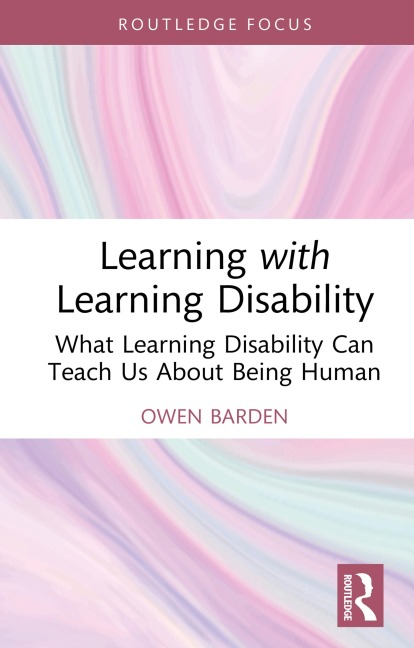
This book uses the concept of "learning disability" to explore what it means to be human. It argues that we need to learn with rather than from or about learning disability. This crucial distinction means being open to what learning disability can teach us about what it means to be human. This approach comes from recognising learning disability as an organising concept - a concept which radically transforms our sense of what it means to be - or not be - a person. After reflecting on the author's relationship to learning disability, the book explores relationships and tensions between conceptualisations of learning disability and of the human. Through historical ontology, the book initially examines how the phenomenon of "learning disability" came into being. It then explores ways in which the concept of learning disability has, over the course of the 20th and 21st centuries, radically transformed our sense not only of education and learning, but also of who is or is not deemed entitled to full citizenship and the associated rights, and so who is or is not fully human. Each chapter of the book exposes tensions and contradictions apparent in the ways we tend to think about personhood and learning disability, illuminating them through a series a binary oppositions: human and not fully human; menacing and vulnerable; controlled and abandoned; capable and incapable; human and posthuman. The book concludes by drawing together these tensions and contradictions to challenge the prevailing metanarrative of disability and make the case for a more inclusive conceptualisation of what it means to be human. It will be of interest to all scholars and students of disability studies, the history of learning disability, humanism and posthumanism, and learning disability advocacy.
Owen Barden is Assistant Professor in Intellectual Disability and Inclusion at Trinity College Dublin, Ireland. He has published extensively on learning disability, with particular interests in histories of learning disabilities and participatory methodologies.
1.Introduction. 2.Human and Not Fully Human. 3.Vulnerable and Menacing. 4.Controlled and Abandoned. 5.Human and Posthuman. 6.Conclusion.
Dieses eBook wird im PDF-Format geliefert und ist mit einem Adobe Kopierschutz (DRM) versehen. Sie können dieses eBook mit allen Geräten lesen, die das PDF-Format und den Adobe Kopierschutz (DRM) unterstützen.
Zum Beispiel mit den folgenden Geräten:
• tolino Reader
Laden Sie das eBook direkt über den Reader-Shop auf dem tolino herunter oder übertragen Sie das eBook auf Ihren tolino mit einer kostenlosen Software wie beispielsweise Adobe Digital Editions.
• Sony Reader & andere eBook Reader
Laden Sie das eBook direkt über den Reader-Shop herunter oder übertragen Sie das eBook mit der kostenlosen Software Sony READER FOR PC/Mac oder Adobe Digital Editions auf ein Standard-Lesegeräte mit epub- und Adobe DRM-Unterstützung.
• Tablets & Smartphones
Möchten Sie dieses eBook auf Ihrem Smartphone oder Tablet lesen, finden Sie hier unsere kostenlose Lese-App für iPhone/iPad und Android Smartphone/Tablets.
• PC & Mac
Lesen Sie das eBook direkt nach dem Herunterladen mit einer kostenlosen Lesesoftware, beispielsweise Adobe Digital Editions, Sony READER FOR PC/Mac oder direkt über Ihre eBook-Bibliothek in Ihrem Konto unter „Meine eBooks“ - „online lesen“.
Schalten Sie das eBook mit Ihrer persönlichen Adobe ID auf bis zu sechs Geräten gleichzeitig frei.
Bitte beachten Sie, dass die Kindle-Geräte das Format nicht unterstützen und dieses eBook somit nicht auf Kindle-Geräten lesbar ist.