Und dann auf "Zum Home-Bildschirm [+]".

Stöbern
genialokal zum Startbildschirm hinzufügen
Installieren Sie die genialokal App auf Ihrem Startbildschirm für einen schnellen Zugriff und eine komfortable Nutzung.
Installieren Sie die genialokal App auf Ihrem Startbildschirm für einen schnellen Zugriff und eine komfortable Nutzung.



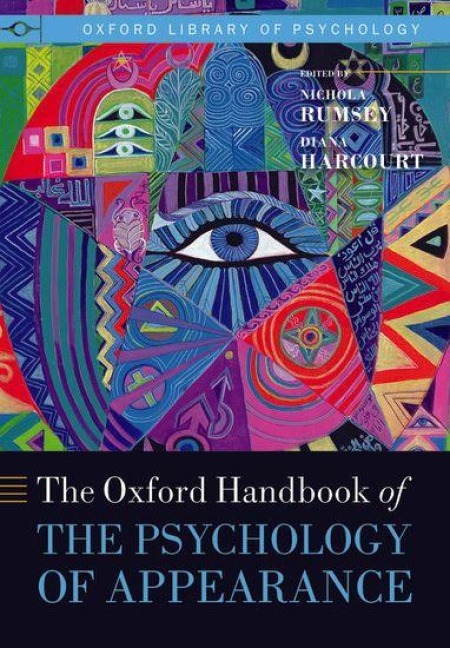
We live in a society in which messages associating physical attractiveness with success and happiness are pervasive.This book gives a detailed, authoritative account of research, policy, and practice in psychological aspects of appearance, including the role of the media in shaping people's attitudes and behaviours towards appearance.
Professor Rumsey is VTCT Professor of Appearance Research at UWE and is Co-Director of the Centre for Appearance Research (CAR). Following the completion of her PhD "Psychological Problems Associated with Facial Disfigurement" in 1983, Nichola has built an international reputation for her research in this field and has attracted funding from a variety of bodies to support research on appearance. Nichola was awarded a personal Chair by UWE in 2002. She was elected President of the Craniofacial Society of Great Britain & Ireland in 2003-4 (the first psychologist to be elected to this position), and Chair of the British Psychological Society's Division of Health Psychology from 2005-6. She was awarded honorary membership of the British Association of Aesthetic Plastic Surgeons in 2009.
Dr Harcourt was appointed Reader in Health Psychology at UWE in 2006, and is Co-Director of the Centre for Appearance Research (CAR). Her interest in the psychological consequences of changes to appearance led her to conduct her PhD research into women's experiences of mastectomy and breast reconstruction after a diagnosis of cancer. Her PhD was supervised by Professor Nichola Rumsey, with whom she has worked closely since the inception of the Centre for Appearance Research (CAR) in 1998. She was Chair of the British Psychological Society's Division of Health Psychology from 2009-10.
Introduction
Setting the Scene
1: Overview
2: Hannah Frith: Appearance and Society
3: Malcolm MacLachlan, Grainne Ni Mháille, Pamela Gallagher and Deirdre Desmond: Embodiment and Appearance
4: Hannah Falvey: Cross-cultural Differences
5: Esther L.E. Hansen and Peter E.M. Butler: Challenges in Health Care Provision in the UK
6: Valerie Lamaine and Andrea Pusic: Challenges in Health Care Provision in the USA
7: Tom Potokar and Patricia Price: Challenges in Health Care Provision in Resource-Poor Countries
8: Julie Kent: A Sociological Perspective in Biomedical Technologies and Appearance
9: Andrew R. Thompson: Researching Appearance: Models, Theories, and Frameworks
10 Summary and Synthesis: Nichola Rumsey and Diana Harcourt
Who is affected by appearance concerns, in what way, and why?
11: Overview
Across the lifespan
12: Linda Smolak: Appearance in Childhood and Adolescence
13: Marika Tiggemann and Julie Slevec: Appearance in Adulthood
14: Lucie Baker and Eyal Gringart: Appearance in Later Life
Individual differences in adjustment and distress
15: Helen Falkner: Gender
16: Caroline Huxley and Nikki Hayfield: Lesbian, Gay and Bisexualities, Appearance and Body Image
17: Habib Naqvi and Krysia Saul: Culture and Ethnicity
18: Emma Halliwell and Phillippa Diedrichs: Influence of the Media
19 The Role of the Family: Rebecca Bellew
20: Lina Ricciardelli and David Mellor: Influence of Peers
21: Timothy P. Moss and Ben Rosser: Adult Psychosocial Adjustment to Visible Differences: Physical and Psychological Predictors of Variation
Consequences of Appearance Concerns
22 Appearance and Exercise: James Byron-Daniel
23: Irmgard Tischner and Helen Malson: Understanding the Too Fat Body and the Too Thin Body: A Critical Psychological Perspective
24: Victoria Lawson: Appearance Concerns, Dietary Restriction and Disordered Eating
25: Canice E. Crerand, Leanne Magee and David B. Sarwer: Cosmetic Procedures
Experiences of people who have a visible difference
26: Kristin Billaud-Feragen: Congenital Conditions
27: Julie Wisely and Sarah Gaskell: Trauma - with special reference to burn injury
28: Christine Bundy: Visible Difference Associated with Disease: Skin conditions
29: Heidi Williamson and Melissa Wallace: When Treatment Affects Appearance
30: Summary and Synthesis
What needs to change and how can change be achieved
31: Section Overview
Societal Interventions
32: Barry Gunter: Role of the Media
33: James Partridge: Persuading the Public: New face values for the 21st Century
34: Julia Cadogan: Changing Provision of Healthcare Settings in the United Kingdom
35: Susan Brown: Interventions for Families and Healthcare Professionals
36: Alexandra Clarke: Regulation of Cosmetic Surgery
Interventions at an individual or group level
37: Phillippa Diedrichs and Emma Halliwell: School Based Interventions to Promote Positive Body Image and the Acceptance of Diversity in Appearance
38: Elizabeth Jenkinson: Therapeutic Interventions: Evidence of effectiveness
39: Alyson Bessell: Computer Based Psychosocial Interventions
40: Sarah Grogan and Daniel Masterson: Using Appearance Concerns to Promote Health
41: Summary and Synthesis
Research Issues
42: Overview
43: Ross Krawczyk, Jessie Menzel and J. Kevin Thompson: Methodological Issues in the Study of Body Image and Appearance
44: Martin Persson: Using Retrospective Approaches in the Study of Disfigurement
45: Emma Dures: Mixed Methods: The best of both worlds?
46: Neil S. Coulson: Methodological Choices (Online research)
47: Diana Harcourt: Using Novel Methods in Appearance Research
48: Amanda Bates: Promoting Participant Voices in Research
49: Summary and Synthesis
The Psychology of Appearance
50: Nichola Rumsey and Diana Harcourt: The Future
Index