Und dann auf "Zum Home-Bildschirm [+]".

Stöbern
genialokal zum Startbildschirm hinzufügen
Installieren Sie die genialokal App auf Ihrem Startbildschirm für einen schnellen Zugriff und eine komfortable Nutzung.
Installieren Sie die genialokal App auf Ihrem Startbildschirm für einen schnellen Zugriff und eine komfortable Nutzung.

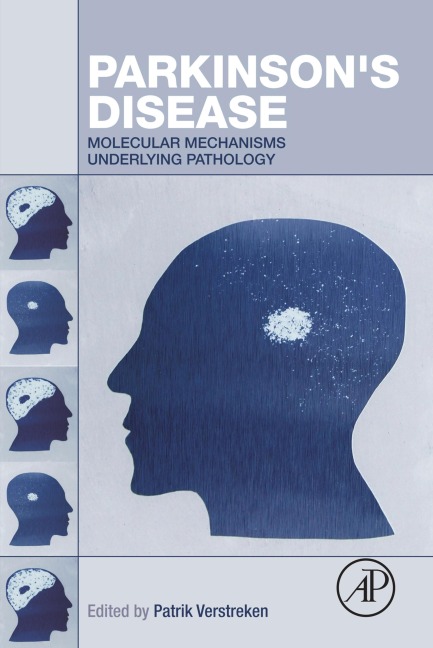
Parkinson's Disease: Molecular Mechanisms Underlying Pathology explores the molecular pathways at the basis of the cellular defects connected to Parkinson's disease, the second most common neurodegenerative disease, and the most common movement disorder. This book presents the latest research on the pathways and mechanisms that have been discovered to play a role in Parkinson's pathology. This focus on mechanisms rather than individual genes allows the contributors to elaborate on overlapping and joint functions of different causative genes. Readers will find descriptions of model systems that present parallels (and differences) between discoveries in different species, demonstrating the importance of multidisciplinary research that spans a broad array of technologies and model organisms. Written from both a cross-methodology and cross-species perspective, the book provides readers with the current state of knowledge on the molecular biology of Parkinson's.
- Written by experts in the field that focus on pathways and mechanisms implicated in Parkinson's pathology
- Draws parallels between multidisciplinary discoveries in different model organisms using an array of technologies
- Provides a cross-methodology and cross-species approach to understanding the molecular biology of Parkinson's disease
- Includes approximately 25 color Illustrations and diagrams to explain concepts and models
- Focuses on key pathways and mechanisms (as opposed to model organism or gene) to provide a multidisciplinary approach to Parkinson's disease
1. The Neurogenetics of Parkinson's Disease and putative links to other neurodegenerative disordersChristina M. Lill and Christine Klein2. Electron transport chainLiesbeth Aerts and Vanessa A. Morais3. Mitochondrial fission and fusionVictoria L. Hewitt and Alexander J. Whitworth4. Axonal mitochondrial transport Evgeny Shlevkov and Thomas L. Schwarz5. MitophagyLouise King and Hélène Plun-Favreau6. Autophagy and vesicle traffickingPatrick Lewis, Maria Perez-Carrion and Giovanni Piccoli7. Endocytosis and synaptic functionSandra Soukup, Patrik Verstreken and Sven Vilain8. Neuroinflammation as a potential mechanism underlying Parkinson's Disease Carolina Cebrián and David Sulzer9. Protein translation in Parkinson's DiseaseJungwoo Wren Kim, Leire Abalde-Atristain, Jia Hao, Ian Martin, Valina L. Dawson and Ted M. Dawson