Und dann auf "Zum Home-Bildschirm [+]".

Stöbern
genialokal zum Startbildschirm hinzufügen
Installieren Sie die genialokal App auf Ihrem Startbildschirm für einen schnellen Zugriff und eine komfortable Nutzung.
Installieren Sie die genialokal App auf Ihrem Startbildschirm für einen schnellen Zugriff und eine komfortable Nutzung.
Ihr gewünschter Artikel ist in 0 Buchhandlungen vorrätig - wählen Sie hier eine Buchhandlung in Ihrer Nähe aus:

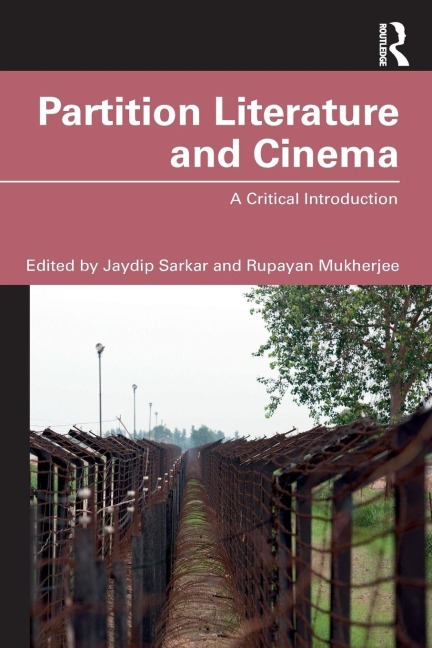
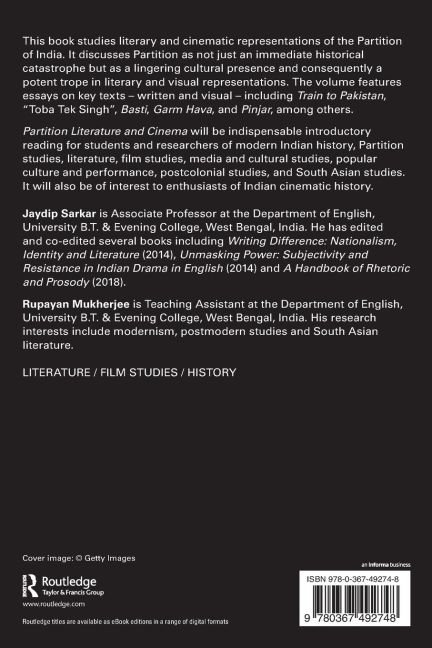
This book studies literary and cinematic representations of the Partition of India. It features essays on key texts - written and visual - including Train to Pakistan, Toba Tek Singh, Basti, Garm Hava, Pinjar, among others.
Jaydip Sarkar is Associate Professor at the Department of English, University B.T. & Evening College, West Bengal, India. He has edited and co-edited several books including Writing Difference: Nationalism, Identity and Literature (2014), Unmasking Power: Subjectivity and Resistance in Indian Drama in English (2014) and A Handbook of Rhetoric and Prosody (2018). Rupayan Mukherjee is Teaching Assistant at the Department of English, University B.T. & Evening College, West Bengal, India. His research interests include modernism, postmodern studies and South Asian literature.
Introduction: Literature and Film: An Alternative Archive of the Partition of India Part 1: Historical Reality: Texts of Response 1. Political Mayhems and the Moment of Rupture: Bhisham Sahni's Tamas 2. Ideology of Hatred and the Violent Making of Nations: Khushwant Singh's Train to Pakistan 3. Partition and the Shattered Familiar: Bapsi Sidhwa's The Ice-Candy Man 4. Saadat Hasan Manto's "Toba Tek Singh": A Nation Split by Trauma and Madness 5. Translating Trauma into Sublime: Gulzar's Response to Manto's "Toba Tek Singh" Part 2: Memory and Mnemonic: Of Homeland and Homelessness 6. Politics of Memory and the Myth of Homelessness: Intizar Husain's Basti 7. Redrawing the Borders of Nostalgia: A Reading of Ritwik Ghatak's Selected Short Stories 8. Memory of Home and the Impossibility of Return: Reading Jibanananda Das's "I Shall Return to This Bengal" and "I Have Seen Bengal's Face" 9.Tracing Erasure and Re-mapping the Memory Lane: Partition Movies of Ritwik Ghatak 10. From Home to Homeland: Negotiating Memory and Displacement in Dibyendu Palit's "Alam's own House" Part 3: Body-Politics: The Woman in Question 11. Decentrification and Gendered perspectives in Partition Narratives: An analysis of Garm Hava 12. Honour, Women's Body and Marginalisation: A Study of Amrita Pritam's Pinjar 13. History Versus (Her)story: Jyotirmoyee Devi's Epar Ganga Opar Ganga 14. Immanent Needs, Immediate Solutions: Body and Reconciliation in Manik Bandopadhyay's "The Final Solution" 15. The Aporiac Self: Feminine and the Poetics of Silence in Sabiha Sumar's Khamosh Pani Post Script: Inverted Prisms, Imperfect Histories: Towards a Dalit Historiography of India's Partition