Und dann auf "Zum Home-Bildschirm [+]".

Stöbern
genialokal zum Startbildschirm hinzufügen
Installieren Sie die genialokal App auf Ihrem Startbildschirm für einen schnellen Zugriff und eine komfortable Nutzung.
Installieren Sie die genialokal App auf Ihrem Startbildschirm für einen schnellen Zugriff und eine komfortable Nutzung.
Ihr gewünschter Artikel ist in 0 Buchhandlungen vorrätig - wählen Sie hier eine Buchhandlung in Ihrer Nähe aus:

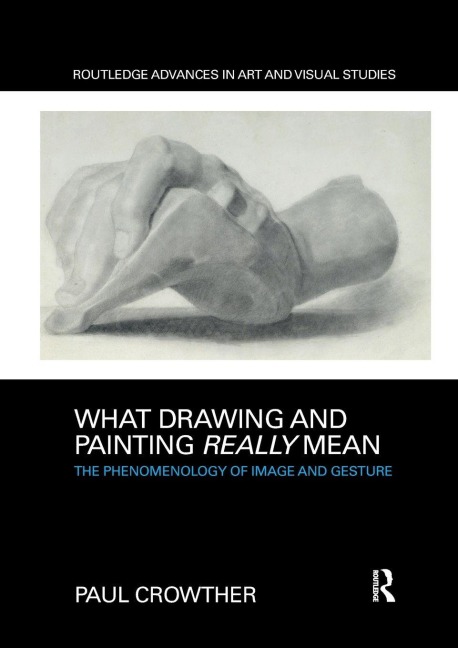
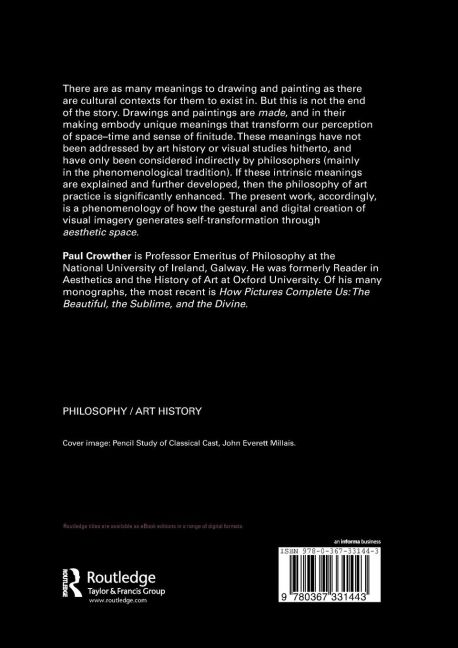
There are as many meanings to drawing and painting as there are cultural contexts for them to exist in. But this is not the end of the story. Drawings and paintings are made, and in their making embody unique meanings that transform our perception of space-time and sense of finitude. These meanings have not been addressed by art history or visual studies hitherto, and have only been considered indirectly by philosophers (mainly in the phenomenological tradition). If these intrinsic meanings are explained and further developed, then the philosophy of art practice is significantly enhanced. The present work, accordingly, is a phenomenology of how the gestural and digital creation of visual imagery generates self-transformation through aesthetic space.
Paul Crowther is Professor Emeritus of Philosophy at the National University of Ireland, Galway. He was formerly Reader in Aesthetics and the History of Art at Oxford University. Of his many monographs, the most recent is How Pictures Complete Us: The Beautiful, the Sublime, and the Divine.
List of fi gures List of plates Acknowledgments Introduction: Drawing and Painting in the Age of Networks 1. The Cognitive Function of the Image 2. Origins of Drawing and Painting: the Hominid Creation of Aesthetic Space 3. The Phenomenology of Drawing and Painting 4. A Bigger Picture: Drawing, Painting, and the Structure of Aesthetic Space 5. Art's Eternalization of the Moment 6. The Aesthetic Space of Abstract Art 7. Conditions of Creativity: Drawing and Painting with Computers Conclusion: Drawing and Painting at the Limits of Art Bibliography Index