Und dann auf "Zum Home-Bildschirm [+]".

Stöbern
genialokal zum Startbildschirm hinzufügen
Installieren Sie die genialokal App auf Ihrem Startbildschirm für einen schnellen Zugriff und eine komfortable Nutzung.
Installieren Sie die genialokal App auf Ihrem Startbildschirm für einen schnellen Zugriff und eine komfortable Nutzung.
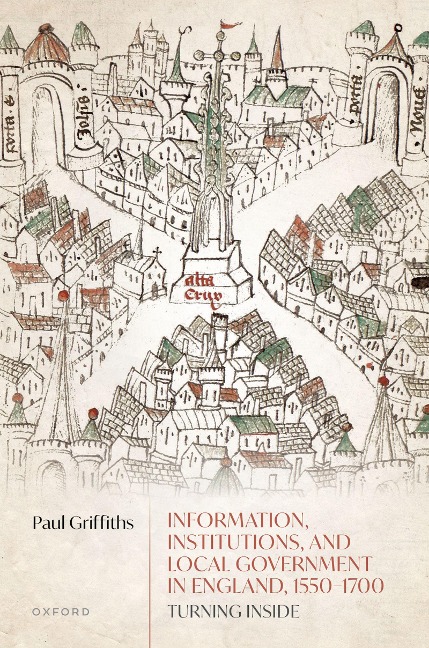
The years between 1550 and 1700 saw significant changes in the nature and scope of local government: sophisticated information and intelligence systems were developed; magistrates came to rely more heavily on surveillance to inform 'good government'; and England's first nationwide system of incarceration was established within bridewells. But while these sizeable and lasting shifts have been well studied, less attention has been paid to the important characteristic that they shared: the 'turning inside' of the title. What was happening beneath this growth in activity was a shift from 'open' to 'closed' management of a host of problems--from the representation of authority itself to treatment of every kind of local disorder, from petty crime and poverty to dirty streets. Information, Institutions, and Local Government in England, 1550-1700 explores the character and consequences of these changes for the first time. Drawing on wide-ranging archival research in 34 archives, the book examines the ways in which the notion of representing authority and ethics in public (including punishment) was increasingly called into question in early modern England, and how and why local government officials were involved in this. This 'turning inside' was encouraged by insistence on precision and clarity in broad bodies of knowledge, culture, and practice that had lasting impacts on governance, as well as a range of broader demographic, social, and economic changes that led to deeper poverty, thinner resources, more movement, and imagined or real crime-waves. In so doing, and by drawing on a diverse range of examples, the book offers important new perspectives on local government, visual representation, penal cultures, institutions, incarceration, and surveillance in the early modern period.
Paul Griffiths is Professor of Early Modern British Cultural and Social History at Iowa State University. He is the author of Youth and Authority: Formative Experiences in England, 1560-1640 (OUP, 1996) and Lost Londons: Change, Crime, and Control in the Capital City, 1550-1660 (CUP, 2008). His Cambridge PhD was supervised by Keith Wrightson and he has also taught at the universities of Cambridge, Warwick, and Leicester. He has held National Humanities Centre and National Endowment of the Humanities fellowships.
- Introduction - 1: '(Mys)precyson' - 2: 'Manifestaccon' - 3: Punishment - 4: Institutions - 5: Information - 6: Turning Inside
Dieses eBook wird im PDF-Format geliefert und ist mit einem Adobe Kopierschutz (DRM) versehen. Sie können dieses eBook mit allen Geräten lesen, die das PDF-Format und den Adobe Kopierschutz (DRM) unterstützen.
Zum Beispiel mit den folgenden Geräten:
• tolino Reader
Laden Sie das eBook direkt über den Reader-Shop auf dem tolino herunter oder übertragen Sie das eBook auf Ihren tolino mit einer kostenlosen Software wie beispielsweise Adobe Digital Editions.
• Sony Reader & andere eBook Reader
Laden Sie das eBook direkt über den Reader-Shop herunter oder übertragen Sie das eBook mit der kostenlosen Software Sony READER FOR PC/Mac oder Adobe Digital Editions auf ein Standard-Lesegeräte mit epub- und Adobe DRM-Unterstützung.
• Tablets & Smartphones
Möchten Sie dieses eBook auf Ihrem Smartphone oder Tablet lesen, finden Sie hier unsere kostenlose Lese-App für iPhone/iPad und Android Smartphone/Tablets.
• PC & Mac
Lesen Sie das eBook direkt nach dem Herunterladen mit einer kostenlosen Lesesoftware, beispielsweise Adobe Digital Editions, Sony READER FOR PC/Mac oder direkt über Ihre eBook-Bibliothek in Ihrem Konto unter „Meine eBooks“ - „online lesen“.
Schalten Sie das eBook mit Ihrer persönlichen Adobe ID auf bis zu sechs Geräten gleichzeitig frei.
Bitte beachten Sie, dass die Kindle-Geräte das Format nicht unterstützen und dieses eBook somit nicht auf Kindle-Geräten lesbar ist.