Und dann auf "Zum Home-Bildschirm [+]".

Stöbern
genialokal zum Startbildschirm hinzufügen
Installieren Sie die genialokal App auf Ihrem Startbildschirm für einen schnellen Zugriff und eine komfortable Nutzung.
Installieren Sie die genialokal App auf Ihrem Startbildschirm für einen schnellen Zugriff und eine komfortable Nutzung.
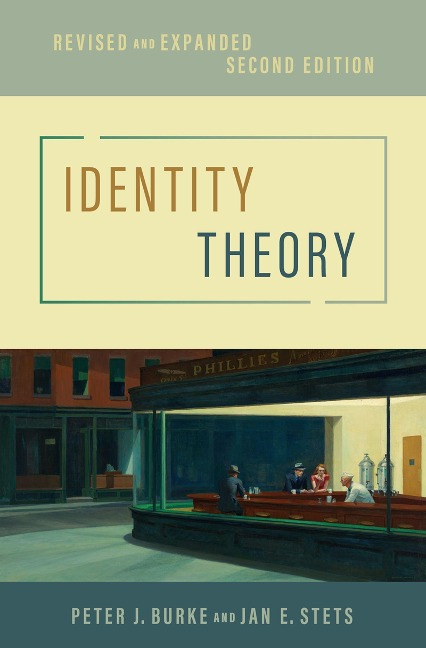
The concept of identity has become widespread within the social and behavioral sciences, cutting across disciplines from psychiatry and psychology to political science and sociology. Introduced more than fifty years ago, identity theory is a social psychological theory that attempts to understand people's identities, their sources in interaction and society, their processes of operation, and their consequences for interaction and society from a sociological perspective. In this fully updated second edition of Identity Theory, Peter J. Burke and Jan E. Stets expand and refine their discussion of identity theory. Each chapter has been significantly revised and chapters have been added to address new theoretical developments and empirical research in the field. They cover identity characteristics, the processes and outcomes of identity verification, and the operation of identities to detail in particular the role of emotional, behavioral, and cognitive processes. In addition, Burke and Stets explore the multiple identities individuals hold from their multiple positions in society and organizations as well as the multiple identities activated by many people interacting in groups and organizations. Written in an accessible style, this revised edition of Identity Theory continues to make the full range of this powerful theory understandable to readers at all levels.
Peter J. Burke is Distinguished Professor of the Graduate Division at the University of California at Riverside (UCR). He has served as Chair of the Department of Sociology at UCR Chair of the Department of Sociology at Indiana University, Bloomington, and Editor of Social Psychology Quarterly. One of the originators of Identity Theory, his research draws on Complexity Theory, Artificial Intelligence, and Computer Simulation to understand (1) how individuals, acting as agents with specific identities, come together in interaction to create groups, organizations, and societies, and (2) how these social structures constrain and limit the kinds of actions that individuals can take. He has published more than ninety research papers and five books. He is a Fellow of the American Association for the Advancement of Science and Fellow of the Association for Psychological Science. He is past chair of the American Sociological Association (ASA) Section on Social Psychology and the ASA Section on Theory. He is the winner of the 2003 ASA Cooley-Mead Award for Lifetime Contributions to Distinguished Scholarship in Social Psychology. He is the recipient of research grants from the National Science Foundation. Jan E. Stets is currently Distinguished Professor in the Department of Sociology and Director of the Social Psychology Research Laboratory at the University of California, Riverside (UCR). She has served as Co-Chair of the Department of Sociology at UCR, Director of the Sociology Program at the National Science Foundation, and Co-Editor of Social Psychology Quarterly. She works in the areas of self and identity, emotions, and morality. She is the author of ten books and more than 100 papers. Her Sociology of Emotions (2005) has been translated into Japanese, Croatian, Polish, and Chinese. Her Handbook of the Sociology of Emotions (2007) received the 2008 Outstanding Contribution Award from the American Sociological Association (ASA) Section on Emotions. She is a Fellow of the American Association for the Advancement of Science and Fellow of the Society for Experimental Social Psychology. She is past chair of the ASA Section on Emotions, the ASA Section on Social Psychology, and the ASA Section on Altruism, Morality, and Social Solidarity. She is the recipient of the 2020 ASA Cooley-Mead Award for Lifetime Contributions to Distinguished Scholarship in Social Psychology. She is the recipient of research grants from the National Science Foundation.
Preface 1: Agency and Social Structure 2: The Origins of Identity Theory 3: The Development of Identity Theory 4: Identity Meanings and Resources 5: The Characteristics of Identities 6: The Identity Model 7: Identity Verification: Processes 8: Identity Verification: Outcomes 9: Bases of Identities 10: Multiple Identities 11: Identity Change 12: Future Research References Index
Dieses eBook wird im PDF-Format geliefert und ist mit einem Adobe Kopierschutz (DRM) versehen. Sie können dieses eBook mit allen Geräten lesen, die das PDF-Format und den Adobe Kopierschutz (DRM) unterstützen.
Zum Beispiel mit den folgenden Geräten:
• tolino Reader
Laden Sie das eBook direkt über den Reader-Shop auf dem tolino herunter oder übertragen Sie das eBook auf Ihren tolino mit einer kostenlosen Software wie beispielsweise Adobe Digital Editions.
• Sony Reader & andere eBook Reader
Laden Sie das eBook direkt über den Reader-Shop herunter oder übertragen Sie das eBook mit der kostenlosen Software Sony READER FOR PC/Mac oder Adobe Digital Editions auf ein Standard-Lesegeräte mit epub- und Adobe DRM-Unterstützung.
• Tablets & Smartphones
Möchten Sie dieses eBook auf Ihrem Smartphone oder Tablet lesen, finden Sie hier unsere kostenlose Lese-App für iPhone/iPad und Android Smartphone/Tablets.
• PC & Mac
Lesen Sie das eBook direkt nach dem Herunterladen mit einer kostenlosen Lesesoftware, beispielsweise Adobe Digital Editions, Sony READER FOR PC/Mac oder direkt über Ihre eBook-Bibliothek in Ihrem Konto unter „Meine eBooks“ - „online lesen“.
Schalten Sie das eBook mit Ihrer persönlichen Adobe ID auf bis zu sechs Geräten gleichzeitig frei.
Bitte beachten Sie, dass die Kindle-Geräte das Format nicht unterstützen und dieses eBook somit nicht auf Kindle-Geräten lesbar ist.