Und dann auf "Zum Home-Bildschirm [+]".

Stöbern
genialokal zum Startbildschirm hinzufügen
Installieren Sie die genialokal App auf Ihrem Startbildschirm für einen schnellen Zugriff und eine komfortable Nutzung.
Installieren Sie die genialokal App auf Ihrem Startbildschirm für einen schnellen Zugriff und eine komfortable Nutzung.


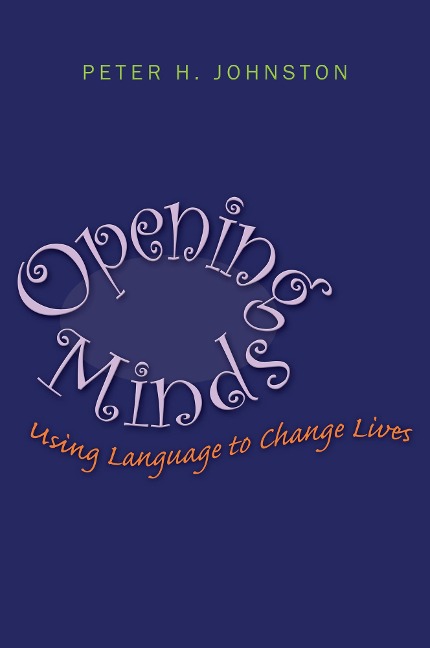
Introducing a spelling test to a student by saying, 'Let' s see how many words you know,' is different from saying, 'Let's see how many words you know already.' It is only one word, but the already suggests that any words the child knows are ahead of expectation and, most important, that there is nothing permanent about what is known and not known. Peter Johnston Grounded in research, Opening Minds: Using Language to Change Livesshows how words can shape students' learning, their sense of self, and their social, emotional and moral development. Make no mistake: words have the power to open minds - or close them. Following up his groundbreaking book, Choice Words, author Peter Johnston continues to demonstrate how the things teachers say (and don't say) have surprising consequences for the literate lives of students. In this new book, Johnston shows how the words teachers choose can affect the worlds students inhabit in the classroom. He explains how to engage children with more productive talk and how to create classrooms that support students' intellectual development, as well as their development as human beings.
Peter H. Johnston (Ph.D. University of Illinois) is Professor of Education and Chair of the Reading Department at State University of New York at Albany. His position as an advocate for teachers and children developed from his early career teaching primary school in his native New Zealand. He is a recipient of the Albert J. Harris Award for his contribution to the understanding of reading disability and was chair of the IRA/NCTE Joint Task Force on Assessment. His many publications include Knowing Literacy: Constructive Literacy Assessment (Stenhouse 1997) and Running Records: A Self-Tutoring Guide (Stenhouse 2000). Peter's continuing interest is in literacy assessment as it relates to democratic society.
Chapter 1: Choosing Words, Choosing Worlds; Chapter 2: Learning Worlds: People, Performing, and Learning; Chapter 3: Changing Learning Narratives; Chapter 4: "Good Job!" Feedback, Praise, and Other Responses; Chapter 5: Any Other Ways to Think About That? Inquiry, Dialogue, Uncertainty, and Difference; Chapter 6: Social Imagination; Chapter 7: Moral Agency: Moral Development and Civic Engagement; Chapter 8: Thinking Together, Working Together; Chapter 9: Choice Worlds