Und dann auf "Zum Home-Bildschirm [+]".

Stöbern
genialokal zum Startbildschirm hinzufügen
Installieren Sie die genialokal App auf Ihrem Startbildschirm für einen schnellen Zugriff und eine komfortable Nutzung.
Installieren Sie die genialokal App auf Ihrem Startbildschirm für einen schnellen Zugriff und eine komfortable Nutzung.


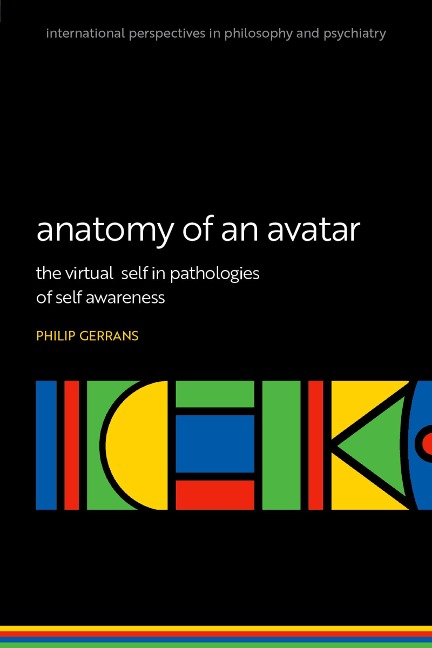
This book applies a powerful framework in computational neuroscience (predictive coding and active inference) to explain psychiatric disorders that are characterised by pathologies of self-awareness. It shows how the self is best conceived of as an avatar or model made by the brain for the fundamental purpose of optimising basic bodily function. That avatar integrates and coordinates neurocomputation across the mind. It allows the mind to anticipate and respond to sensory information that bears on the organism's prospects. The self is thus a model (avatar) made by the brain to allow the body to play the game of life. When activity in circuitry that implements the avatar is compromised a variety of psychiatric disorders result. Anatomy of an Avatar provides a theoretical framework for theories of embodied selfhood anchored in homoestatic regulation, as well as exploring psychiatric disorders involving the self and the empirical application of concepts of free energy minimisation, active inference and predictive processing. The book also includes key case studies in the cognitive neuropsychiatry of self awareness and test cases for philosophical concepts of self representation and the experience of self awareness. The book will be essential reading for those in the fields of psychology and consciousness, psychiatry, and philosophy.
Philip Gerrans is a Professor of Philosophy at the University of Adelaide. His work is at the intersection of psychiatry neuroscience and philosophy. He has written on developmental disorders, the emotions, delusions, disorders of self awareness, psychedelic experience and dreams. A unifying theme is the explanatory role of neurocomputational theory.
- 1: Allostatic Active Inference - 2: Material me: Embodiment and self awareness - 3: Pain and the avatar - 4: Depersonalisation - 5: A vessel without a pilot: The Cotard delusion - 6: Ego dissolution in psychedelic experience - 7: The social self - 8: Alienation and identification in addiction - 9: Engineering empathy: Emotion and self representation in artificial intelligence
Dieses eBook wird im PDF-Format geliefert und ist mit einem Adobe Kopierschutz (DRM) versehen. Sie können dieses eBook mit allen Geräten lesen, die das PDF-Format und den Adobe Kopierschutz (DRM) unterstützen.
Zum Beispiel mit den folgenden Geräten:
• tolino Reader
Laden Sie das eBook direkt über den Reader-Shop auf dem tolino herunter oder übertragen Sie das eBook auf Ihren tolino mit einer kostenlosen Software wie beispielsweise Adobe Digital Editions.
• Sony Reader & andere eBook Reader
Laden Sie das eBook direkt über den Reader-Shop herunter oder übertragen Sie das eBook mit der kostenlosen Software Sony READER FOR PC/Mac oder Adobe Digital Editions auf ein Standard-Lesegeräte mit epub- und Adobe DRM-Unterstützung.
• Tablets & Smartphones
Möchten Sie dieses eBook auf Ihrem Smartphone oder Tablet lesen, finden Sie hier unsere kostenlose Lese-App für iPhone/iPad und Android Smartphone/Tablets.
• PC & Mac
Lesen Sie das eBook direkt nach dem Herunterladen mit einer kostenlosen Lesesoftware, beispielsweise Adobe Digital Editions, Sony READER FOR PC/Mac oder direkt über Ihre eBook-Bibliothek in Ihrem Konto unter „Meine eBooks“ - „online lesen“.
Schalten Sie das eBook mit Ihrer persönlichen Adobe ID auf bis zu sechs Geräten gleichzeitig frei.
Bitte beachten Sie, dass die Kindle-Geräte das Format nicht unterstützen und dieses eBook somit nicht auf Kindle-Geräten lesbar ist.