Und dann auf "Zum Home-Bildschirm [+]".

Stöbern
genialokal zum Startbildschirm hinzufügen
Installieren Sie die genialokal App auf Ihrem Startbildschirm für einen schnellen Zugriff und eine komfortable Nutzung.
Installieren Sie die genialokal App auf Ihrem Startbildschirm für einen schnellen Zugriff und eine komfortable Nutzung.
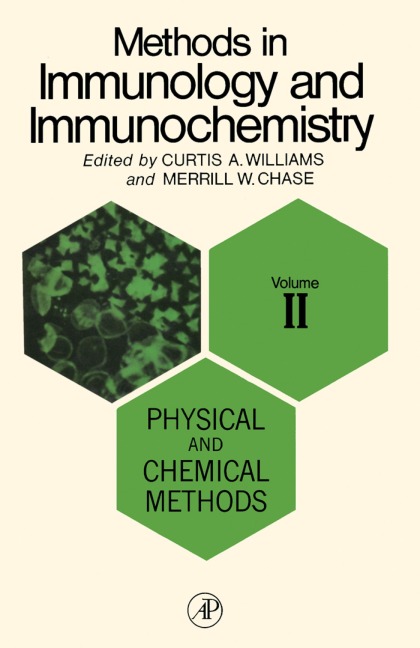
Methods in Immunology: Volume II, Physical and Chemical Methods is a collection of papers dealing with electrophoresis, analytical ultracentrifugation, dialysis, ultrafiltration, cellulose ion exchangers, and chromatographic separation of macromolecules on porous gels. Some papers explain the applications of radioisotopes, optical analysis, and chemical analysis of proteins, carbohydrates, lipids, and nucleic acid. One paper describes the theory of electro-migration. Factors such as electrical charge or frictional coefficients govern the rate of migration of charged particles in an electric field. The differences found in their velocities can be used to separate substances or analyze them. Mobility is a characteristic property of molecules and can also be influenced by the composition of the medium or solution. Dialysis separates solvents too large to diffuse through a barrier from smaller solutes; ultrafiltration (reverse osmosis) forces solvent and solutes up to a certain critical size through the barrier by a high pressure on one side. The book notes that the membrane never becomes plugged in dialysis because of some opposite movement of the solvent. Another paper points out that the significance of radioactive tracers in immunochemistry employed to identify and label macromolecules functioning as antigens and antibodies. The collection can prove valuable to bio-chemists, cellular biologists, micro-biologists, developmental biologists, and scientists involved in immunological research.
Contributors to Volume IIPrefaceContents of Other VolumesChapter 6. Electrophoresis A. Factors Governing the Rate of Migration of Charged Particles in an Electric Field Definition Electromigration Theory Electrophoretic Friction Relaxation Effect Ionic Strength Effects Buffer Ion Effects B. Moving-Boundary Electrophoresis Historical Procedures and Concepts Criteria of Purity Multiple Moving Boundaries Demonstrations of Protein-Protein Interactions Interaction of Proteins with Small Molecules Fractionation Potentiality Moving Boundary vs Zone Electrophoresis C. Analytical Zone Electrophoresis 1. General Survey of Methods and Matrices 2. Cellulose Acetate Membranes (CAM) Apparatus and Procedure Fixing and Staining (Proteins, Lipoproteins) Enzyme Localization 3. Starch Gel Electrophoresis Theoretical Considerations Apparatus and Procedure for Vertical Starch Gel Buffers Slicing and Staining Electrophoresis: Common and High-Voltage Separations Urea-Starch Gel and Urea-Mercaptoethanol-Starch Gel with Acid and Alkaline Buffers Two-Dimensional Electrophoresis Techniques 4. Disc Electrophoresis, Acrylamide Gel Columns Theory Apparatus Reagents and Solutions Procedures 5. Acrylamide Gel Electrophoresis General Consideration Apparatus Procedure Two-Dimensional Gel Electrophoresis Discontinuous Gel Systems Handling of Large-Pore Gels Staining Recovery of Separated Components D . Preparative Zone Electrophoresis 1. Zone Electrophoresis on Powder Blocks General Discussion Methodology Choice of Supporting Medium Applications: Immunoglobulins and Fragments Ferritin-Globulin Complex Complement Components Carbohydrate Separation 2. Column Electrophoresis General Considerations Apparatus for Small-Scale Preparations Anticonvection Materials Procedure for Serum Fractionation on Sephadex G-25 Large-Scale Preparations 3. Preparative Electrophoresis in Horizontal Gels General Method of Electrophoresis into Flowing Buffer Apparatus Example: Separation of Adenosine Nucleotides 4. Electrophoresis-Convection Principles Apparatus and Resolution Fractionation of y-Globulins and Serum Other ExamplesChapter 7. Ultracentrifugation Preparative and Analytical Ultracentrifugation A. Introduction and Applications B. Moving-Zone Methods C. Moving-Zone Methods D. Isodensity Methods E. Separation of Cellular Organelles F. Classical Sedimentation Equilibrium Methods G. Summary of Mathematical FormulasChapter 8 . Dialysis and Ultrafiltration Dialysis and Ultrafiltration Definitions Cellophane Membranes Analytical Dialysis Cell Preparative Dialysis Countercurrent Thin-Layer Dialysis Ultrafiltration Methods for Altering the Porosity of CellophaneChapter 9 . Chromatographic Separations of Macromolecules on Porous Gels and Cellulose Ion Exchangers A. Introductions B. Chromatography on Gels 1. Chromatography on Sephadex Exclusion Limit of Different Cross-Linked Dextrans Adsorption Properties Eluant Choice Column Dimensions and Buffers Techniques 2. Chromatography on Polyacrylamide Gels Preparation of Polyacrylamide Spheres Packing the Column Techniques Fractionation of Human Serum 3.