Und dann auf "Zum Home-Bildschirm [+]".

Stöbern
genialokal zum Startbildschirm hinzufügen
Installieren Sie die genialokal App auf Ihrem Startbildschirm für einen schnellen Zugriff und eine komfortable Nutzung.
Installieren Sie die genialokal App auf Ihrem Startbildschirm für einen schnellen Zugriff und eine komfortable Nutzung.
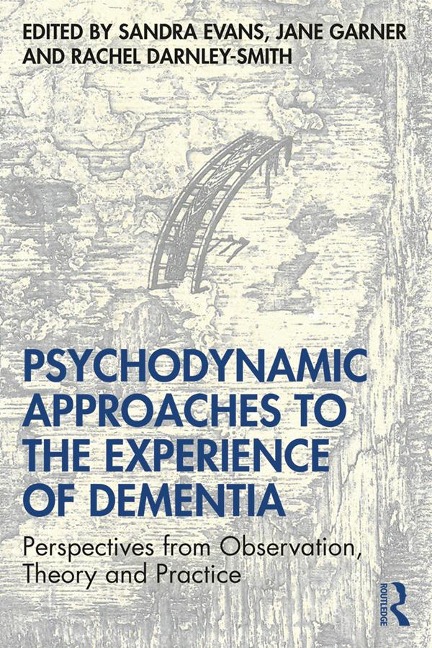
Psychodynamic Approaches to the Experience of Dementia: Perspectives from Observation, Theory and Practice demonstrates the impact of healthcare approaches that take into account not only the practical needs but also the emotional experience of the patient, their partners, families and friends, lay carers and professional staff. Currently there is no cure for dementia, but the psychosocial and therapeutic approaches described in this volume have appeared to help people, both patients and carers, feel more contained and less lonely and isolated. Psychoanalytic theory provides a disciplined way of thinking about the internal world of an individual and their relationships. Each author provides their own commentary on the personal and interpersonal effects of dementia, endeavouring to understand behaviours and emotions which may otherwise seem incomprehensible. The subject is approached from a psychodynamic perspective, considering the unconscious, previous and current experiences and relationships, including those between patients and staff. Psychodynamic Approaches to the Experience of Dementia illustrates the practical and theoretical thinking of clinicians from a wide range of disciplines who are engaged in the care of people in late life with a diagnosis of dementia. It will be essential reading for mental health and health professionals in practice and training in the field of dementia.
Sandra Evans has been an NHS psychiatrist, teacher and trainer for over 30 years. Sandra is a group analyst also in private practice with GANLondon. Jane Garner has over 30 years clinical experience in the NHS using psychodynamic ideas to inform psychiatric practice and teaching, particularly in the areas of old age and dementia services, continuing care, institutional abuse, sex and relationships. Rachel Darnley-Smith is a music therapist and senior lecturer at Roehampton University, UK. She has worked with people with dementia over many years, mostly in the NHS and published widely on music therapy, aesthetics and psychoanalysis .
List of figures and illustrations List of contributors Foreword by Nori Graham Acknowledgements Introduction Sandra Evans, Jane Garner and Rachel Darnley-Smith 1. Encountering dementia Louis Resnick 2. Where lies the expert? Jane Garner 3. Working with people with mild neurocognitive disorders (mild NCD) or mild cognitive impairments (MCI) Julia C. Segal 4. Prognosis and planning: advance care planning through a psychoanalytic frame Juliette Brown 5. The experience of loss in dementia; melancholia without the mourning? Sandra Evans 6. Dementia and dialogue: acute hospitals and Liaison psychiatry Matthew Hagger 7. Psychodynamic interventions in dementia: the Australian and New Zealand experience Neil Jeyasingam 8. Art therapy with people with dementia: the present and the past Angela Byers 9. Attachment in confusional states and in dementia: theory into practice Sandra Evans 10. The fragile thread of connection: living as a couple with dementia Andrew Balfour 11. Maintaining boundaries: counselling in a care home Susan Maciver, Chris McGregor and Tom C. Russ 12. Music as mirror in the care of elderly people with dementia Rachel Darnley-Smith 13. Groups for people with cognitive impairment and with dementia: what should we be doing? Sandra Evans 14. Disintegration and integration in dementia care: mentalisation as a means to keep whole Stephanie Petty, Michelle Potts and Daniel Anderson 15. A psychoanalytic and philosophical exploration of boredom and disengagement in dementia Sandra Evans 16. Continuing care review: a report on a thoughtful project and its untimely demise Jane Garner 17. Negotiating the border: music therapy for people in the last hours of dementia Adrienne Freeman 18. Can anything good be born of a dementia: potential for reparation? Jane Garner Index
Dieses eBook wird im PDF-Format geliefert und ist mit einem Adobe Kopierschutz (DRM) versehen. Sie können dieses eBook mit allen Geräten lesen, die das PDF-Format und den Adobe Kopierschutz (DRM) unterstützen.
Zum Beispiel mit den folgenden Geräten:
• tolino Reader
Laden Sie das eBook direkt über den Reader-Shop auf dem tolino herunter oder übertragen Sie das eBook auf Ihren tolino mit einer kostenlosen Software wie beispielsweise Adobe Digital Editions.
• Sony Reader & andere eBook Reader
Laden Sie das eBook direkt über den Reader-Shop herunter oder übertragen Sie das eBook mit der kostenlosen Software Sony READER FOR PC/Mac oder Adobe Digital Editions auf ein Standard-Lesegeräte mit epub- und Adobe DRM-Unterstützung.
• Tablets & Smartphones
Möchten Sie dieses eBook auf Ihrem Smartphone oder Tablet lesen, finden Sie hier unsere kostenlose Lese-App für iPhone/iPad und Android Smartphone/Tablets.
• PC & Mac
Lesen Sie das eBook direkt nach dem Herunterladen mit einer kostenlosen Lesesoftware, beispielsweise Adobe Digital Editions, Sony READER FOR PC/Mac oder direkt über Ihre eBook-Bibliothek in Ihrem Konto unter „Meine eBooks“ - „online lesen“.
Schalten Sie das eBook mit Ihrer persönlichen Adobe ID auf bis zu sechs Geräten gleichzeitig frei.
Bitte beachten Sie, dass die Kindle-Geräte das Format nicht unterstützen und dieses eBook somit nicht auf Kindle-Geräten lesbar ist.