Und dann auf "Zum Home-Bildschirm [+]".

Stöbern
genialokal zum Startbildschirm hinzufügen
Installieren Sie die genialokal App auf Ihrem Startbildschirm für einen schnellen Zugriff und eine komfortable Nutzung.
Installieren Sie die genialokal App auf Ihrem Startbildschirm für einen schnellen Zugriff und eine komfortable Nutzung.
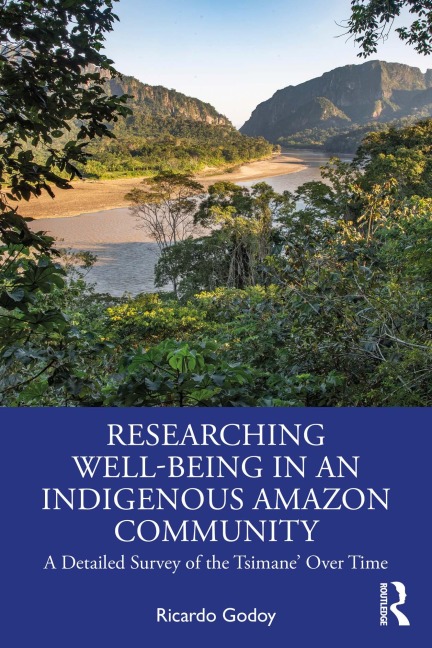
This book aims to provide the first comprehensive, multi-year, systematic, quantitative assessment in the behavioral sciences of how well-being changes over time in a small-scale rural society of Indigenous People in the Global South. Using data compiled by the Tsimane' Amazonian Panel Study (2002-010) that monitored change in Tsimane' communities, this book analyzes economic, social, and health changes in a farming and foraging society of native Amazonians in Bolivia. It uses multidisciplinary methods to follow the same individuals, households, and village through time and bring together three themes: well-eing, economic inequalities, and the fate of Indigenous People in small-cale rural societies of the Global South. It finds considerable material deprivation, high economic inequalities within Tsimane' society, and declining standards of living over time It ends by asking "Is this evidence that people adjust to anything or are these the costs Tsimane' pay to retain autonomy and follow a historical lifestyle?" This book aims to provide a comprehensive approach to the measurement of well-being and how to track its changes, providing a platform for future generations to gauge long-term change. It will resonate with undergraduate and graduate students across the behavioral sciences, professional anthropologists who specialize in the Amazon or well-being, development economists, and senior researchers who are part of the wave of emerging interest in doing research in small-scale rural societies of the Global South.
Ricardo Godoy is a Professor at the Heller School for Social Policy and Management at Brandeis University. He holds a PhD in Anthropology from Columbia University. With William R. Leonard (Northwestern University) he helped to established the Tsimane' Amazonian Panel Study (TAPS).
About the Author Acknowledgements Introduction Chapter 1. Tsimane', their neighbors, and Westerners: the past 500 years Chapter 2. History and findings from TAPS and longitudinal studies in anthropology Chapter 3. The setting and methods to gather information Chapter 4. Asking what makes people happy and sad is a gateway into the perceived causes of subjective well-being Chapter 5. Using food to assess well-being, income, and income inequality Chapter 6. Farming, an indirect runway to Tsimane' subjective well-being Chapter 7. Well-being: staying healthy despite breakdowns Chapter 8. Well-being: a world of limited and wilting sociality Chapter 9. The marketplace: cash earnings, expenditures, swaps, and asset borrowing to bolster well-being. Chapter 10. Economic inequalities and well-being: why yoke them? Chapter 11. Takeaways and the future Appendix A. Where to find TAPS datasets and the electronic report of the longitudinal study Appendix B. A selective review of cross-sectional studies by the TAPS team
Dieses eBook wird im PDF-Format geliefert und ist mit einem Adobe Kopierschutz (DRM) versehen. Sie können dieses eBook mit allen Geräten lesen, die das PDF-Format und den Adobe Kopierschutz (DRM) unterstützen.
Zum Beispiel mit den folgenden Geräten:
• tolino Reader
Laden Sie das eBook direkt über den Reader-Shop auf dem tolino herunter oder übertragen Sie das eBook auf Ihren tolino mit einer kostenlosen Software wie beispielsweise Adobe Digital Editions.
• Sony Reader & andere eBook Reader
Laden Sie das eBook direkt über den Reader-Shop herunter oder übertragen Sie das eBook mit der kostenlosen Software Sony READER FOR PC/Mac oder Adobe Digital Editions auf ein Standard-Lesegeräte mit epub- und Adobe DRM-Unterstützung.
• Tablets & Smartphones
Möchten Sie dieses eBook auf Ihrem Smartphone oder Tablet lesen, finden Sie hier unsere kostenlose Lese-App für iPhone/iPad und Android Smartphone/Tablets.
• PC & Mac
Lesen Sie das eBook direkt nach dem Herunterladen mit einer kostenlosen Lesesoftware, beispielsweise Adobe Digital Editions, Sony READER FOR PC/Mac oder direkt über Ihre eBook-Bibliothek in Ihrem Konto unter „Meine eBooks“ - „online lesen“.
Schalten Sie das eBook mit Ihrer persönlichen Adobe ID auf bis zu sechs Geräten gleichzeitig frei.
Bitte beachten Sie, dass die Kindle-Geräte das Format nicht unterstützen und dieses eBook somit nicht auf Kindle-Geräten lesbar ist.