Und dann auf "Zum Home-Bildschirm [+]".

Stöbern
genialokal zum Startbildschirm hinzufügen
Installieren Sie die genialokal App auf Ihrem Startbildschirm für einen schnellen Zugriff und eine komfortable Nutzung.
Installieren Sie die genialokal App auf Ihrem Startbildschirm für einen schnellen Zugriff und eine komfortable Nutzung.
Ihr gewünschter Artikel ist in 0 Buchhandlungen vorrätig - wählen Sie hier eine Buchhandlung in Ihrer Nähe aus:

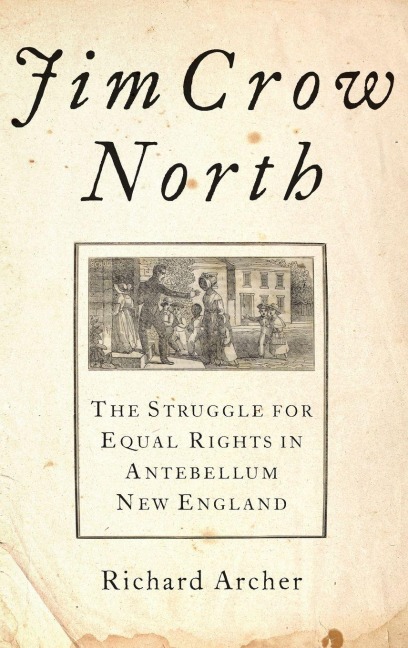
More than a century before Rosa Parks refused to give up her seat on a Montgomery bus, Shadrach Howard, David Ruggles, Frederick Douglass, and others had rejected demands that they relinquish their seats on various New England railroads. They were protesting segregation on Jim Crow cars, a term that originated in New England in 1839. Theirs was part of a larger movement for equal rights in antebellum New England. Using sit-ins, boycotts, petition drives, and other initiatives, African-American New Englanders and their white allies attempted to desegregate schools, transportation, neighborhoods, churches, and cultural venues. Above all they sought to be respected and treated as equals in a reputedly democratic society. Jim Crow North is the tale of that struggle and the racism that prompted it. Despite widespread racism, black New Englanders were remarkably successful. By the advent of the Civil War African American men could vote and hold office in every New England state but Connecticut. Schools, except in the largest cities of Connecticut and Rhode Island, were integrated. Railroads, stagecoaches, hotels, and cultural venues (with occasional aberrations) were free from discrimination. People of African descent and of European descent could marry one another and live peaceably, even in Maine and Rhode Island where such marriages were legally prohibited. There was an emerging, if still small, black middle class who benefitted most. But there were limits to progress. A majority of African-Americans in New England were mired in poverty preventing full equality both then and now.
Richard Archer is a Professor of History Emeritus at Whittier College. He is the author of two previous books on New England, Fissures in the Rock: New England in the Seventeenth Century and As If an Enemy's Country: The British Occupation of Boston and the Origins of Revolution.
- Part I: Jim Crow in New England
- Chapter 1: The World of Hosea Easton and David Walker
- Chapter 2: New England's Peculiar Institution
- Chapter 3: Emancipation and Free African Americans
- Part II: Girding Up
- Chapter 4: Unity and Uplift
- Chapter 5: Advanced Education
- Chapter 6: Intimidation, Assaults, and Riots
- Part III: Towards Equality
- Chapter 7: Riding the Rails with Jim Crow
- Chapter 8: Forward Steps
- Part IV: Mixed Marriages
- Chapter 9: Repealing the Law
- Chapter 10: Breaking a Barrier
- Part V: Hitting the Wall
- Chapter 11: Fugitives
- Chapter 12: Inching Ahead
- Chapter 13: The Wall
- Part VI: Epilogue
- Chapter 14: Miles to Go
- Acknowledgments