Und dann auf "Zum Home-Bildschirm [+]".

Stöbern
genialokal zum Startbildschirm hinzufügen
Installieren Sie die genialokal App auf Ihrem Startbildschirm für einen schnellen Zugriff und eine komfortable Nutzung.
Installieren Sie die genialokal App auf Ihrem Startbildschirm für einen schnellen Zugriff und eine komfortable Nutzung.

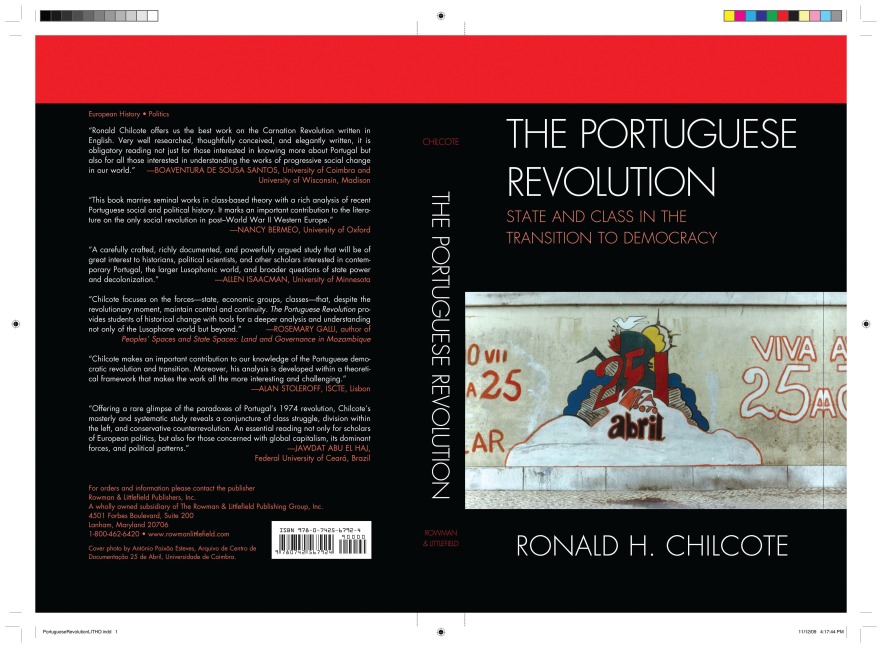
Building on decades of research, leading scholar Ronald H. Chilcote provides a definitive analysis of the 1974-1975 Portuguese revolution, which captured global attention and continues to resonate today. His study revisits a key historical moment to explain the revolution and its aftermath through periods of authoritarianism and resistance as well as representative and popular democracy. Exploring the intertwined themes of class, state, and hegemony, Chilcote builds a powerful framework for understanding the Portuguese case as well as contemporary political economy worldwide.
Ronald H. Chilcote is professor of economics and political science at the University of California, Riverside.
Preface: Portugal and Comparative Inquiry
Introduction
Chapter 1: Capitalism and the Bourgeois Revolution
Part I: State Forms, Enterprise, and Continuity in the Consolidation of Capitalism
Chapter 2: Origins and Evolution of the State
Chapter 3: Economic Groups, Public Enterprises, and Multinationals: Links to the State
Chapter 4: Continuity of the State in the Political Economy
Part II: Class and Movement in the Struggle for a Socialist Transition and Popular Democracy
Chapter 5: Class and Movement in the Struggle for a Socialist Transition and Popular Democracy
Chapter 6: The April 25 Coup
Chapter 7: Institutional Conflict and the MFA
Chapter 8: The New Popular and Social Movements
Chapter 9: Social Classes in Struggle
Chapter 10: Legacies of the Revolution
Chapter 11: The Aftermath
Conclusion: Assessment and Implications