Und dann auf "Zum Home-Bildschirm [+]".

Stöbern
genialokal zum Startbildschirm hinzufügen
Installieren Sie die genialokal App auf Ihrem Startbildschirm für einen schnellen Zugriff und eine komfortable Nutzung.
Installieren Sie die genialokal App auf Ihrem Startbildschirm für einen schnellen Zugriff und eine komfortable Nutzung.
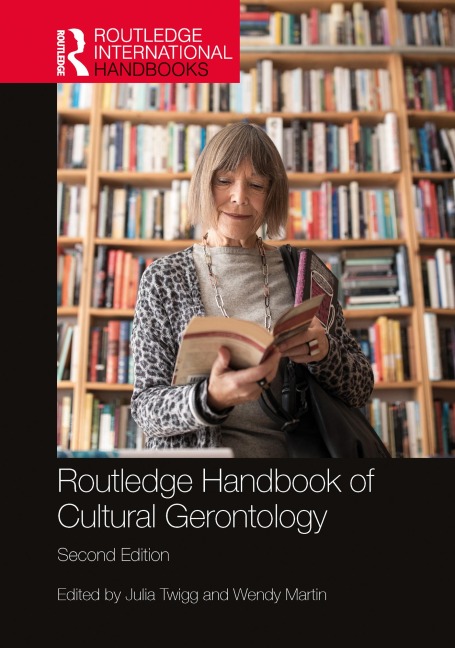
The second edition of this landmark handbook provides an authoritative overview of the emergence and development of cultural gerontology. It reveals the vibrancy and diversity of theory, methodology and research methods, and reflects on changes in the field since the first edition and examines future directions. Over the last two decades, cultural gerontology has emerged as one of the most lively and insightful areas of academic analysis. Whilst the Cultural Turn may have come quite late to ageing studies, cultural perspectives have increasingly influenced the field. Drawing from work across the humanities and social sciences, it has changed the ways in which we study later years, challenging old stereotypes, bringing to bear new theories, new methodologies, as well as new forms of political and intellectual engagement. The aim of this second edition of the handbook has been to bring together both new and original authors to provide a critical analysis of key perspectives and debates, and consider avenues for future agendas, within their own fields of cultural gerontology. There are new topics and themes, new theoretical and methodological perspectives, as well as chapters that have been extensively revised and updated. The handbook offers lively, interdisciplinary and vibrant accounts of later life around five interconnected areas: the politics and theorising of ageing; materiality and embodiment; cultures of care; identities, relationships and consumption; and arts and technologies. The Routledge Handbook of Cultural Gerontology captures the field's past, present and future in widening the social gerontological imaginary and brings new and creative methodologies to bear on the understanding of all dimensions of the lives of people in mid to later life. It is essential reading for students and scholars concerned with ageing and gerontology.
Julia Twigg is Emeritus Professor of Social Policy and Sociology at the University of Kent, UK. She has written widely on the subjects of age, care, embodiment and fashion. Most recently her work has focussed on the cultural constitution of age. She has published a number of books including Bathing, the Body and Community Care, The Body in Social and Health Care and Fashion and Age: Dress, the Body and Later Life. She is a Fellow of the Academy of Social Sciences and in 2016 was awarded the British Society of Gerontology Outstanding Achievement Award. Wendy Martin is Senior Lecturer and Director of Research in the Department of Health Sciences, Brunel University of London. Her research focuses on ageing, embodiment, the digital and everyday life and the use of visual methods in ageing research. She was Principal Investigator for ESRC research project Photographing Everyday Life, is Co-Investigator for UKRI Ageing Development Award Sound, Environment and Ageing and for the Social Sciences and Humanities Research Council of Canada international partnership Aging in Data. Wendy is Co-Editor of Socio-gerontechnology: Interdisciplinary Critical Studies of Ageing and Technology and is on the editorial boards for Ageing and Society and Journal of Global Ageing.
1. Revisiting Cultural Gerontology: Exploring the Landscape Ten Years On PART 1: THE POLITICS AND THEORISING OF AGEING 2. From Successful Ageing to Ageing Well 3. The Cultural Turn in Gerontology 4.Transitions and Time in an 5. Global and Local Ties and the Reconstruction of Later Life 6. Money and Finance in Later Life 7.The Civic Culture in Ageing Societies 8. Aged by Culture in the New COVID Era 9. Intersectionality and Paradoxes of Age Inequality 10. Culture, Ethnicity, Race, and Migrancy 11. The Race(ing) of Ageing Studies: Disrupting the Veil of Whiteness 12. Indigenous Elders, Older Adults, and Ageing 13. Beyond the View of the West: Ageing Anthropology PART 2: MATERIALITY AND EMBODIMENT 15. An Intersectional Considerations of Ageing and the Body 16. Sex, Sexuality and Later Life 17. The Smile in Older Age 18. Dress and Age 19. Materiality and Ageing 20. Architectural Imaginaries and Cultures of Care in Later Life 21. Meanings of Home and Age 22. Gardens and Gardening in Later Life 23. Cemeteries and Age 24. Ageing, Physical Activity and Sport PART 3: CULTURES OF CARE 25. Cultures of Care 26. Personhood and the Dilemmas of Dementia Care 27. Dementia and Embodiment 28. The Fourth Age 29. Loneliness and Isolation 30. Suffering and Pain in Old Age 31. Medical Humanities and Cultural Gerontology PART 4: IDENTITIES AND SOCIAL RELATIONSHIPS 33. Representations of Ageing in the Media 34. Youth Culture, Ageing and Identity 35. Gender: Some Implications of a Contested Concept and Area of Social Life 36. Queering Cultural Gerontology 37. Ethnographies of Ageing 38. The Value of Religion, Spirituality, and Humanism to Older People 39. Ageing Workers 40. Lifestyle Migration, Ageing, and the Meaning of Relative Privilege 41. Widowhood and its Cultural Representations 42. Ageing and Biographical Methods PART 5: ARTS AND TECHNOLOGIES 44. Literature and Age 45. Ageing in Film 46. Visual Methods in Ageing Research 47. Celebrity Culture and Ageing 48. Ageing and Popular Music 49. Rethinking Late-Life Creativity: Beyond 'Late Style' 50. Ageing Playfully 51. From Chronological Age to Biomarkers of Ageing: A Historical Cultural Sociology 52. Science, Technology and Ageing 53. The Co-Constitution of Ageing and Technology in a Cultural Context
Dieses eBook wird im PDF-Format geliefert und ist mit einem Adobe Kopierschutz (DRM) versehen. Sie können dieses eBook mit allen Geräten lesen, die das PDF-Format und den Adobe Kopierschutz (DRM) unterstützen.
Zum Beispiel mit den folgenden Geräten:
• tolino Reader
Laden Sie das eBook direkt über den Reader-Shop auf dem tolino herunter oder übertragen Sie das eBook auf Ihren tolino mit einer kostenlosen Software wie beispielsweise Adobe Digital Editions.
• Sony Reader & andere eBook Reader
Laden Sie das eBook direkt über den Reader-Shop herunter oder übertragen Sie das eBook mit der kostenlosen Software Sony READER FOR PC/Mac oder Adobe Digital Editions auf ein Standard-Lesegeräte mit epub- und Adobe DRM-Unterstützung.
• Tablets & Smartphones
Möchten Sie dieses eBook auf Ihrem Smartphone oder Tablet lesen, finden Sie hier unsere kostenlose Lese-App für iPhone/iPad und Android Smartphone/Tablets.
• PC & Mac
Lesen Sie das eBook direkt nach dem Herunterladen mit einer kostenlosen Lesesoftware, beispielsweise Adobe Digital Editions, Sony READER FOR PC/Mac oder direkt über Ihre eBook-Bibliothek in Ihrem Konto unter „Meine eBooks“ - „online lesen“.
Schalten Sie das eBook mit Ihrer persönlichen Adobe ID auf bis zu sechs Geräten gleichzeitig frei.
Bitte beachten Sie, dass die Kindle-Geräte das Format nicht unterstützen und dieses eBook somit nicht auf Kindle-Geräten lesbar ist.