Und dann auf "Zum Home-Bildschirm [+]".

Stöbern
genialokal zum Startbildschirm hinzufügen
Installieren Sie die genialokal App auf Ihrem Startbildschirm für einen schnellen Zugriff und eine komfortable Nutzung.
Installieren Sie die genialokal App auf Ihrem Startbildschirm für einen schnellen Zugriff und eine komfortable Nutzung.
Ihr gewünschter Artikel ist in 0 Buchhandlungen vorrätig - wählen Sie hier eine Buchhandlung in Ihrer Nähe aus:

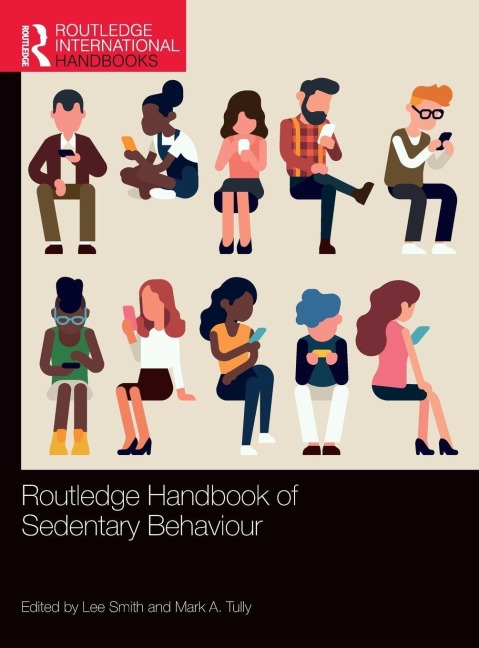
This book provides a source of information on the epidemiological trends in sedentary behaviour across the lifecourse. Innovations in quantifying sedentary behaviour have led to a number of developments in tools used to measure sedentary behaviour, and this book reviews their relative merits.
Lee Smith is an epidemiologist in the Faculty of Science and Engineering at the School of Psychology and Sport Science, Anglia Ruskin University, UK, with expertise in physical activity and sedentary behaviour. Lee researches ways in which we can increase levels of physical activity and reduce sedentary behaviour across the lifespan and within special populations. Mark A. Tully is Research Director of the School of Medicine and Professor of Public Health at Ulster University, UK. Prof Tully's research focuses on addressing population levels of physical inactivity and sedentary behaviour, which are major causes of poor physical and mental wellbeing. His research includes interventions targeting older adults and socioeconomically disadvantaged communities. In addition, he is interested in the effects of changes in the built environment on behaviours.
Section 1: Introduction. 1. Introduction to sedentary behaviour. Section 2: Sedentary behaviour epidemiology. 2. Defining sedentary behaviour and current sedentary behaviour guidelines. 3. Global levels and patterns of sedentary behaviour in children, adolescents, adults, and older adults. 4. Correlates of sedentary behaviour across the lifespan. 5. Global levels and correlates of sedentary behaviour in clinical populations. 6. Synopsis of Section 2: Sedentary behaviour epidemiology. Section 3: Measuring sedentary behaviour. 7. An overview of subjective sedentary behaviour measures. 8. An overview of objective sedentary behaviour measures. 9. Sedentary behaviour: A cluster of unhealthy behaviours. 10. Synopsis of Section 3: Sedentary behaviour measurement summary. Section 4: Sedentary behaviour and health outcomes. 11. Physical inactivity, sedentary behaviour, and non-communicable disease. 12. Sedentary behaviour and physical non-communicable disease and risk factors in older adults and special populations. 13. Sedentary behaviour and mental health in adolescents. 14. The relationship between sedentary behaviour with mental health complications and psychosocial outcomes in adults. 15. The relationship between sedentary behaviour and mental health complications and psychosocial outcomes in older adults and special populations. 16. Sedentary behaviour and cancer. 17. Sedentary behaviour and pain. 18. Sedentary behaviour and obesity. 19. Mechanisms linking sedentary behaviour to health outcomes. 20. Synopsis of Section 4: Sedentary behaviour and health outcomes. Section 5: Sedentary behaviour interventions. 21. Use of psychological theory in sedentary behaviour interventions. 22. Sedentary behaviour interventions in children. 23. Sedentary behaviour interventions in adolescents. 24. Sedentary behaviour interventions in adults. 25. Sedentary behaviour interventions in older adults. 26. Sedentary behaviour interventions in special populations. 27. Synopsis of Section 5: Sedentary behaviour interventions. Section 6: Conclusion. 28. Conclusion.