Und dann auf "Zum Home-Bildschirm [+]".

Stöbern
genialokal zum Startbildschirm hinzufügen
Installieren Sie die genialokal App auf Ihrem Startbildschirm für einen schnellen Zugriff und eine komfortable Nutzung.
Installieren Sie die genialokal App auf Ihrem Startbildschirm für einen schnellen Zugriff und eine komfortable Nutzung.
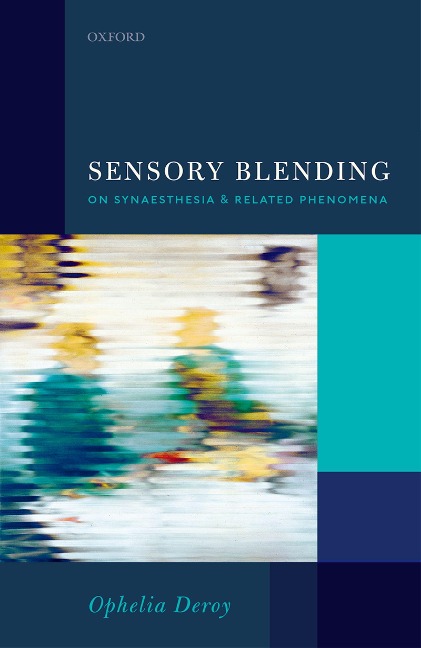
Synaesthesia is, in the words of the cognitive neuroscientist Cytowic, a strange sensory blending. Synaesthetes report seeing colours when hearing sounds or proper names, or they experience tastes when reading the names of subway stations. How do these rare cases relate to other more common examples where sensory experiences get mixed - cases like mirror-touch, personification, cross-modal mappings, and drug experiences? Are we all more or less synaesthetes, and does this mean that we are all subjects of crossmodal illusions? Could some apparently strange sensory cases give us an insight into how perception works? Recent research on the causes and prevalence of synaesthesia raises new questions regarding the links between these cases, and the unity of the condition.
By bringing together contributions from leading cognitive neuroscientists and philosophers, this volume considers for the first time the broader theoretical lessons arising from such cases of sensory blending, with regard to the nature of perception and consciousness, the boundaries between perception, illusion and imagination, and the communicability and sharing of experiences.
Ophelia Deroy is a researcher at the Centre for the Study of the Senses and the co-director of the Institute of Philosophy at the University of London. She specialises in philosophy of mind and cognitive neurosciences, and has widely published on issues related to multisensory perception, sensory deficits, and synaesthesia, both in philosophical and scientific journals. She is an active promoter and a leading advocate of stronger connections between philosophical and scientific approaches to the mind. Her work is frequently broadcast in national and international newspapers, and she is regularly consulted by institutions and the media regarding the relevance of philosophy for scientific debates.
- Introduction - Part 1. Defining and measuring synaesthesia - 1: Lawrence E. Marks: Synaesthesia, then and now - 2: Casey O'Callaghan: Synesthesia vs. crossmodal illusions - 3: Jonathan Cohen: Synesthetic perception as continuous with ordinary perception, or: We're all synesthetes now - 4: Yasmina Jraissati: Reporting color experience in grapheme-color synesthesia: on the relation between color appearance, categories, and terms - Part 2. Challenges raised by synaesthesia - 5: Myrto Myrtopoulos and Tony Ro: Synesthesia and consciousness: exploring the connections - 6: Berit Brogaard: Synesthetic binding and the reactivation model of memory - 7: André J. Abath: Merleau-Ponty and the problem of synaesthesia - 8: Mohan Mathen: When is Synaesthesia Perception? - 9: Michael Sollberger: Can synaesthesia present the world as it really is? - Part 3. Boundaries of synaesthesia: Unconscious, acquired and social varieties of sensory unions - 10: Ophelia Deroy and Charles Spence: Questioning the continuity claim: what difference does consciousness make? - 11: Devin Blair Terhune, David P. Luke, and Roi Cohen Kadosh: The induction of synaesthesia in non-synaesthetes - 12: Malika Auvray and Mirko Farina: Patrolling the boundaries of synaesthesia: a critical appraisal of transient and artificially-induced forms of synaesthetic experiences - 13: Frédérique de Vignemont: Mirror touch synaesthesia: intersubjective or intermodal fusion? - 14: Noam Sagiv, Monika Sobczak-Edmans, and Adrian L. Williams: Personification, synaesthesia and social cognition
Dieses eBook wird im PDF-Format geliefert und ist mit einem Adobe Kopierschutz (DRM) versehen. Sie können dieses eBook mit allen Geräten lesen, die das PDF-Format und den Adobe Kopierschutz (DRM) unterstützen.
Zum Beispiel mit den folgenden Geräten:
• tolino Reader
Laden Sie das eBook direkt über den Reader-Shop auf dem tolino herunter oder übertragen Sie das eBook auf Ihren tolino mit einer kostenlosen Software wie beispielsweise Adobe Digital Editions.
• Sony Reader & andere eBook Reader
Laden Sie das eBook direkt über den Reader-Shop herunter oder übertragen Sie das eBook mit der kostenlosen Software Sony READER FOR PC/Mac oder Adobe Digital Editions auf ein Standard-Lesegeräte mit epub- und Adobe DRM-Unterstützung.
• Tablets & Smartphones
Möchten Sie dieses eBook auf Ihrem Smartphone oder Tablet lesen, finden Sie hier unsere kostenlose Lese-App für iPhone/iPad und Android Smartphone/Tablets.
• PC & Mac
Lesen Sie das eBook direkt nach dem Herunterladen mit einer kostenlosen Lesesoftware, beispielsweise Adobe Digital Editions, Sony READER FOR PC/Mac oder direkt über Ihre eBook-Bibliothek in Ihrem Konto unter „Meine eBooks“ - „online lesen“.
Schalten Sie das eBook mit Ihrer persönlichen Adobe ID auf bis zu sechs Geräten gleichzeitig frei.
Bitte beachten Sie, dass die Kindle-Geräte das Format nicht unterstützen und dieses eBook somit nicht auf Kindle-Geräten lesbar ist.