Und dann auf "Zum Home-Bildschirm [+]".

Stöbern
genialokal zum Startbildschirm hinzufügen
Installieren Sie die genialokal App auf Ihrem Startbildschirm für einen schnellen Zugriff und eine komfortable Nutzung.
Installieren Sie die genialokal App auf Ihrem Startbildschirm für einen schnellen Zugriff und eine komfortable Nutzung.
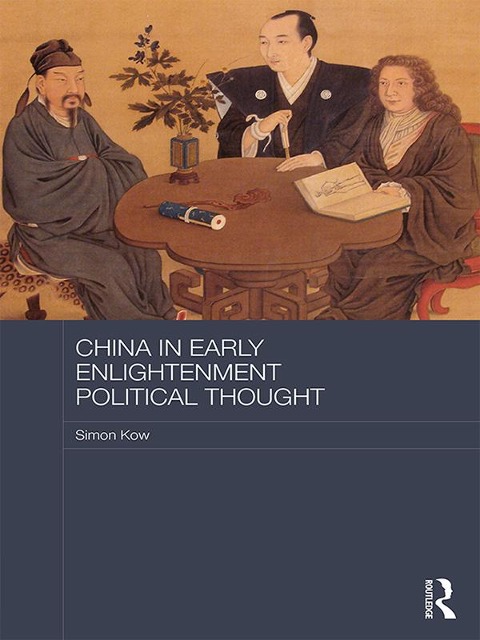
China in Early Enlightenment Political Thought examines the ideas of China in the works of three major thinkers in the early European Enlightenment of the late seventeenth to early eighteenth centuries: Pierre Bayle, Gottfried Wilhelm Leibniz, and the Baron de Montesquieu. Unlike surveys which provide only cursory overviews of Enlightenment views of China, or individual studies of each thinker which tend to address their conceptions of China in individual chapters, this is the first book to provide in-depth comparative analyses of these seminal Enlightenment thinkers that specifically link their views on China to their political concerns. Against the backdrop especially of the Jesuit accounts of China which these philosophers read, Bayle, Leibniz, and Montesquieu interpreted imperial China in three radically divergent ways: as a tolerant, atheistic monarchy; as an exemplar of human and divine justice; and as an exceptional but nonetheless corrupt despotic state. The book thus shows how the development of political thought in the early Enlightenment was closely linked to the question of China as a positive or negative model for Europe, and argues that revisiting Bayle's approach to China is a salutary corrective to the errors and presumptions in the thought of Leibniz and Montesquieu. The book also discusses how Chinese reformers of the late nineteenth and early twentieth centuries drew on Enlightenment writers' different views of China as they sought to envisage how China should be remodeled.
Simon Kow is an Associate Professor of Humanities at the University of King's College, Halifax, Nova Scotia, Canada.
1. Introduction 2. The Jesuits: a swinging door 3. Pierre Bayle: a tolerant, atheistic monarchy 4. Gottfried Wilhelm Leibniz: natural theology and universal justice 5. Montesquieu and Chinese despotism 6. Conclusion: The early European Enlightenment in Chinese political thought
Dieses eBook wird im PDF-Format geliefert und ist mit einem Adobe Kopierschutz (DRM) versehen. Sie können dieses eBook mit allen Geräten lesen, die das PDF-Format und den Adobe Kopierschutz (DRM) unterstützen.
Zum Beispiel mit den folgenden Geräten:
• tolino Reader
Laden Sie das eBook direkt über den Reader-Shop auf dem tolino herunter oder übertragen Sie das eBook auf Ihren tolino mit einer kostenlosen Software wie beispielsweise Adobe Digital Editions.
• Sony Reader & andere eBook Reader
Laden Sie das eBook direkt über den Reader-Shop herunter oder übertragen Sie das eBook mit der kostenlosen Software Sony READER FOR PC/Mac oder Adobe Digital Editions auf ein Standard-Lesegeräte mit epub- und Adobe DRM-Unterstützung.
• Tablets & Smartphones
Möchten Sie dieses eBook auf Ihrem Smartphone oder Tablet lesen, finden Sie hier unsere kostenlose Lese-App für iPhone/iPad und Android Smartphone/Tablets.
• PC & Mac
Lesen Sie das eBook direkt nach dem Herunterladen mit einer kostenlosen Lesesoftware, beispielsweise Adobe Digital Editions, Sony READER FOR PC/Mac oder direkt über Ihre eBook-Bibliothek in Ihrem Konto unter „Meine eBooks“ - „online lesen“.
Schalten Sie das eBook mit Ihrer persönlichen Adobe ID auf bis zu sechs Geräten gleichzeitig frei.
Bitte beachten Sie, dass die Kindle-Geräte das Format nicht unterstützen und dieses eBook somit nicht auf Kindle-Geräten lesbar ist.