Und dann auf "Zum Home-Bildschirm [+]".

Stöbern
genialokal zum Startbildschirm hinzufügen
Installieren Sie die genialokal App auf Ihrem Startbildschirm für einen schnellen Zugriff und eine komfortable Nutzung.
Installieren Sie die genialokal App auf Ihrem Startbildschirm für einen schnellen Zugriff und eine komfortable Nutzung.
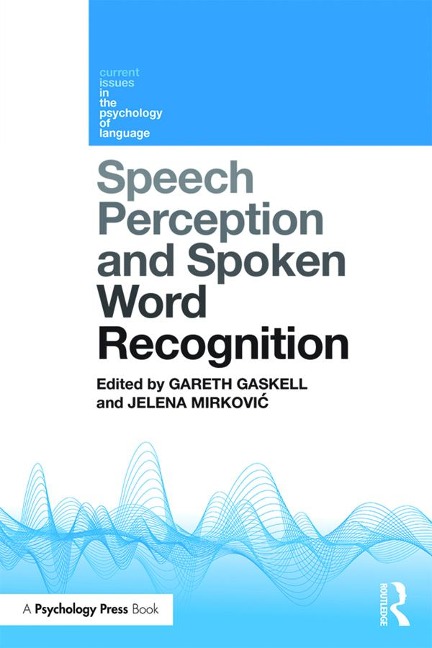
Speech Perception and Spoken Word Recognition features contributions from the field's leading scientists, and covers recent developments and current issues in the study of cognitive and neural mechanisms that take patterns of air vibrations and turn them 'magically' into meaning. The volume makes a unique theoretical contribution in linking behavioural and cognitive neuroscience research, and cutting across traditional strands of study, such as adult and developmental processing. The book: - Focusses on the state of the art in the study of speech perception and spoken word recognition - Discusses the interplay between behavioural and cognitive neuroscience evidence, and between adult and developmental research - Evaluates key theories in the field and relates them to recent empirical advances, including the relationship between speech perception and speech production, meaning representation and real-time activation, and bilingual and monolingual spoken word recognition - Examines emerging areas of study such as word learning and time-course of memory consolidation, and how the science of human speech perception can help computer speech recognition Overall this book presents a renewed focus on theoretical and developmental issues, as well as a multifaceted and broad review of the state of research, in speech perception and spoken word recognition. Particularly interested readers will be researchers of psycholinguistics and adjoining fields as well as advanced undergraduate and postgraduate students.
Gareth Gaskell is Professor of Psychology at the University of York, UK. Jelena Mirkovic is Senior Lecturer in Psychology at York St John University, UK, and an Honorary Fellow at the University of York, UK.
Chapter 1 Representation of speech (Ingrid S. Johnsrude & Bradley R. Buchsbaum) Chapter 2 Perception and production of speech - connected, but how? (Sophie K. Scott) Chapter 3 Consonant bias in the use of phonological information during lexical processing: A lifespan and cross-linguistic perspective (Thierry Nazzi & Silvana Poltrock) Chapter 4 Speech segmentation (Sven L. Mattys & Heather Bortfeld) Chapter 5 Mapping spoken words to meaning (James S. Magnuson) Chapter 6 Zones of proximal development for models of spoken word recognition (Daniel Mirman) Chapter 7 Learning and integration of new word-forms: Consolidation, pruning and the emergence of automaticity (Bob McMurray, Efthymia C. Kapnoula & M. Gareth Gaskell) Chapter 8 Bilingual spoken word recognition (Peiyao Chen & Viorica Marian) Chapter 9 The effect of speech sound disorders on the developing language system: Implications for treatment and future directions in research (Breanna I. Krueger & Holly L. Storkel) Chapter 10 Speech perception by humans and machines (Matthew H. Davis & Odette Scharenborg)
Dieses eBook wird im PDF-Format geliefert und ist mit einem Adobe Kopierschutz (DRM) versehen. Sie können dieses eBook mit allen Geräten lesen, die das PDF-Format und den Adobe Kopierschutz (DRM) unterstützen.
Zum Beispiel mit den folgenden Geräten:
• tolino Reader
Laden Sie das eBook direkt über den Reader-Shop auf dem tolino herunter oder übertragen Sie das eBook auf Ihren tolino mit einer kostenlosen Software wie beispielsweise Adobe Digital Editions.
• Sony Reader & andere eBook Reader
Laden Sie das eBook direkt über den Reader-Shop herunter oder übertragen Sie das eBook mit der kostenlosen Software Sony READER FOR PC/Mac oder Adobe Digital Editions auf ein Standard-Lesegeräte mit epub- und Adobe DRM-Unterstützung.
• Tablets & Smartphones
Möchten Sie dieses eBook auf Ihrem Smartphone oder Tablet lesen, finden Sie hier unsere kostenlose Lese-App für iPhone/iPad und Android Smartphone/Tablets.
• PC & Mac
Lesen Sie das eBook direkt nach dem Herunterladen mit einer kostenlosen Lesesoftware, beispielsweise Adobe Digital Editions, Sony READER FOR PC/Mac oder direkt über Ihre eBook-Bibliothek in Ihrem Konto unter „Meine eBooks“ - „online lesen“.
Schalten Sie das eBook mit Ihrer persönlichen Adobe ID auf bis zu sechs Geräten gleichzeitig frei.
Bitte beachten Sie, dass die Kindle-Geräte das Format nicht unterstützen und dieses eBook somit nicht auf Kindle-Geräten lesbar ist.