Und dann auf "Zum Home-Bildschirm [+]".

Stöbern
genialokal zum Startbildschirm hinzufügen
Installieren Sie die genialokal App auf Ihrem Startbildschirm für einen schnellen Zugriff und eine komfortable Nutzung.
Installieren Sie die genialokal App auf Ihrem Startbildschirm für einen schnellen Zugriff und eine komfortable Nutzung.
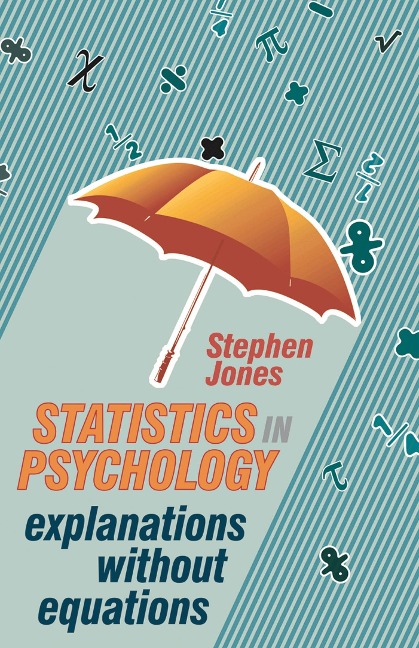
How do you choose the appropriate statistical method for any given research task? What are the features that discern one statistical method from another, and for which research projects are they appropriate to use? Written specifically with the undergraduate psychology student in mind and for those who desire an explanation for the use of statistics in psychological research without the mathematics, this refreshing and much-needed introduction is invaluable for any psychology students who 'don't get numbers'. Breaking away from the traditional, numerical approaches, Jones delivers an engaging and insightful read into the rationale behind the use of statistics, drawing upon non-numerical examples and scenarios from both psychological literature and everyday life to explain key statistical concepts. Learn about the methods for testing populations and samples, standard errors, inferential and descriptive statistics as well as variables and participants.
This is an ideal companion to core textbooks and will serve a clearer understanding of statistical methods in psychology. By reading this book students can hope to gain a better sense of what makes empirically valid research and learn to critically evaluate facts and figure in any presented research. The foundations of psychology's claims are the empiricism of well-conducted and reliable data.
STEPHEN JONES is Senior Lecturer in the Department of Psychology at the University of the West of England, UK, where he has been teaching Experimental Psychology, Research Methods and Statistics for the past ten years. He is a Chartered Psychologist, Chartered Scientist, Associate Fellow of the British Psychological Society and a Fellow of the Higher Education Academy.
PART I: VARIABLES AND PARTICIPANTS
Variables and their Measurement
Research Design
Summary
Self-Test
PART II: DESCRIPTIVE STATISTICS
Summarising Findings via Measures of Central Tendency
Summarising Findings via Measures of Dispersion
Summarising Findings via Standardising Scores
Summary
Self-Test
PART III: PRELUDE TO TESTING
Populations, Samples and Standard Errors
Hypothesis Testing, Probability and Statistical Significance
Parametric Assumptions
Narrative
Summary
Self-Test
PART IV: INFERENTIAL STATISTICS
Parametric Testing
Non-Parametric Testing (Ordinal)
Non-Parametric Testing (Nominal)
Summary
Self-Test.