Und dann auf "Zum Home-Bildschirm [+]".

Stöbern
genialokal zum Startbildschirm hinzufügen
Installieren Sie die genialokal App auf Ihrem Startbildschirm für einen schnellen Zugriff und eine komfortable Nutzung.
Installieren Sie die genialokal App auf Ihrem Startbildschirm für einen schnellen Zugriff und eine komfortable Nutzung.
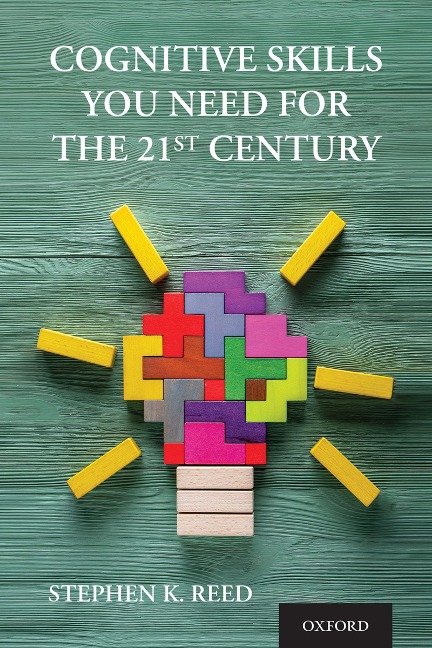
In Cognitive Skills You Need for the 21st Century, Stephen Reed discusses a Future of Jobs report that contrasts trending and declining skills required by the workforce in the year 2022. Trending skills include analytical thinking and innovation, active learning strategies, creativity, reasoning, and complex problem solving. Part One on Acquiring Knowledge contains chapters on cognitive processes that are critical for learning. Part Two on Organizing Knowledge explains how matrices, networks, and hierarchies offer contrasting methods for visualizing organization. Part Three on Reasoning discusses visuospatial reasoning, reasoning from imperfect knowledge, and reasoning strategies. Part Four on Problem Solving focuses on the knowledge and strategies required to solve different types of problems, including those that involve design and dynamic changes. Part Five on Artificial Intelligence contains chapters on the Data Sciences, Explanatory Models, the Information Sciences, and General AI. Part Six on Education consists of three chapters on educating 21st century skills at all levels of instruction. Research in Cognitive Psychology, Education, and AI provides the foundation for acquiring these skills.
Stephen Reed is an Emeritus Professor at San Diego State University and a visiting scholar at the University of California, San Diego. He served for seven years as the coordinator of a joint doctoral program between the two universities in mathematics and science education. He is the author of five books and is now working on the 2nd edition of Thinking Visually and the 10th edition of Cognition: Theory and Applications.
TOC Preface Introduction
Part One. Acquiring Knowledge
Chapter 1. Comprehension Chapter 2. Action Chapter 3. Categorization Chapter 4. Abstraction
Part Two. Organizing Knowledge
Chapter 5. Matrices Chapter 6. Networks Chapter 7. Hierarchies
Part Three. Reasoning
Chapter 8. Visuospatial Reasoning Chapter 9. Imperfect Knowledge Chapter 10. Reasoning Strategies
Part Four. Problem Solving
Chapter 11. Problems Chapter 12. Design Chapter 13. Dynamics
Part Five. Artificial Intelligence
Chapter 14. Data Sciences Chapter 15. Explainable AI Chapter 16. Information Sciences Chapter 17. General AI
Part Six. Education
Chapter 18. Complex Systems Chapter 19. Computational and Mathematical Thinking Chapter 20. Continuing Education
Notes References
Dieses eBook wird im PDF-Format geliefert und ist mit einem Adobe Kopierschutz (DRM) versehen. Sie können dieses eBook mit allen Geräten lesen, die das PDF-Format und den Adobe Kopierschutz (DRM) unterstützen.
Zum Beispiel mit den folgenden Geräten:
• tolino Reader
Laden Sie das eBook direkt über den Reader-Shop auf dem tolino herunter oder übertragen Sie das eBook auf Ihren tolino mit einer kostenlosen Software wie beispielsweise Adobe Digital Editions.
• Sony Reader & andere eBook Reader
Laden Sie das eBook direkt über den Reader-Shop herunter oder übertragen Sie das eBook mit der kostenlosen Software Sony READER FOR PC/Mac oder Adobe Digital Editions auf ein Standard-Lesegeräte mit epub- und Adobe DRM-Unterstützung.
• Tablets & Smartphones
Möchten Sie dieses eBook auf Ihrem Smartphone oder Tablet lesen, finden Sie hier unsere kostenlose Lese-App für iPhone/iPad und Android Smartphone/Tablets.
• PC & Mac
Lesen Sie das eBook direkt nach dem Herunterladen mit einer kostenlosen Lesesoftware, beispielsweise Adobe Digital Editions, Sony READER FOR PC/Mac oder direkt über Ihre eBook-Bibliothek in Ihrem Konto unter „Meine eBooks“ - „online lesen“.
Schalten Sie das eBook mit Ihrer persönlichen Adobe ID auf bis zu sechs Geräten gleichzeitig frei.
Bitte beachten Sie, dass die Kindle-Geräte das Format nicht unterstützen und dieses eBook somit nicht auf Kindle-Geräten lesbar ist.