Und dann auf "Zum Home-Bildschirm [+]".

Stöbern
genialokal zum Startbildschirm hinzufügen
Installieren Sie die genialokal App auf Ihrem Startbildschirm für einen schnellen Zugriff und eine komfortable Nutzung.
Installieren Sie die genialokal App auf Ihrem Startbildschirm für einen schnellen Zugriff und eine komfortable Nutzung.
Ihr gewünschter Artikel ist in 0 Buchhandlungen vorrätig - wählen Sie hier eine Buchhandlung in Ihrer Nähe aus:

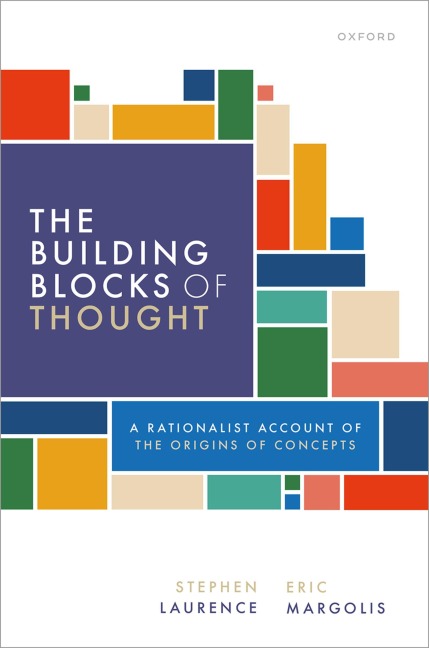
This is a broad and authoritative study of a central topic in the study of the mind: the origins of concepts. The authors a comprehensive rethinking of the foundations of the debate between rationalists and empiricists. They draw on a wealth of data across the cognitive sciences to make the case for a rationalist account, concept nativism.
Stephen Laurence is Professor of Philosophy at the University of Sheffield. He received his PhD in Philosophy at Rutgers University and taught at the University of Manchester, Hampshire College, the London School of Economics, and the University of Hull. He is Director of the Hang Seng Centre for Cognitive Studies and directed the AHRC Innateness and the Structure of the Mind Project and the AHRC Culture and the Mind Project. He is co-editor of The Conceptual Mind and Concepts: Core Readings (both The MIT Press) among other books, and has published numerous articles in both philosophical and scientific journals.
Eric Margolis is Professor of Philosophy at the University of British Columbia. He received his PhD in Philosophy at Rutgers University and taught at Rice University and the University of Wisconsin prior to his appointment at the University of British Columbia. He has received research funding from The Wisconsin Alumni Research Foundation, The Peter Wall Institute for Advanced Studies, and Canada's Social Science and Humanities Research Council. He is co-editor of The Oxford Handbook of Philosophy of Cognitive Science (OUP, 2012), and The Conceptual Mind (The MIT Press), among other books, and has published extensively in philosophical journals.
1: Introduction: Whatever Happened to the Debate Over Innate Ideas?
PART I: The Rationalism-Empiricism Debate
2: What the Rationalism-Empiricism Debate is Really About
3: Why the Rationalism-Empiricism Debate Isn't the Nature-Nurture Debate
4: The Viability of Rationalism
5: Abstraction and the Allure of Illusory Explanation
6: Concepts, Innateness, and Why Concept Nativism is about More Than Just Innate Concepts
7: Conclusion to Part I
PART II: Seven Arguments for Concept Nativism
8: The Argument from Early Development (1)
9: The Argument from Early Development (2)
10: The Argument from Animals
11: The Argument from Universality
12: The Argument from Initial Representational Access
13: The Argument from Neural Wiring
14: The Argument from Prepared Learning
15: The Argument from Cognitive and Behavioural Quirks
16: Conclusion to Part II
PART III. Alternative Empiricist Perspectives
17: Methodological Empiricism
18: Neo-Associationism
19: Artificial Neural Networks: From Connectionism to Deep Learning
20: Neuroconstructivism
21: Perceptual Meaning Analysis
22: Embodied Cognition
23: Conclusion to Part III
PART IV. Fodorian Concept Nativism
24: The Evolution of Fodor's Case Against Concept Learning
25: Not All Concepts Are Innate
26: Fodor's Biological Account of Concept Acquisition-and the Importance of Cultural Learning
27: Conclusion to Part IV
28: Coda: Innate Ideas Revisited