Und dann auf "Zum Home-Bildschirm [+]".

Stöbern
genialokal zum Startbildschirm hinzufügen
Installieren Sie die genialokal App auf Ihrem Startbildschirm für einen schnellen Zugriff und eine komfortable Nutzung.
Installieren Sie die genialokal App auf Ihrem Startbildschirm für einen schnellen Zugriff und eine komfortable Nutzung.
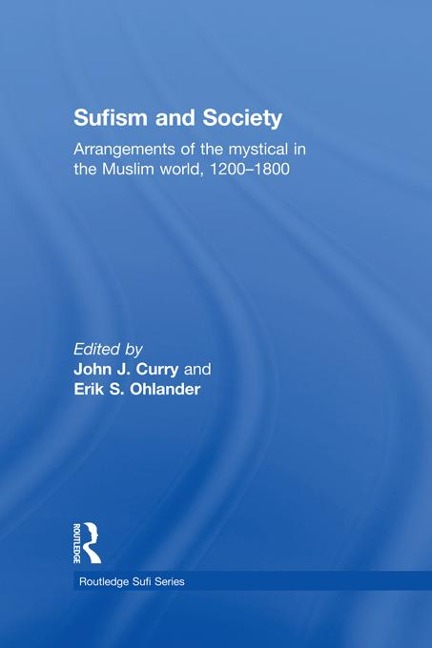
In recent years, many historians of Islamic mysticism have been grappling in sophisticated ways with the difficulties of essentialism. Reconceptualising the study of Islamic mysticism during an under-researched period of its history, this book examines the relationship between Sufism and society in the Muslim world, from the fall of the Abbasid caliphate to the heyday of the great Ottoman, Mughal and Safavid empires. Treating a heretofore under-researched period in the history of Sufism, this work establishes previously unimagined trajectories for the study of mystical movements as social actors of real historical consequence. Thematically organized, the book includes case studies drawn from the Middle Eastern, Turkic, Persian and South Asian regions by a group of scholars whose collective expertise ranges widely across different historical, geographical, and linguistic landscapes. Chapters theorise why, how, and to what ends we might reconceptualise some of the basic methodologies, assumptions, categories of thought, and interpretative paradigms which have heretofore shaped treatments of Islamic mysticism and its role in the social, cultural and political history of pre-modern Muslim societies. Proposing novel and revisionist treatments of the subject based on the examination of many under-utilized sources, the book draws on a number of disciplinary perspectives and methodological approaches, from art history to religious studies. As such, it will appeal to students and scholars of Middle East studies, religious history, Islamic studies and Sufism.
John J. Curry is Assistant Professor of History at the University of Nevada, Las Vegas, where he has taught courses in Islamic and world history since 2006. His most recent research has focused on Ottoman Sufi orders, and he has recently published The Transformation of Muslim Mystical Thought in the Ottoman Empire: The Rise of the Halveti Order, 1350-1650. Erik S. Ohlander is Associate Professor of Religious Studies at Indiana University--Purdue University Fort Wayne. An historian of religion and specialist in Islamic studies, he has written widely in the areas of Islamic mysticism, Qur'anic studies, and Islamic intellectual history and religious movements.
Introduction Part I: Historiography 1. Intersections between Sufism and Power: Narrating the Shaykhs and Sultans of Northern India, 1200-1400 2. Mecca Real and Imagined: Texts, Transregional Networks and the Curious Case of Baha' al-Din Zakariyya of Multan 3. Hagiography, Court Records, and Early Modern Sufi Brotherhoods: Shaykh Khalid and Social Movement Theory Part II: Landscapes 4. Mystical Authority and Governmentality in Medieval Islam 5. Writing Down the Feats and Setting up the Scene: Hagiographers and Architectural Patrons in the Age of Empires 6. Between Patron and Piety: Jahan Ara Begam's Sufi Affiliations and Articulations in Seventeenth-century Mughal India Part III: Praxis 7. Between Center and Periphery: The Development of the Sufi Fatwa in Late-Medieval Egypt 8. Inventing a Sufi Tradition: The Use of the Futuwwa Ritual Gathering as a Model for the Qizilbash Djem 9. Isma'il Rusuhi Ankaravi: An Early Mevlevi Intervention into the Emerging Kadizadeli-Sufi Conflict Part IV: Negotiations 10. Banishment, Persecution and Incarceration: Ibrahim-i Gülseni's Years as a Subversive Force During the Final Years of the Mamluk Sultanate, ca. 1507-1517 11. "The Meeting of the Two Sultans:" Three Sufi Mystics Negotiate with the Court of Murad III 12. In the Dream Realm of a Sixteenth-century Ottoman Biographer: Tasköprizade and the Sufi Shaykhs
Dieses eBook wird im PDF-Format geliefert und ist mit einem Adobe Kopierschutz (DRM) versehen. Sie können dieses eBook mit allen Geräten lesen, die das PDF-Format und den Adobe Kopierschutz (DRM) unterstützen.
Zum Beispiel mit den folgenden Geräten:
• tolino Reader
Laden Sie das eBook direkt über den Reader-Shop auf dem tolino herunter oder übertragen Sie das eBook auf Ihren tolino mit einer kostenlosen Software wie beispielsweise Adobe Digital Editions.
• Sony Reader & andere eBook Reader
Laden Sie das eBook direkt über den Reader-Shop herunter oder übertragen Sie das eBook mit der kostenlosen Software Sony READER FOR PC/Mac oder Adobe Digital Editions auf ein Standard-Lesegeräte mit epub- und Adobe DRM-Unterstützung.
• Tablets & Smartphones
Möchten Sie dieses eBook auf Ihrem Smartphone oder Tablet lesen, finden Sie hier unsere kostenlose Lese-App für iPhone/iPad und Android Smartphone/Tablets.
• PC & Mac
Lesen Sie das eBook direkt nach dem Herunterladen mit einer kostenlosen Lesesoftware, beispielsweise Adobe Digital Editions, Sony READER FOR PC/Mac oder direkt über Ihre eBook-Bibliothek in Ihrem Konto unter „Meine eBooks“ - „online lesen“.
Schalten Sie das eBook mit Ihrer persönlichen Adobe ID auf bis zu sechs Geräten gleichzeitig frei.
Bitte beachten Sie, dass die Kindle-Geräte das Format nicht unterstützen und dieses eBook somit nicht auf Kindle-Geräten lesbar ist.