Und dann auf "Zum Home-Bildschirm [+]".

Stöbern
genialokal zum Startbildschirm hinzufügen
Installieren Sie die genialokal App auf Ihrem Startbildschirm für einen schnellen Zugriff und eine komfortable Nutzung.
Installieren Sie die genialokal App auf Ihrem Startbildschirm für einen schnellen Zugriff und eine komfortable Nutzung.
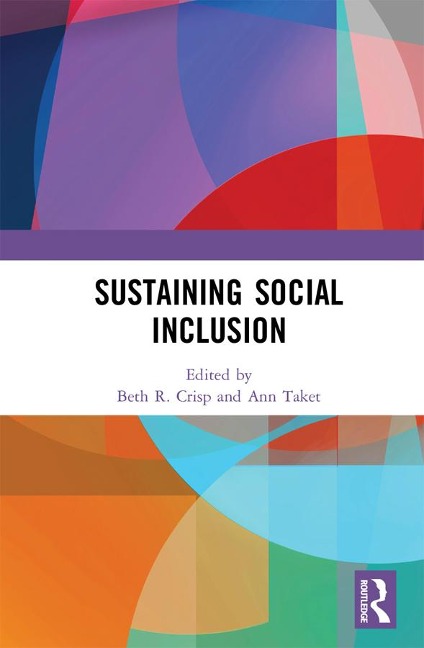
Sustaining Social Inclusion is the third book in a series on social exclusion and social inclusion. It explores what different understandings of sustainability mean in respect of social inclusion in the variety of fields that deal with human health and well-being. The book is global in its scope, with chapters relating to socially inclusive health and social welfare practice internationally. This book is divided into seven parts: - Introduction; - Sustainable policies for promoting social inclusion; - Sustaining programmes which support social inclusion; - Sustaining organisations which promote social inclusion; - Sustainable social inclusion outcomes; - Sustainable social development; and - Conclusions. It examines how social inclusion can be sustained in the long-term when funding tends to be time-limited. This research-based book is relevant to a wide range of different readerships globally. It addresses issues of concern for those engaged in debates about the provision of health, social welfare, and other public services. Sustaining Social Inclusion will be of interest to academics, policy makers, and practitioners in a wide range of fields, including public health, health promotion, health sciences, history, medicine, philosophy, disability studies, social work, social policy, sociology, and urban planning.
Beth R. Crisp is Professor and Discipline Lead in Social Work, Deakin University, Australia, and a member of the Centre for Health through Action on Social Exclusion (CHASE). Ann Taket held the Chair in Health and Social Exclusion and was Director of CHASE, Deakin University, Australia until her retirement at the end of 2019.
List of illustrations. List of contributors. List of acronyms. Part 1: Introduction. 1 Approaches to sustaining social inclusion, Beth R. Crisp and Ann Taket. Part 2: Sustainable policies for promoting social inclusion. 2 The transformative journey to sustainability for Australia's compensation systems: how peer support and restorative justice interventions are creating a new inclusive narrative, John Bottomley, Bette Phillips-Campbell and Gordon Traill. 3 Sustaining social inclusion: lessons from research, intervention and policy making, Tamar Kabakian-Khasholian, Rana Saleh, Jihad Makhoul and Fadi El-Jardali. 4 Social policy to support women's reproductive decision-making and access to economic participation and resources: an Australian case study, Melissa Graham, Hayley McKenzie and Greer Lamaro Haintz. 5 Not impossible: working with the Deafblind community to develop a more inclusive world, Alana Roy, Beth R. Crisp, Keith McVilly. Part 3: Sustaining programmes which support social inclusion. 6 Opening Doors: creating and sustaining community leadership for promoting social inclusion, Ann Taket, Alex Mills, Sally-Ann Nadj and Ronda Held. 7 Responding to hunger in Australia: the role of traditional and emerging food distribution measures in addressing food insecurity, Fiona H. McKay. 8 Developing inclusion in a small town food service, Rohena Duncombe, Joe Fay, Gwen Gould, Charlie Fay, Malcolm Fay, Julia Harrington, Kuatarina Mount, Brian Neale and Suzanne Arnold. Part 4: Sustaining organisations which promote social inclusion. 9 How to imagine, and make, good universities, Raewyn Connell. 10 Four decades-plus of promoting inclusion to higher education, Beth R. Crisp. 11 Socially inclusive service development: a new expression of democracy for non-democratic organisations delivering social care, Sarah Pollock. 12 The space to think critically: how supervision can support sustainable practice in social service organisations, Matt Rankine and Liz Beddoe. Part 5: Sustainable social inclusion outcomes. 13 Embedding change: designing short term projects for sustainable effects, Elena Jenkin, Erin Wilson, Robert Campain, Kevin Murfitt, and Matthew Clarke. 14 Philosophy and ethics: sustaining social inclusion in the disability sector, Emma Rush, Monica Short, Giselle Burningham and Joan Cartledge. 15 Spirituality and religion: sustaining individuals and communities or replicating colonisation? Beth R. Crisp. 16 A 'good news' story of social inclusion: refugee resettlement in Australia, Kim Robinson. Part 6: Sustainable social development. 17 Strengthening everyday peace formation via community development In Myanmar's Rohingya-Rakhine conflict, Vicki-Ann Ware and Anthony Ware. 18 Sustaining inclusion through work: livelihoods experience of rural Indonesian villagers with disability, Ekawati Liu, Yuhda Wahyu, Irfan Kortschak, Hezti Insriani and Erin Wilson. 19 The potential of Information and Communication Technology (ICT) to create sustainable caring communities, Zsolt Bugarszki. 20 Building an accessible and inclusive city, Richard Tucker, Louise Johnson, Patsie Frawley, Kevin Murfitt, Fiona Andrews and David Kelly. 21 Theatre-based programmes: promoting empathy and engagement, Ann Taket. Part 7: Conclusions. 22 Strategies for sustaining social inclusion, Beth R. Crisp and Ann Taket. Index.
Dieses eBook wird im PDF-Format geliefert und ist mit einem Adobe Kopierschutz (DRM) versehen. Sie können dieses eBook mit allen Geräten lesen, die das PDF-Format und den Adobe Kopierschutz (DRM) unterstützen.
Zum Beispiel mit den folgenden Geräten:
• tolino Reader
Laden Sie das eBook direkt über den Reader-Shop auf dem tolino herunter oder übertragen Sie das eBook auf Ihren tolino mit einer kostenlosen Software wie beispielsweise Adobe Digital Editions.
• Sony Reader & andere eBook Reader
Laden Sie das eBook direkt über den Reader-Shop herunter oder übertragen Sie das eBook mit der kostenlosen Software Sony READER FOR PC/Mac oder Adobe Digital Editions auf ein Standard-Lesegeräte mit epub- und Adobe DRM-Unterstützung.
• Tablets & Smartphones
Möchten Sie dieses eBook auf Ihrem Smartphone oder Tablet lesen, finden Sie hier unsere kostenlose Lese-App für iPhone/iPad und Android Smartphone/Tablets.
• PC & Mac
Lesen Sie das eBook direkt nach dem Herunterladen mit einer kostenlosen Lesesoftware, beispielsweise Adobe Digital Editions, Sony READER FOR PC/Mac oder direkt über Ihre eBook-Bibliothek in Ihrem Konto unter „Meine eBooks“ - „online lesen“.
Schalten Sie das eBook mit Ihrer persönlichen Adobe ID auf bis zu sechs Geräten gleichzeitig frei.
Bitte beachten Sie, dass die Kindle-Geräte das Format nicht unterstützen und dieses eBook somit nicht auf Kindle-Geräten lesbar ist.