Und dann auf "Zum Home-Bildschirm [+]".

Stöbern
genialokal zum Startbildschirm hinzufügen
Installieren Sie die genialokal App auf Ihrem Startbildschirm für einen schnellen Zugriff und eine komfortable Nutzung.
Installieren Sie die genialokal App auf Ihrem Startbildschirm für einen schnellen Zugriff und eine komfortable Nutzung.
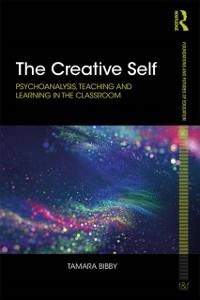
The Creative Self engages with the work of the psychoanalyst D.W. Winnicott to develop alternative ways of thinking about key issues at the heart of pedagogy; specifically pedagogic relationships, creativity, defiance and compliance. These issues underpin the desires and defences of professionals located in educational institutions, such as the desire to know what is best, to know how to reach all learners, normalised expectations of behaviours and outcomes, and sometimes challenging engagements with students and the curriculum. Each chapter provides both a theoretical focus and illustrative demonstrations of the ways in which Winnicott's theories may be relocated and used productively as tools for professional and academic reflexivity. By building extensively on Winnicott's understanding of the ways in which relationships facilitate (or hinder) the development of the self, this book extends his clinical focus on parental and analytical relationships to think about the ways in which the pedagogic relationship can provide an environment in which people may (or may fail to) develop as learners. This approach provides powerful ways of thinking about pedagogy and pedagogic relationships that stand apart from the cognitive and rationalist tradition. This focus can be used constructively to support people working in educational settings to re-establish a sense of personal and professional autonomy in an environment recently typified by compliance. The Creative Self is an engaging and innovative read appealing to postgraduate students, teachers, researchers and academics with a desire for a new analytic lens through which to explore the educational experiences of both learners and teachers in schools, colleges and universities.
Tamara Bibby is an independent researcher and writer, previously at University College London, Institute of Education, UK.
1. Introduction Part I: Things that go right 2. The origins and meaning of wellness 3. Becoming a person: Winnicott's developmental story 4. Communication. Maybe. 5. Creativity and play: listening to oneself Part II: Things that go wrong 6. The roots of compliance and non-compliance: True and False Self Structures revisted 7. All the good girls and boys: compliance and its vicissitudes 8. Defiance: insult or sign of hope? Part III: Working it through 9. Hate and being a good enough teacher 10. Institutions: both mad and maddening
Dieses eBook wird im PDF-Format geliefert und ist mit einem Adobe Kopierschutz (DRM) versehen. Sie können dieses eBook mit allen Geräten lesen, die das PDF-Format und den Adobe Kopierschutz (DRM) unterstützen.
Zum Beispiel mit den folgenden Geräten:
• tolino Reader
Laden Sie das eBook direkt über den Reader-Shop auf dem tolino herunter oder übertragen Sie das eBook auf Ihren tolino mit einer kostenlosen Software wie beispielsweise Adobe Digital Editions.
• Sony Reader & andere eBook Reader
Laden Sie das eBook direkt über den Reader-Shop herunter oder übertragen Sie das eBook mit der kostenlosen Software Sony READER FOR PC/Mac oder Adobe Digital Editions auf ein Standard-Lesegeräte mit epub- und Adobe DRM-Unterstützung.
• Tablets & Smartphones
Möchten Sie dieses eBook auf Ihrem Smartphone oder Tablet lesen, finden Sie hier unsere kostenlose Lese-App für iPhone/iPad und Android Smartphone/Tablets.
• PC & Mac
Lesen Sie das eBook direkt nach dem Herunterladen mit einer kostenlosen Lesesoftware, beispielsweise Adobe Digital Editions, Sony READER FOR PC/Mac oder direkt über Ihre eBook-Bibliothek in Ihrem Konto unter „Meine eBooks“ - „online lesen“.
Schalten Sie das eBook mit Ihrer persönlichen Adobe ID auf bis zu sechs Geräten gleichzeitig frei.
Bitte beachten Sie, dass die Kindle-Geräte das Format nicht unterstützen und dieses eBook somit nicht auf Kindle-Geräten lesbar ist.