Und dann auf "Zum Home-Bildschirm [+]".

Stöbern
genialokal zum Startbildschirm hinzufügen
Installieren Sie die genialokal App auf Ihrem Startbildschirm für einen schnellen Zugriff und eine komfortable Nutzung.
Installieren Sie die genialokal App auf Ihrem Startbildschirm für einen schnellen Zugriff und eine komfortable Nutzung.
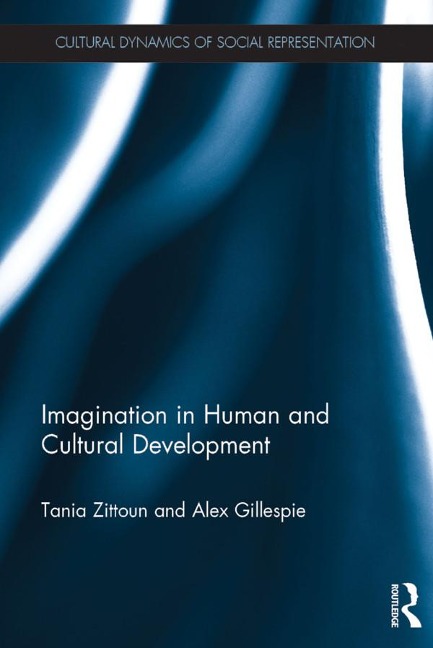
This book positions imagination as a central concept which increases the understanding of daily life, personal life choices, and the way in which culture and society changes. Case studies from micro instances of reverie and daydreaming, to utopian projects, are included and analysed. The theoretical focus is on imagination as a force free from immediate constraints, forming the basis of our individual and collective agency. In each chapter, the authors review and integrate a wide range of classic and contemporary literature culminating in the proposal of a sociocultural model of imagination. The book takes into account the triggers of imagination, the content of imagination, and the outcomes of imagination. At the heart of the model is the interplay between the individual and culture; an exploration of how the imagination, as something very personal and subjective, grows out of our shared culture, and how our shared culture can be transformed by acts of imagination. Imagination in Human and Cultural Development offers new perspectives on the study of psychological learning, change, innovation and creativity throughout the lifespan. The book will appeal to academics and scholars in the fields of psychology and the social sciences, especially those with an interest in development, social change, cultural psychology, imagination and creativity.
Tania Zittoun is Professor at the Institute of Psychology and Education at the University of Neuchâtel, Switzerland. She studies human development through the lifecourse, with a particular focus on how people make sense of, and create, their own trajectories. Alex Gillespie is Associate Professor in Social Psychology at the London School of Economics, UK. He studies social interaction, specifically how it produces novelty, creates our sense of self, and enables society to reproduce itself.
Preface 1. Imagination: A sociocultural approach 2. The Centrality of Imagination to Everyday Life 3. The Loop of Imagination 4. Resources for Imagination 5. Imagination in Situated Activities 6. Imagination in the Lifecourse 7. Imagination in Societal Change 8. Imagination as Freedom References
Dieses eBook wird im PDF-Format geliefert und ist mit einem Adobe Kopierschutz (DRM) versehen. Sie können dieses eBook mit allen Geräten lesen, die das PDF-Format und den Adobe Kopierschutz (DRM) unterstützen.
Zum Beispiel mit den folgenden Geräten:
• tolino Reader
Laden Sie das eBook direkt über den Reader-Shop auf dem tolino herunter oder übertragen Sie das eBook auf Ihren tolino mit einer kostenlosen Software wie beispielsweise Adobe Digital Editions.
• Sony Reader & andere eBook Reader
Laden Sie das eBook direkt über den Reader-Shop herunter oder übertragen Sie das eBook mit der kostenlosen Software Sony READER FOR PC/Mac oder Adobe Digital Editions auf ein Standard-Lesegeräte mit epub- und Adobe DRM-Unterstützung.
• Tablets & Smartphones
Möchten Sie dieses eBook auf Ihrem Smartphone oder Tablet lesen, finden Sie hier unsere kostenlose Lese-App für iPhone/iPad und Android Smartphone/Tablets.
• PC & Mac
Lesen Sie das eBook direkt nach dem Herunterladen mit einer kostenlosen Lesesoftware, beispielsweise Adobe Digital Editions, Sony READER FOR PC/Mac oder direkt über Ihre eBook-Bibliothek in Ihrem Konto unter „Meine eBooks“ - „online lesen“.
Schalten Sie das eBook mit Ihrer persönlichen Adobe ID auf bis zu sechs Geräten gleichzeitig frei.
Bitte beachten Sie, dass die Kindle-Geräte das Format nicht unterstützen und dieses eBook somit nicht auf Kindle-Geräten lesbar ist.