Und dann auf "Zum Home-Bildschirm [+]".

Stöbern
genialokal zum Startbildschirm hinzufügen
Installieren Sie die genialokal App auf Ihrem Startbildschirm für einen schnellen Zugriff und eine komfortable Nutzung.
Installieren Sie die genialokal App auf Ihrem Startbildschirm für einen schnellen Zugriff und eine komfortable Nutzung.
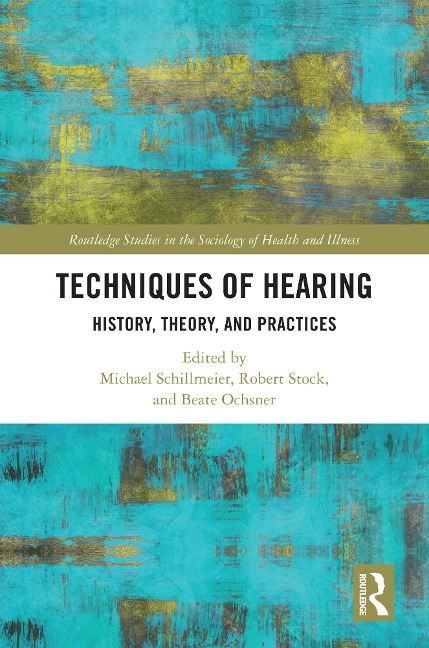
Hearing, health, and technologies are entangled in multi-faceted ways. This edited volume addresses this complex relationship by arguing that modern hearing was and is increasingly linked to and mediated by technological innovations. By providing a set of original interdisciplinary investigations that shed new light on the history, theory, and practices of hearing techniques, it is able to explore the heterogeneous entanglements of sound, hearing practices, technologies, and health issues. As the first book to bring together historians, scholars from media studies, social sciences, cultural studies, acoustics, and neuroscientists, the volume discusses modern technologies and their decisive impact on how "normal" hearing, enhanced and smart hearing, as well as hearing impairment have been configured. It brings both new insights into the histories of hearing technologies as well as allowing us to better understand how enabling hearing technologies have currently been unfolding an increasingly hybrid ecology engaging smart hearing devices and offering stress-free hearing and acoustic well-being in novel auditory environments. The volume will be of interest to all scholars and students of disability studies, sound studies, sociology of health and illness, medical history, health and society, as well as those interested in the practices and techniques of self-monitored and smart hearing.
Michael Schillmeier is Professor for Sociology at the Department of Sociology, Philosophy and Anthropology at the University of Exeter (UK). He is widely published, investigating the empirical and conceptual understanding of the social and societal. Fields of interdisciplinary research include Science, Technology and Society (STS), Health and Illness, Disability Studies, Bodies, Senses, and Art. Robert Stock is Assistant Professor for Cultures of Knowledge at the Department of Cultural History and Theory at Humboldt-Universität zu Berlin. His main research interests are cultures of knowledge, digital media and dis/abilities, politics of inclusion and access work. He is co-founder of the scientific network Dis/Abilities and Digital Media funded by German Research Foundation, DFG. Beate Ochsner is Professor of Media Studies at the University of Konstanz. She is spokeswoman for the research unit "Media and participation" (mediaandparticipation.com) where she also heads the project "Techno-sensory processes of participation". Her research focuses on participatory media cultures, intersections between media and dis/ability, and gaming cultures.
1.An Unquiet Quiet: The History and 'Smart' Politics of Sound Masking in the Office. 2.Technologies of Silence. 3.Pleasure and Pain with Amplified Sound: A Sound and Music History of Loudspeaker Systems in Germany, ca. 1930. 4.Measuring Listening Effort: An Attempt to Quantify Mental Exertion. 5.Hearing Echoes as an Audile Technique: From "Facial Vision" to Experimental Psychology and Echolocation. 6.Mobile Music Listening and the Self-Management of Health and Well-Being. 7.Better Hearing for All - Smart Solutions for the Clinical, Subclinical and Normal-Hearing Population. 8."The Future is Ear" (Hunn 2014): Infrastructures of 'Smart Hearing'. 9.Listening or Reading? Rethinking Ableism in Relation to the Senses and (Acoustic) Text. 10.Binaural Gaming Arrangements: Techno-Sensory Configurations of Playing the Audio Game A Blind Legend. 11.Hearing Like an Animal: Exploring Acoustic Experience Beyond Human Ears. 12."Adaptive Environments": Ambient Media and the Temporalities of Sonic Selfcare. 13.The Shepherd's Farewell: Shared Hearing as (a Mode of) Healing - Music, Imagery and Emotion-Neural Dynamics. 14.Dis/abling Smartness: AAC Devices, Music and Acoustic Wellbeing.
Dieses eBook wird im PDF-Format geliefert und ist mit einem Adobe Kopierschutz (DRM) versehen. Sie können dieses eBook mit allen Geräten lesen, die das PDF-Format und den Adobe Kopierschutz (DRM) unterstützen.
Zum Beispiel mit den folgenden Geräten:
• tolino Reader
Laden Sie das eBook direkt über den Reader-Shop auf dem tolino herunter oder übertragen Sie das eBook auf Ihren tolino mit einer kostenlosen Software wie beispielsweise Adobe Digital Editions.
• Sony Reader & andere eBook Reader
Laden Sie das eBook direkt über den Reader-Shop herunter oder übertragen Sie das eBook mit der kostenlosen Software Sony READER FOR PC/Mac oder Adobe Digital Editions auf ein Standard-Lesegeräte mit epub- und Adobe DRM-Unterstützung.
• Tablets & Smartphones
Möchten Sie dieses eBook auf Ihrem Smartphone oder Tablet lesen, finden Sie hier unsere kostenlose Lese-App für iPhone/iPad und Android Smartphone/Tablets.
• PC & Mac
Lesen Sie das eBook direkt nach dem Herunterladen mit einer kostenlosen Lesesoftware, beispielsweise Adobe Digital Editions, Sony READER FOR PC/Mac oder direkt über Ihre eBook-Bibliothek in Ihrem Konto unter „Meine eBooks“ - „online lesen“.
Schalten Sie das eBook mit Ihrer persönlichen Adobe ID auf bis zu sechs Geräten gleichzeitig frei.
Bitte beachten Sie, dass die Kindle-Geräte das Format nicht unterstützen und dieses eBook somit nicht auf Kindle-Geräten lesbar ist.