Und dann auf "Zum Home-Bildschirm [+]".

Stöbern
genialokal zum Startbildschirm hinzufügen
Installieren Sie die genialokal App auf Ihrem Startbildschirm für einen schnellen Zugriff und eine komfortable Nutzung.
Installieren Sie die genialokal App auf Ihrem Startbildschirm für einen schnellen Zugriff und eine komfortable Nutzung.
Ihr gewünschter Artikel ist in 0 Buchhandlungen vorrätig - wählen Sie hier eine Buchhandlung in Ihrer Nähe aus:

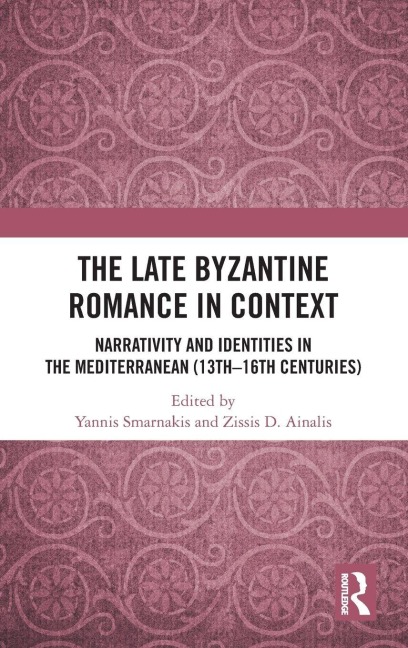

This book investigates issues of identity and narrativity in late Byzantine romances in a Mediterranean context, covering the chronological span from the capture of Constantinople by the Crusaders in 1204 to the sixteenth century.
Yannis Smarnakis is a lecturer in the Social and Cultural History of Byzantium at the University of the Aegean, Greece. He specializes in the social and cultural history of the Late Byzantine era, focusing on issues related to the construction of identities and otherness, the history of political thought, perceptions of the past, urban revolts, and the historiography of Byzantium. His most recent monograph is Byzantine Renaissance and Utopia: Plethon and the Despotate of Morea, published in Greek in 2017. Zissis D. Ainalis studied medieval and modern Greek philology at the University of Ioannina and holds a PhD in history from the Université Paris 1 Panthéon-Sorbonne. He is a postdoctoral researcher in the Department of Social Anthropology and History of the University of the Aegean, Greece, and is a PI of the research program "The World of the Palaiologan Romance: Representations of Self and Society in the Greek Narrative Works of the Late Medieval Period." His research focuses on Greek-language narrative works from late antiquity to the end of the Byzantine period.
1. Introduction: a) Identities and narrativity in a Mediterranean context (13th-16th centuries): a brief introduction Yannis Smarnakis b) The Late Byzantine romance in context Zissis D. Ainalis 2. The narrator's voice: narrative and representation of the self in the Late Byzantine romances Zissis D. Ainalis 3. Western cultural ways and their perception in Palaiologan narratives: some cases from historiography and vernacular romances Nafsika Vassilopoulou 4. The Forty Viziers and the Ottoman sultans: offering advice and expressing critique in the 1440s Eleni Gara 5. East and the eastern other in the imaginary of Byzantine romance Zoi Kokka 6. An "emperor" under the guise of a Moses: narrative representations of the East in Philippe de Mézières' Songe du viel pelerin Eleni Tounta 7. Narrative representations of space in the tale of Imperios and Margarona: constructing the image of a "global" mediterranean for a popular audience Yannis Smarnakis 8. Fathers, sons and brothers: the succession to the throne and the construction of masculinities in Velthandros and Chrysantza and Kallimachos and Chrysorrhoe Konstantinos Karatolios 9. The virgin and the soldier, the monk and the whore: gendered metonymy and confessional resistance in the post-Byzantine world Yorgos Tzedopoulos