Und dann auf "Zum Home-Bildschirm [+]".

Stöbern
genialokal zum Startbildschirm hinzufügen
Installieren Sie die genialokal App auf Ihrem Startbildschirm für einen schnellen Zugriff und eine komfortable Nutzung.
Installieren Sie die genialokal App auf Ihrem Startbildschirm für einen schnellen Zugriff und eine komfortable Nutzung.
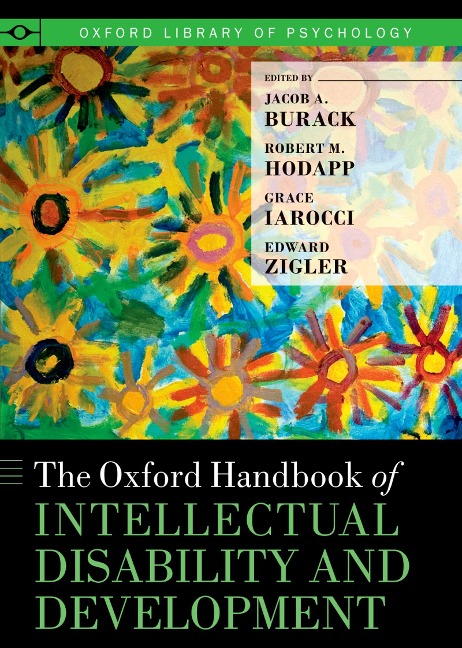
Though the tremendous amount of recently-emerged developmentally-oriented research has produced much progress in understanding the personality, social, and emotional characteristics of persons with intellectual disabilities (ID), there is still much we don't know, and the vast task of precisely charting functioning in all these areas, while also identifying the associated fine-tuned, complex, and intertwined questions that crop up along the way, seems daunting and insurmountable. The goal of The Oxford Handbook of Intellectual Disability and Development is to update the field with new, precise research and sophisticated theory regarding individuals with ID provided by seasoned developmental theorists who have made original conceptual contributions to the field. This volume is divided into five general sections (ID and its connection to genetics, relationships, cognitive development, socio-emotional development, and development of language), with each focused on a domain of functioning or aspect of life that is inherent to an integrated, transactional perspective of development. While developmental approaches to understanding persons with intellectual disability will continue to emerge, this comprehensive volume is a must-read for specialists and developmental psychologists who must have the conceptual foundations for examining the developmental trajectories across persons with any of the many different ID etiologies.
Jacob A. Burack, Ph.D., is Professor of School/Applied Developmental Psychology and Human Development in the Department of Educational and Counselling Psychology at McGill University, Director of the McGill Youth Study Team (MYST), and a researcher at Hôpital Rivière-des-Prairies.
Robert M. Hodapp, Ph.D., is a Professor of Special Education in the Department of Special Education at Vanderbilt Peabody College and Director of Research at Vanderbilt University Center for Excellence in Developmental Disabilities.
Grace Iarocci, Ph.D., is Associate Professor of Developmental and Clinical Psychology in the Department of Psychology at Simon Fraser University, a Michael Smith Foundation for Health Research Scholar, and Director of the Autism and Developmental Disorders Lab at SFU.
Edward Zigler, Ph.D., is Sterling Professor of Psychology (Emeritus) at Yale University, founder and Director Emeritus of Yale's Edward Zigler Center in Child Development and Social Policy. He is a member of the Institute of Medicine and the American Academy of Arts and Sciences. In the 1970's, he was the founding Director of the U.S. Office of Child Development (now ACYF) and Chief of the U.S. Children's Bureau.
Part One: Introduction and Overview
1. The More You Know the Less You Know, But That's OK: Developments in the Developmental Approach to Intellectual Disability Jacob A. Burack, Natalie Russo, Heidi Flores, Grace Iarocci, and Edward Zigler
Part Two: Genes and Behavior
2. Behavioural Genetics, Genomics, Intelligence, and Mental Retardation Grace Iarocci and Stephen A. Petrill
3. The Contribution of Developmental Models towards Understanding Gene-to-Behavior Mapping: The Case of Williams Syndrome Mayada Elsabbagh & Annette Karmiloff-Smith
4. Linking Genes to Cognition: The Case of Fragile X Syndrome Kim M. Cornish, Armando Bertone, Cary S. Kogan, and Gaia Scerif
Part Three: Cognitive Development
5. The Organization and Development of Spatial Representation: Insights from Williams Syndrome Barbara Landau
6. Understanding the Development of Attention in Persons with Intellectual Disability: Challenging the Myths Grace Iarocci, Mafalda Porporino, James T. Enns, and Jacob A. Burack
7. Memory and Learning in Intellectual Disabilities Stefano Vicari
8. Short-Term Memory and Working Memory in Mental Retardation Christopher Jarrold and Jon Brock
9. Executive Function across Syndromes Associated with Intellectual Disabilities: A Developmental Perspective Natalie Russo, Tamara Dawkins, Mariëtte Huizinga, and Jacob A. Burack
10. Musical Ability and Developmental Disorders Anjali K. Bhatara, Eve-Marie Quintin, and Daniel J. Levitin
11. Brain-Based Methods in the Study of Developmental Disabilities: Examples from ERP and MRI Research Alexandra P.F. Key and Tricia A. Thornton-Well
Part Four: Language Development
12. Language Development in Childhood, Adolescence, and Young Adulthood in Persons with Down Syndrome Robin S. Chapman and Elizabeth Kay-Raining Bird
13. Literacy Development in Childhood, Adolescence, and Young Adulthood in Persons with Down Syndrome Elizabeth Kay-Raining Bird and Robin S. Chapman
14. Language Development in Fragile X Syndrome: Syndrome-Specific Features, Within-Syndrome Variation, and Contributing Factors Leonard Abbeduto, Andrea McDuffie, Nancy Brady, and Sara T. Kover
15. Language Development in Williams Syndrome Carolyn B. Mervis
Part Five: Social-Emotional Development
16. Emotional Development in Children with Developmental Disabilities Connie Kasari, Laudan Jahromi, and Amanda Gulsrud
17. Socio-emotional and Brain Development in Children with Genetic Syndromes Associated with Developmental Delay Alison Niccols, Karen Thomas, and Louis A. Schmidt
18. The Assessment and Presentation of Autism Spectrum Disorder and Associated Characteristics in Individuals with Severe Intellectual Disability and Genetic Syndromes Joanna Moss, Patricia Howlin, and Chris Oliver
Part Six: Family and Context
19. Family Well-being and Children with Intellectual Disability Laraine Masters Glidden
20. Dyadic Interaction between Mothers and Children with Down Syndrome or Williams Syndrome: Empirical Evidence and Emerging Agendas Penny Hauser-Cram, Angela N. Howell-Moneta, and Jessica Mercer Young
21. Parenting and Mental Retardation: An attachment perspective Rinat Feniger-Schaal, David Oppenheim, Nina Koren-Karie, and Nurit Yirmiya
22. Children with Down Syndrome: Parents' Perspectives Michal Al-Yagon and Malka Margalit
23. Child Eliciting Effects in Families of Children with Intellectual Disability: Proximal and Distal Perspectives Deborah J. Fidler
24. Life Course Perspectives in Intellectual Disability Research: The Case of Family Caregiving Anna J. Esbensen, Marsha Mailick Seltzer, and Marty Wyngaarden Krauss
Part Seven: Conclusions and Future Directions
25. On Knowing More: Future Issues for Developmental Approaches to Intellectual Disabilities Jacob A. Burack, Robert M. Hodapp, Grace Iarocci, and Edward Zigler
Index
Dieses eBook wird im PDF-Format geliefert und ist mit einem Adobe Kopierschutz (DRM) versehen. Sie können dieses eBook mit allen Geräten lesen, die das PDF-Format und den Adobe Kopierschutz (DRM) unterstützen.
Zum Beispiel mit den folgenden Geräten:
• tolino Reader
Laden Sie das eBook direkt über den Reader-Shop auf dem tolino herunter oder übertragen Sie das eBook auf Ihren tolino mit einer kostenlosen Software wie beispielsweise Adobe Digital Editions.
• Sony Reader & andere eBook Reader
Laden Sie das eBook direkt über den Reader-Shop herunter oder übertragen Sie das eBook mit der kostenlosen Software Sony READER FOR PC/Mac oder Adobe Digital Editions auf ein Standard-Lesegeräte mit epub- und Adobe DRM-Unterstützung.
• Tablets & Smartphones
Möchten Sie dieses eBook auf Ihrem Smartphone oder Tablet lesen, finden Sie hier unsere kostenlose Lese-App für iPhone/iPad und Android Smartphone/Tablets.
• PC & Mac
Lesen Sie das eBook direkt nach dem Herunterladen mit einer kostenlosen Lesesoftware, beispielsweise Adobe Digital Editions, Sony READER FOR PC/Mac oder direkt über Ihre eBook-Bibliothek in Ihrem Konto unter „Meine eBooks“ - „online lesen“.
Schalten Sie das eBook mit Ihrer persönlichen Adobe ID auf bis zu sechs Geräten gleichzeitig frei.
Bitte beachten Sie, dass die Kindle-Geräte das Format nicht unterstützen und dieses eBook somit nicht auf Kindle-Geräten lesbar ist.