Und dann auf "Zum Home-Bildschirm [+]".

Stöbern
genialokal zum Startbildschirm hinzufügen
Installieren Sie die genialokal App auf Ihrem Startbildschirm für einen schnellen Zugriff und eine komfortable Nutzung.
Installieren Sie die genialokal App auf Ihrem Startbildschirm für einen schnellen Zugriff und eine komfortable Nutzung.
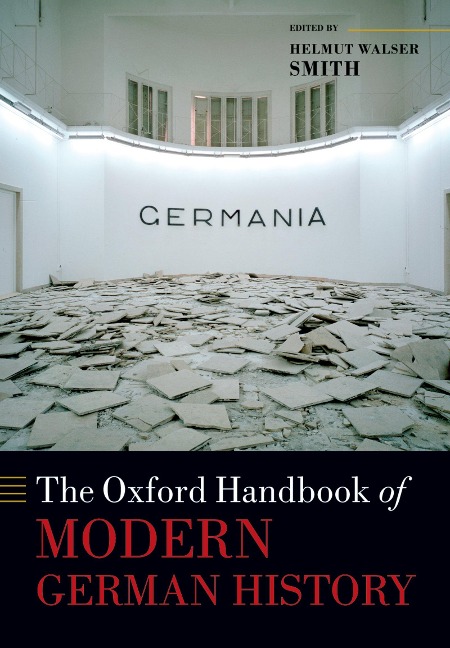
This is the first comprehensive, multi-author survey of German history that features cutting-edge syntheses of major topics by an international team of leading scholars. Emphasizing demographic, economic, and political history, this Handbook places German history in a denser transnational context than any other general history of Germany. It underscores the centrality of war to the unfolding of German history, and shows how it dramatically affected the development of German nationalism and the structure of German politics. It also reaches out to scholars and students beyond the field of history with detailed and cutting-edge chapters on religious history and on literary history, as well as to contemporary observers, with reflections on Germany and the European Union, and on 'multi-cultural Germany'. Covering the period from around 1760 to the present, this Handbook represents a remarkable achievement of synthesis based on current scholarship. It constitutes the starting point for anyone trying to understand the complexities of German history as well as the state of scholarly reflection on Germany's dramatic, often destructive, integration into the community of modern nations. As it brings this story to the present, it also places the current post-unification Federal Republic of Germany into a multifaceted historical context. It will be an indispensable resource for scholars, students, and anyone interested in modern Germany.
Helmut Walser Smith is Martha Rivers Ingram Professor of History and Director of the Max Kade Center for European and German Studies at Vanderbilt University. A scholar of German nationalism, religious history, and anti-Semitism, he is a specialist on Imperial Germany and has written on the long continuities of German history.
- 1: Helmut Walser Smith: Introduction - Part I: History - 2: Robert von Friedeburg: The Origins of Modern Germany - 3: Celia Applegate: Senses of Place - 4: Ann Goldberg: Women and Men: 1760-1960 - Part II: States, People and Nation, 1760-1860 - 5: Ute Planert: International Conflict, War, and the Making of Modern Germany, 1740-1815 - 6: Jürgen Osterhammel and Franz Leander Fillafer: Cosmopolitanism and the German Enlightenment - 7: Jonathan Sperber: The Atlantic Revolutions in the German Lands, 1776-1849 - 8: James M. Brophy: The End of the Economic Old Order: The Great Transition, 1750-1860 - 9: Ernest Benz: Escaping Malthus: Population Explosion and Human Movement, 1760-1884 - 10: George S. Williamson: Protestants, Catholics, and Jews: Enlightenment, Emancipation, New Forms of Piety - 11: Christian Jansen: The Formation of German Nationalism, 1740-1850 - 12: Ritchie Robertson: German Literature and Thought from 1810 to1890 - Part III: Germany: The Nation State - 13: Siegfried Weichlein: Nation State, Conflict Resolution, and Culture War, 1850-1878 - 14: Helmut Walser Smith: Authoritarian State, Dynamic Society, Failed Imperialist Power, 1878-1914 - 15: Cornelius Torp: The Great Transformation: German Economy and Society, 1850-1914 - 16: Andrew Zimmerman: Race and World Politics: Germany in the Age of Imperialism, 1878-1914 - 17: Benjamin Ziemann: Germany 1914-1918. Total War as a Catalyst of Change - 18: J. Adam Tooze: The German National Economy in an Era of Crisis and War, 1917-1945 - 19: Thomas Mergel: Democracy and Dictatorship - 20: Rebekka Habermas: Piety, Power and Powerlessness: Religion and Religious Groups in Germany, 1870-1945 - 21: 1. Steve Dowden and Meike G. Werner: The Place of German Modernism - 22: Pieter M. Judson: Nationalism in the Era of the Nation State, 1870-1945 - 23: Thomas Kuhne: Todesraum: War, Peace, and the Experience of Mass Death, 1914-1945 - 24: William H. Hagen: The Three Horsemen of the Holocaust: Antisemitism, East European Empire, Aryan Folk Community - 25: 1. Sebastian Conrad and Philipp Ther: The Uprooted: Expulsion, Exile, Flight, Forced Labor, Expulsion, 1880-1948 - Part IV: Germany 1945-1989 - 26: Stefan Ludwig Hoffman: The Occupation of Germany, a Rubble Society - 27: Andrew I. Port: Democracy and Dictatorship in the Cold War: the Two Germanies, 1949-1961 - 28: Uta Poiger: Generations: The Revolution of the 1960s - 29: Donna Harsch: Industrialization, Mass Consumption, Postindustrial Society - 30: Benjamin Ziemann: Religion and the Search for Meaning, 1945-1990 - 31: Lutz Koepnik: Culture in the Shadow of Trauma? - 32: Andreas Daum: The Two German States in the International World - Part V: Contemporary Germany - 33: David F. Patton: Annus Mirabilis: 1989 and German Unification - 34: Kiran Patel: Germany and European Integrations since 1945 - 35: William A. Barbieri, Jr.: Toward a Multicultural Society? - Index
Dieses eBook wird im PDF-Format geliefert und ist mit einem Adobe Kopierschutz (DRM) versehen. Sie können dieses eBook mit allen Geräten lesen, die das PDF-Format und den Adobe Kopierschutz (DRM) unterstützen.
Zum Beispiel mit den folgenden Geräten:
• tolino Reader
Laden Sie das eBook direkt über den Reader-Shop auf dem tolino herunter oder übertragen Sie das eBook auf Ihren tolino mit einer kostenlosen Software wie beispielsweise Adobe Digital Editions.
• Sony Reader & andere eBook Reader
Laden Sie das eBook direkt über den Reader-Shop herunter oder übertragen Sie das eBook mit der kostenlosen Software Sony READER FOR PC/Mac oder Adobe Digital Editions auf ein Standard-Lesegeräte mit epub- und Adobe DRM-Unterstützung.
• Tablets & Smartphones
Möchten Sie dieses eBook auf Ihrem Smartphone oder Tablet lesen, finden Sie hier unsere kostenlose Lese-App für iPhone/iPad und Android Smartphone/Tablets.
• PC & Mac
Lesen Sie das eBook direkt nach dem Herunterladen mit einer kostenlosen Lesesoftware, beispielsweise Adobe Digital Editions, Sony READER FOR PC/Mac oder direkt über Ihre eBook-Bibliothek in Ihrem Konto unter „Meine eBooks“ - „online lesen“.
Schalten Sie das eBook mit Ihrer persönlichen Adobe ID auf bis zu sechs Geräten gleichzeitig frei.
Bitte beachten Sie, dass die Kindle-Geräte das Format nicht unterstützen und dieses eBook somit nicht auf Kindle-Geräten lesbar ist.