Und dann auf "Zum Home-Bildschirm [+]".

Stöbern
genialokal zum Startbildschirm hinzufügen
Installieren Sie die genialokal App auf Ihrem Startbildschirm für einen schnellen Zugriff und eine komfortable Nutzung.
Installieren Sie die genialokal App auf Ihrem Startbildschirm für einen schnellen Zugriff und eine komfortable Nutzung.
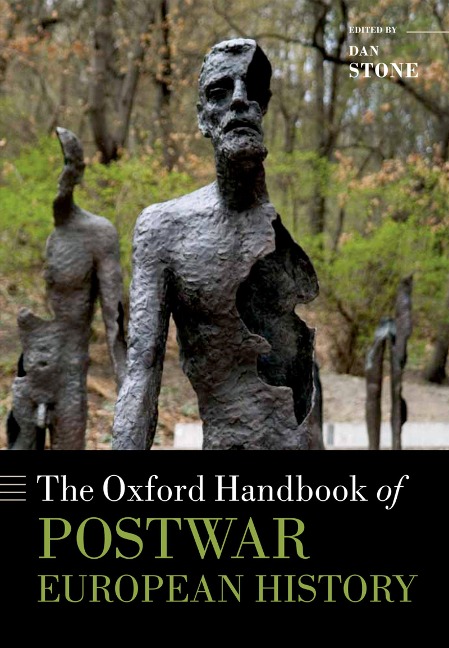
The postwar period is no longer current affairs but is becoming the recent past. As such, it is increasingly attracting the attentions of historians. Whilst the Cold War has long been a mainstay of political science and contemporary history, recent research approaches postwar Europe in many different ways, all of which are represented in the thirty-five chapters of this book. As well as diplomatic, political, institutional, economic, and social history, The Oxford Handbook of Postwar European History contains chapters which approach the past through the lenses of gender, espionage, art and architecture, technology, agriculture, heritage, postcolonialism, memory, and generational change, and shows how the history of postwar Europe can be enriched by looking to disciplines such as anthropology and philosophy. The Handbook covers all of Europe, with a notable focus on Eastern Europe. Including subjects as diverse as the meaning of 'Europe' and European identity, southern Europe after dictatorship, the cultural meanings of the bomb, the 1968 student uprisings, immigration, Americanization, welfare, leisure, decolonization, the Wars of Yugoslav Succession, and coming to terms with the Nazi past, the essays in this Handbook offer an unparalleled coverage of postwar European history that offers far more than the standard Cold War framework. Readers will find self-contained, state-of-the-art analyses of major subjects, each written by an acknowledged expert, as well as stimulating and novel approaches to newer topics. Combining empirical rigour and adventurous conceptual analysis, this Handbook offers in one substantial volume a guide to the numerous ways in which historians are now rewriting the history of postwar Europe.
Dan Stone is Professor of Modern History at Royal Holloway, University of London. His recent publications include Histories of the Holocaust (2010) and (as editor) The Historiography of Genocide (2008).
- List of Contributors - Editor's Introduction: Postwar Europe as History - PART I: WHAT IS POSTWAR EUROPE? - 1: Geoff Eley: Corporatism and the Social Democratic Moment: The Postwar Settlement, 1945-1973 - 2: Richard Overy: Interwar, War, Postwar: Was There a Zero Hour in 1945? - 3: Catherine Lee and Robert Bideleux: East, West, and the Return of 'Central': Borders Drawn and Redrawn - 4: Luiza Bialasiewicz: Spectres of Europe: Europes Past, Present and Future - 5: Luisa Passerini: Europe and Its Others. Is There a European Identity? - PART II: PEOPLE - 6: Philipp Ther: Ethnic Cleansing - 7: Dan Stone: Responding to 'Order Without Life'? Living under Communism - 8: Philipp Gassert: The Spectre of Americanization: Western Europe in the American Century - 9: Stephen Castles: Immigration and Asylum: Challenges to European Identities and Citizenship - 10: Uli Linke: Gendering Europe, Europeanizing Gender: The Politics of Difference in a Global Era - 11: Martn Klimke: 1968: Europe in Technicolour - PART III: BLOCS, PARTIES, POLITICAL POWER - 12: Mark Pittaway: Making Postwar Communism - 13: Jussi M. Hanhimäki: Europe's Cold War - 14: Ido De Haan: The Western European Welfare State beyond Christian and Social Democratic Ideology - 15: Douglas Selvedge: The Truth about Friendship Treaties: Behind the Iron Curtain - PART IV: RE-CONSTRUCTION: STARTING AFRESH OR REBUILDING THE OLD? - 16: Leopoldo Nuti: A Continent Bristling with Arms: Continuity and Change in Western European Security Policies after the Second World War - 17: Gianni Toniolo and Nick Crafts: 'Les trente glorieuses': From the Marshall Plan to the Oil Crises - 18: Robert Bideleux: European Integration: The Rescue of the Nation State? - 19: Ivan T. Berend: A Restructured Economy: From the Oil Crisis to the Financial Crisis, 1973-2009 - 20: Rosemary Wakeman: Veblen Redivivus: Leisure and Excess in Europe - PART V: FEAR - 21: P. D. Smith: 'Gentlemen, You are Mad!' Mutual Assured Destruction and Cold War Culture - 22: Vladimir Tismaneanu: What Was National Stalinism? - 23: Martin Evans: Colonial Fantasies Shattered - 24: Helen Graham and Alejandro Quiroga: After the Fear Was Over? What Came after Dictatorships in Spain, Greece, and Portugal - 25: Michael Shafir: What Comes after Communism? - 26: Cathie Carmichael: Brothers, Strangers and Enemies: Ethno-nationalism and the Demise of Communist Yugoslavia - PART VI: CULTURE AND HISTORY - 27: Hugh D. Clout: The Countryside: Toward a Theme Park? - 28: Brian Graham and G. J. Ashworth: Heritage and the Reconceptualization of the Postwar European City - 29: Robert J. C. Young: The Postcolonial Condition - 30: Stefan Muthesius: Postwar Art, Architecture, and Design - 31: Andrew Jamison: Science and Technology in Postwar Europe - 32: Ib Bondebjerg: Images of Europe - European Images: Postwar European Cinema and Television Culture - PART VII: COMING TO TERMS WITH THE WAR - 33: Samuel Moyn: Intellectuals and Nazism - 34: Roger Markwick: The Great Patriotic War in Soviet and Post-Soviet Collective Memory - 35: Dan Stone: Memory Wars in the 'New Europe' - Index
Dieses eBook wird im PDF-Format geliefert und ist mit einem Adobe Kopierschutz (DRM) versehen. Sie können dieses eBook mit allen Geräten lesen, die das PDF-Format und den Adobe Kopierschutz (DRM) unterstützen.
Zum Beispiel mit den folgenden Geräten:
• tolino Reader
Laden Sie das eBook direkt über den Reader-Shop auf dem tolino herunter oder übertragen Sie das eBook auf Ihren tolino mit einer kostenlosen Software wie beispielsweise Adobe Digital Editions.
• Sony Reader & andere eBook Reader
Laden Sie das eBook direkt über den Reader-Shop herunter oder übertragen Sie das eBook mit der kostenlosen Software Sony READER FOR PC/Mac oder Adobe Digital Editions auf ein Standard-Lesegeräte mit epub- und Adobe DRM-Unterstützung.
• Tablets & Smartphones
Möchten Sie dieses eBook auf Ihrem Smartphone oder Tablet lesen, finden Sie hier unsere kostenlose Lese-App für iPhone/iPad und Android Smartphone/Tablets.
• PC & Mac
Lesen Sie das eBook direkt nach dem Herunterladen mit einer kostenlosen Lesesoftware, beispielsweise Adobe Digital Editions, Sony READER FOR PC/Mac oder direkt über Ihre eBook-Bibliothek in Ihrem Konto unter „Meine eBooks“ - „online lesen“.
Schalten Sie das eBook mit Ihrer persönlichen Adobe ID auf bis zu sechs Geräten gleichzeitig frei.
Bitte beachten Sie, dass die Kindle-Geräte das Format nicht unterstützen und dieses eBook somit nicht auf Kindle-Geräten lesbar ist.