Und dann auf "Zum Home-Bildschirm [+]".

Stöbern
genialokal zum Startbildschirm hinzufügen
Installieren Sie die genialokal App auf Ihrem Startbildschirm für einen schnellen Zugriff und eine komfortable Nutzung.
Installieren Sie die genialokal App auf Ihrem Startbildschirm für einen schnellen Zugriff und eine komfortable Nutzung.

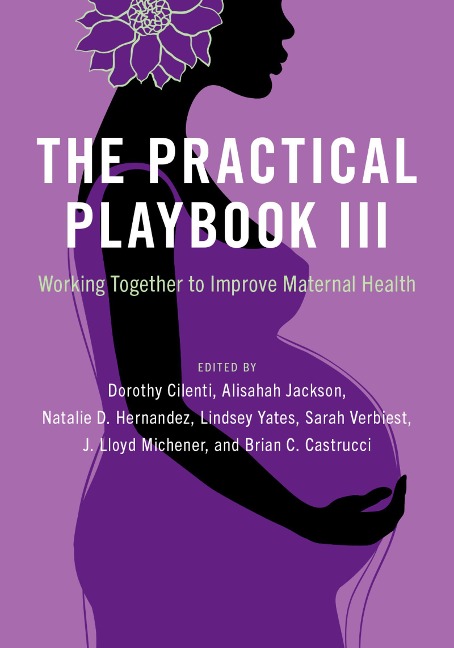
This is an open access title available under the terms of a CC BY-NC-ND 4.0 International license. It is free to read at Oxford Academic and offered as a free PDF download from OUP and selected open access locations. Since publishing The Practical Playbook II, there has been growing recognition of increased maternal deaths and poor maternal health outcomes disproportionately impacting Black, Indigenous, People of Color in the United States. Practitioners are often unaware or unequipped to understand the inequities faced by historically marginalized populations in maternal health care. The Practical Playbook III is a guide for researchers, community activists, and advocates of maternal health offering practical tools and strategies to improve inequities in maternal health. This third edition aims to describe the need and opportunities for improving maternal health through multi-sector collaborations. It highlights examples of effective cross-sector partnerships that are making real improvements in health outcomes for maternal health populations and offers practical tools and strategies for practitioners working in this space. Other features include: · Examples of multidisciplinary partnerships that leverage new ideas and resources, including innovative approaches to gathering and using data · Policies and practices that are improving the health and well-being of birthing people and children across the country · Strategies for scaling up and sustaining successful coalitions and programs · Existing or promising tools and strategies to improve maternal health in the future The Practical Playbook III brings together voices of experience and authority to answer the most challenging questions in maternal health and provide concrete steps for maternal stakeholders to improve maternal health outcomes.
Dorothy Cilenti is a Clinical Professor in the Department of Maternal and Child Health at the UNC Gillings School of Global Public Health. Alisahah Jackson is CEO of Why Health Matters. Natalie D. Hernandez is an Associate Professor in the Department of Obstetrics and Gynecology at Morehouse School of Medicine. Lindsey Yates is a Postdoctoral Trainee in the Center of Excellence in the Department of Maternal and Child Health at the UNC Gillings School of Global Public Health. Sarah Verbiest is a Clinical Professor at the UNC School of Social Work. J. Lloyd Michener is Professor Emeritus of Community and Family Medicine at the Duke University School of Medicine. Brian C. Castrucci is CEO of the de Beaumont Foundation.
Foreword by Brian C. Castrucci
Acknowledgments
Contributors Section I. Introduction 1. Why a Practical Playbook about Working together to Improve Maternal Health? Alisahah Jackson, Dorothy Cilenti, Lindsey Yates, Sarah Verbiest, J. Lloyd Michener, and Natalie D. Hernandez
2. Promoting Federal Partnerships for Effective Program Implementation Clara E. Busse, Sandra Lloyd, Ashley Wilkes, and Catherine J. Vladutiu
3. How Academic Centers Can Accelerate Partnerships and Progress in Maternal Health Alison M. Stuebe
4. Transformational Maternal and Child Health through Expanded Health Care Coordination and Community Engagement Ahmed Calvo Lyndsey Stadtmueller, Anita Isama, Erica O'Neill, and Mark Loafman
5. Improving MCH Outcomes: An Opportunity for Expanded Primary Health Care Teams Mark Loafman, Kenya Thomas, Anita Isama, and Ahmed Calvo
6. It's Not a Flip of the Switch: One Health Care System's Collaborative Approach to Engaging External Partners to Support the Maternity Journey Brisa Urquieta de Hernandez, Christine Brocato, Manoja Lecamwasam, and Anuradhika Anuradhika
Section II. Collaboration 7. Collaborations to Improve Maternal Health Dorothy Cilenti and Ruth Buzi
8. Extending the Reach of Maternal Health Practice into New Zones of Transformation with the Framework for Aligning Sectors Daniel Lanford, Karen Minyard, Leigh Alderman, Japera Hemming, Chris Parker, and Tanisa Adimu
9. An Approach for Whole-person Health: Oral Health Care Integration for Improved Maternal Outcomes Timothy L. Ricks and Zachary A. Brian
10. What it REALLY takes to Succeed: Practical Tips for Maternal Health Collaboration Plia Hanson and Kimberly Sherman
11. Bringing together Clinical and Community Partners for Better Patient Care: Bootheel Perinatal Network Barbara Gleason, Rebecca Burger, Morgan Nesselrodt, Susan Kendig, and Tanisa Adimu
12. A Community Approach to Addressing Inequities in Maternal Health Deidre McDaniel, Valerie Newsome Garcia, Karen Chustz, Saanie Sulley, Deborah Frazier, and Haywood Brown
13. The Broward Healthy Start Program: Cross-Sector Collaboration: Improving Pregnancy Outcomes and Birth Equity Using a Collective Impact Framework Marci Ronik, Monica Figueroa King, Sharetta Remikie, and Roneé Wilson
14. Impacting Maternal and Prenatal Care Together: A Harris County/Houston Collaborative June Hanke, Jamie Freeny, and Ruth S. Buzi
15. Activating Our Village in LA County: Birth Equity and Black Families Sonya Young Aadam, Deborah Allen, Brandi Desjolais, Melissa Franklin, Adjoa Jones, Helen O'Connor, Kaci Patterson, and Sylvia Swilley
Section III. Equity
16. Centering Equity: Systemic Racism and Social Determinants of Maternal Health Natalie D. Hernandez and Tamaron Johnson
17. Historical Context Matters: Structural Racism, Maternal Health & Reproductive Justice Christine M. Velez and M. Mercedes Ávila
18. Equity and Systemic Racism Jonathan Webb
19. Maternal Health Equity: A Consensus-Driven Definition and Research Priorities Elizabeth A. Mosley
20. Redesigning Systems with Black Women to Improve Maternal Health in Atlanta Jemea Dorsey and Kaprice Welsh
21. Doulas and Incarcerated Populations Crystal Hayes and Marisa Pizii
22. Environmental Impacts on Maternal Health Michele Okoh
23. Re-Imagining Prenatal Care: Designing a Justice-Conscious Approach to Reproductive Health, Pregnancy, and Early Parenthood Keegan Warren-Clem and Daphne McGee
Section IV. Data
24. Using and Improving Maternal Health Data to Achieve Equity Lindsey Yates
25. Democratizing Data: Understanding the Challenges and Opportunities for Community-Based Utilization of Maternal Mortality Data and Maternal Health Interventions Athena Cross and Pam Silberman
26. Decolonizing Maternal Health Research: An Introduction to Indigenous Research Methods and a Decolonial Framework for Indigenous Maternal Health Research Alayah Jennings-Johnson
27. Garbage In, Garbage Out: Examining How Maternal Health Data Tools Misuse Race Marie V. Plaisime
28. Maternal Health and Gathering Evidence of Structural Racism Lauri Andress
29. Using Narrative Medicine and Longitudinal Qualitative Research to Examine Maternal Health Outcomes Burcu Bozkurt
30. Culturally Responsive Evaluation Kimberley Broomfield-Massey, Rakiah Anderson, Calondra Tibbs, and Christine Tucker
Section V. Innovations
31. Innovations to Improve Maternal Health Sarah Verbiest and Monica Beltran
32. Respectful Care and Reproductive Justice as Foundations for Maternal Health Innovation Aja Clark Phoebe Wescott, Amy Ushry, Kiara Cruz, Christie Allen, and Inas Mahdi
33. Women's Health Before, Between, Beyond, and Regardless of Pregnancy Sarah Verbiest, Suzanne Woodward, and Lindsey Yates
34. Innovation in Systems of Postpartum Care Kimberly D. Harper, Nkechi Charles, Amelia N. Gibson, and Kristin P. Tully
35. The Integral Role of Community-Based Doulas in Supporting Birth Equity Twylla Dillion and Zainab Sulaiman
36. From Grassroots to Telecommunication Innovation: Bridging the Gap in Perinatal Mental Health Chris Raines and Wendy Davis
37. Using a Learning Community Model to Address Substance Misuse and Co-Occurring Mental Health Challenges among MCH Populations Sanaa Akbarali, Ramya Dronamraju, Katrin Patterson, Ellen Pliska, and Christine Mackie
38. Innovations in Virtual Care Leslie deRosset, Halle Neeley, and Aunchalee Palmquist
Section VI. Systems and Scalability
39. Scaling Up and Sustaining Improvements in Maternal Health Equity J. Lloyd Michener
40. Role of HRSA's Maternal and Child Health Bureau in Supporting States and Communities to Advance Maternal Health Equity Michael D. Warren, Kathy K. Best Erin Patton, and Belinda Pettiford
41. Driving Access, Health Equity, and Innovation in Maternal Health Care through Medicaid Jessica C. Smith, Emily Heberlein, Angie Snyder, and Karen Minyard
42. Role of Academic Health Systems in Improving and Sustaining Maternal Health Olufunmilayo Chinekezi, Karey Sutton, Crista Johnson-Agbakwu, and Yhenneko Taylor
43. Building a Maternal Health Workforce to Advance Equity, Partnerships, and Healthy Communities Amy J. Mullenix and M. Kathryn Menard
44. The Role of the Family Physician in Pregnancy Care: Striving for Birth Equity and Reducing Maternal Morbidity and Mortality Julie K. Wood
45. Employing Policy and Advocacy for Sustainable Decline in Maternal Mortality and Maternal Health Inequities Anna Kheyfets, Maria Gabriela Ruiz, Keri Carvalho, Candace Stewart, and Ndidiamaka Amutah-Onukagha,
46. Sustainability and Finance: The Role of State and Territorial Health Agencies Ellen Pliska, Britta Cedergren, Kristin Sullivan, Melissa Touma, Karl Ensign, Sowmya Kuruganti, Deborah Backman, Alex Wheatley, Shannon Vance, Sanaa Akbarali, and Kimberlee Wyche-Etheridge
47. How State-Based Foundations Can Leverage Collaboration to Improve Maternal Health: A Case Study from California Dana G. Smith and Stephanie Teleki
48. Role of AHEC in Improving Maternal Health Adam J. Zolotor, Jill M. Forcina, Tara Owens Shuler, and Hugh H. Tilson, Jr.
49. Rural Local Health Departments as Critical Access Points for Maternal Health Equity Lisa Macon Harrison and Abigail Kenney Section VII. Conclusion
50. The Journey Forward Dorothy Cilenti, Alisahah Jackson, Natalie D. Hernandez, Lindsey Yates, Sarah Verbiest, and J. Lloyd Michener