Und dann auf "Zum Home-Bildschirm [+]".

Stöbern
genialokal zum Startbildschirm hinzufügen
Installieren Sie die genialokal App auf Ihrem Startbildschirm für einen schnellen Zugriff und eine komfortable Nutzung.
Installieren Sie die genialokal App auf Ihrem Startbildschirm für einen schnellen Zugriff und eine komfortable Nutzung.
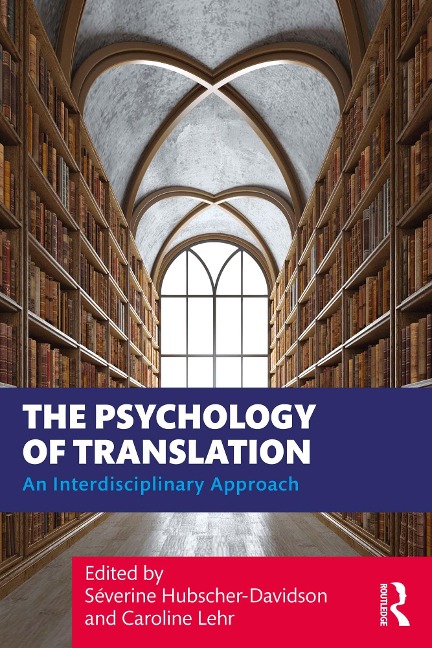
Drawing on work from scholars in both psychology and translation studies, this collection offers new perspectives on what Holmes (1972) called 'translation psychology'. This interdisciplinary volume brings together contributions addressing translation from the vantage point of different applied branches of psychology, including critical-developmental psychology, occupational psychology, and forensic psychology. Current theoretical and methodological practices in these areas have the potential to strengthen and diversify how translators' decision-making and problem-solving behaviours are understood, but many sub-branches of psychology have lacked visibility so far in the translation studies literature. The Psychology of Translation: An Interdisciplinary Approach therefore seeks to expand our understanding of translator behaviour by bringing to the fore new schools of thought and conceptualisations. Some chapters report on empirical studies, while others provide a review of research in a particular area of psychology of relevance to translation and translators. Written by a range of leading figures and authorities in psychology and translation, it offers unique contributions that can enrich translation process research and provide a means of encouraging further development in the area of translation psychology. This book will be of interest to scholars working at the intersection of translation and psychology, in such fields as translation studies, affective science, narrative psychology, and work psychology, amongst other areas. It will be of particular interest to researchers and postgraduate students in translation studies.
Séverine Hubscher-Davidson is Head of Translation Studies in the School of Languages and Applied Linguistics at The Open University (United Kingdom). She has taught translation theory and practice for over 15 years and published articles on various aspects of translation psychology and well-being in well-established journals such as Target, Meta, and Translation Studies. Her first monograph, Translation and Emotion: A Psychological Perspective (2017), tackles the impact of emotions on translation performance. Caroline Lehr is a professor at Zurich University of Applied Sciences (Switzerland), where she teaches translation and translation theory. She received her PhD from the University of Geneva and has conducted post-doctoral research both at the Copenhagen Business School and University College London. In her current research, she pursues an interdisciplinary approach integrating translation and psychology. Together with Séverine Hubscher-Davidson, she co-wrote Improving the Emotional Intelligence of Translators: A Roadmap for an Experimental Training Intervention (2021).
List of Contributors Introduction: expanding and rethinking translation psychology Séverine Hubscher-Davidson Chapter 1 Translation psychology: broadening the research framework Alicia Bolaños-Medina Chapter 2 Child language brokering as a care practice: a view from critical-developmental psychology Sarah Crafter Chapter 3 Permission to emote: developing coping techniques for emotional resilience in subtitling Katerina Perdikaki and Nadia Georgiou Chapter 4 The psychological impacts of narratives: insights for translation research Zoë Walkington Chapter 5 Emotions and literary translation performance: a study using the Geneva Emotional Competence Test Klaudia Bednárová-Gibová and Mária Majherová Chapter 6 Performance and well-being in changing work environments: pursuing a sustainable career in translation in post-pandemic times Amelia Manuti Index
Dieses eBook wird im PDF-Format geliefert und ist mit einem Adobe Kopierschutz (DRM) versehen. Sie können dieses eBook mit allen Geräten lesen, die das PDF-Format und den Adobe Kopierschutz (DRM) unterstützen.
Zum Beispiel mit den folgenden Geräten:
• tolino Reader
Laden Sie das eBook direkt über den Reader-Shop auf dem tolino herunter oder übertragen Sie das eBook auf Ihren tolino mit einer kostenlosen Software wie beispielsweise Adobe Digital Editions.
• Sony Reader & andere eBook Reader
Laden Sie das eBook direkt über den Reader-Shop herunter oder übertragen Sie das eBook mit der kostenlosen Software Sony READER FOR PC/Mac oder Adobe Digital Editions auf ein Standard-Lesegeräte mit epub- und Adobe DRM-Unterstützung.
• Tablets & Smartphones
Möchten Sie dieses eBook auf Ihrem Smartphone oder Tablet lesen, finden Sie hier unsere kostenlose Lese-App für iPhone/iPad und Android Smartphone/Tablets.
• PC & Mac
Lesen Sie das eBook direkt nach dem Herunterladen mit einer kostenlosen Lesesoftware, beispielsweise Adobe Digital Editions, Sony READER FOR PC/Mac oder direkt über Ihre eBook-Bibliothek in Ihrem Konto unter „Meine eBooks“ - „online lesen“.
Schalten Sie das eBook mit Ihrer persönlichen Adobe ID auf bis zu sechs Geräten gleichzeitig frei.
Bitte beachten Sie, dass die Kindle-Geräte das Format nicht unterstützen und dieses eBook somit nicht auf Kindle-Geräten lesbar ist.