Und dann auf "Zum Home-Bildschirm [+]".

Stöbern
genialokal zum Startbildschirm hinzufügen
Installieren Sie die genialokal App auf Ihrem Startbildschirm für einen schnellen Zugriff und eine komfortable Nutzung.
Installieren Sie die genialokal App auf Ihrem Startbildschirm für einen schnellen Zugriff und eine komfortable Nutzung.
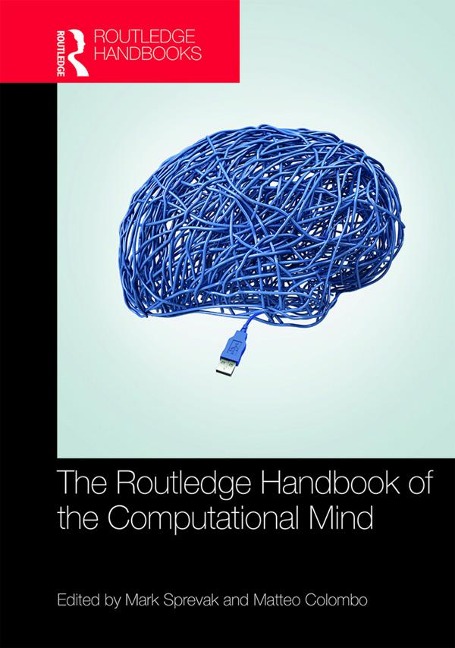
Computational approaches dominate contemporary cognitive science, promising a unified, scientific explanation of how the mind works. However, computational approaches raise major philosophical and scientific questions. In what sense is the mind computational? How do computational approaches explain perception, learning, and decision making? What kinds of challenges should computational approaches overcome to advance our understanding of mind, brain, and behaviour? The Routledge Handbook of the Computational Mind is an outstanding overview and exploration of these issues and the first philosophical collection of its kind. Comprising thirty-five chapters by an international team of contributors from different disciplines, the Handbook is organised into four parts: - History and future prospects of computational approaches - Types of computational approach - Foundations and challenges of computational approaches - Applications to specific parts of psychology. Essential reading for students and researchers in philosophy of mind, philosophy of psychology, and philosophy of science, The Routledge Handbook of the Computational Mind will also be of interest to those studying computational models in related subjects such as psychology, neuroscience, and computer science.
Mark Sprevak is a Senior Lecturer in Philosophy at the University of Edinburgh, UK. His book The Computational Mind is forthcoming from Routledge. Matteo Colombo is an Assistant Professor at the Tilburg Center for Logic, Ethics, and Philosophy of Science, Tilburg University, The Netherlands; and a Humboldt Research Fellow at the Clinic for Psychiatry and Psychotherapy, Charité University Clinic Berlin, Germany.
Introduction Mark Sprevak and Matteo Colombo Part 1: History and Future Directions 1. Computational thought from Descartes to Lovelace Alistair M.C. Isaac 2. Turing and the first electronic brains: What the papers said Diane Proudfoot and Jack Copeland 3. British cybernetics Joe Dewhurst 4. Cybernetics Tara H. Abraham 5. Turing-equivalent computation at the "conception" of cognitive science Kenneth Aizawa 6. Connectionism and post-connectionist models Cameron Buckner and James Garson 7. Artificial Intelligence Murray Shanahan Part 2: Types of Computing 8. Classical computational models Richard Samuels 9. Explanation and connectionist models Catherine Stinson 10. Dynamic information processing Frank Faries and Anthony Chemero 11. Probabilistic models David Danks 12. Prediction error minimization in the brain Jakob Hohwy Part 3: Foundations and Challenges 13. Triviality arguments about computational implementation Mark Sprevak 14. Computational implementation J. Brendan Ritchie and Gualtiero Piccinini 15. Computation and levels in cognitive and neural sciences Lotem Elber-Dorozko and Oron Shagrir 16. Reductive explanation between psychology and neuroscience Daniel A. Weiskopf 17. Helmholtz's vision: Underdetermination, behavior and the brain Clark Glymour and Ruben Sanchez-Romero 18. The nature and function of content in computational models Frances Egan 19. Maps, models and computational simulations in the mind William Ramsey 20. The cognitive basis of computation: Putting computation in its place Daniel D. Hutto, Erik Myin, Anco Peeters and Farid Zahnoun 21. Computational explanations and neural coding Rosa Cao 22. Computation, consciousness, and "Computation and consciousness" Colin Klein 23. Concepts, symbols and computation: An integrative approach Jenelle Salisbury and Susan Schneider 24. Embodied cognition Marcin Milkowski 25. Tractability and the computational mind Jakub Szymanik and Rineke Verbrugge Part 4: Applications 26. Computational cognitive neuroscience Carlos Zednik 27. Simulation in computational neuroscience Liz Irvine 28. Learning and reasoning Matteo Colombo 29. Vision Mazviita Chirimuuta 30. Perception without computation? Nico Orlandi 31. Motor computation Michael Rescorla 32. Computational models of emotion Xiaosi Gu 33. Computational psychiatry Stefan Brugger and Matthew Broome 34. Computational approaches to social cognition John Michael and Miles MacLeod 35. Computational theories of group behavior Bryce Huebner and Joseph Jebari. Index
Dieses eBook wird im PDF-Format geliefert und ist mit einem Adobe Kopierschutz (DRM) versehen. Sie können dieses eBook mit allen Geräten lesen, die das PDF-Format und den Adobe Kopierschutz (DRM) unterstützen.
Zum Beispiel mit den folgenden Geräten:
• tolino Reader
Laden Sie das eBook direkt über den Reader-Shop auf dem tolino herunter oder übertragen Sie das eBook auf Ihren tolino mit einer kostenlosen Software wie beispielsweise Adobe Digital Editions.
• Sony Reader & andere eBook Reader
Laden Sie das eBook direkt über den Reader-Shop herunter oder übertragen Sie das eBook mit der kostenlosen Software Sony READER FOR PC/Mac oder Adobe Digital Editions auf ein Standard-Lesegeräte mit epub- und Adobe DRM-Unterstützung.
• Tablets & Smartphones
Möchten Sie dieses eBook auf Ihrem Smartphone oder Tablet lesen, finden Sie hier unsere kostenlose Lese-App für iPhone/iPad und Android Smartphone/Tablets.
• PC & Mac
Lesen Sie das eBook direkt nach dem Herunterladen mit einer kostenlosen Lesesoftware, beispielsweise Adobe Digital Editions, Sony READER FOR PC/Mac oder direkt über Ihre eBook-Bibliothek in Ihrem Konto unter „Meine eBooks“ - „online lesen“.
Schalten Sie das eBook mit Ihrer persönlichen Adobe ID auf bis zu sechs Geräten gleichzeitig frei.
Bitte beachten Sie, dass die Kindle-Geräte das Format nicht unterstützen und dieses eBook somit nicht auf Kindle-Geräten lesbar ist.