Und dann auf "Zum Home-Bildschirm [+]".

Stöbern
genialokal zum Startbildschirm hinzufügen
Installieren Sie die genialokal App auf Ihrem Startbildschirm für einen schnellen Zugriff und eine komfortable Nutzung.
Installieren Sie die genialokal App auf Ihrem Startbildschirm für einen schnellen Zugriff und eine komfortable Nutzung.


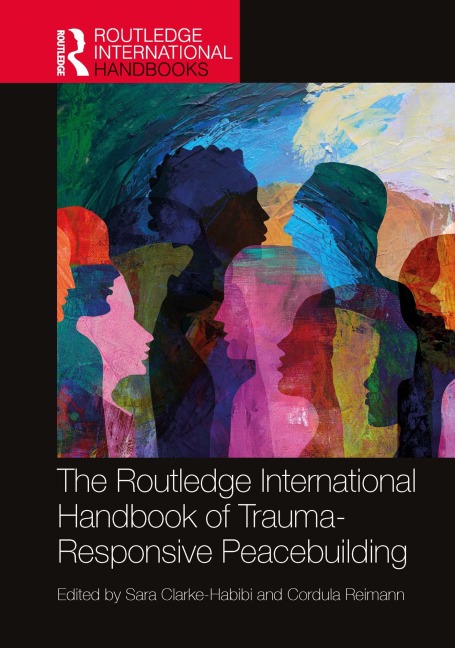
This comprehensive handbook offers a multidisciplinary exploration of research and practice at the intersection of trauma and peacebuilding. Highlighting case studies from diverse conflict contexts around the globe, this book offers conceptual reflections and practical illustrations of trauma-sensitive and trauma-responsive approaches to interventions across the humanitarian-peacebuilding-development (HDP) spectrum. Chapters critically evaluate the current state of research and policy discourse, including the global mental health and psychosocial support (MHPSS) agenda, bringing greater attention to the issue of collective trauma and offering original insights and good practices for engaging with trauma-affected populations. This book highlights the work of international researcher-practitioners who reflect on the implications of personal, collective, transgenerational, and historical trauma for peacebuilding, providing practical recommendations for improved theory and practice. It also emphasises the importance of decolonising trauma and peacebuilding practices, foregrounding perspectives from the Global South as alternatives to conventional Western frameworks. This handbook will appeal to researchers and postgraduate students in the fields of trauma studies, peace psychology, peace and conflict studies, and migration, humanitarian, and development studies. It will also be important reading for professionals in MHPSS, humanitarian aid and donor agencies, peacebuilding professionals and activists, NGOs, and anyone working with populations affected by ongoing and historical conflict.
Sara Clarke-Habibi is a peacebuilding specialist with 25 years of experience as a practitioner, researcher, educator, curriculum developer, trainer, facilitator, and advisor. Focussed on violence-affected and post-conflict environments, she works thematically on issues of trauma-sensitivity, MHPSS, conflict memory and identity, peace psychology, social healing, and intergroup reconciliation. Cordula Reimann has worked for 30 years as a process and dialogue facilitator, trainer, researcher, consultant, and coach on conflict sensitivity, conflict transformation, trauma, and gender. As a practitioner-scholar, Cordula has worked with and for local grassroots movements, mainly in South Asia and the Middle East, international and Swiss and German governmental and non-governmental peacebuilding, development, and aid organisations.
List of Contributors Foreword Barry Hart Preface Sara Clarke-Habibi and Cordula Reimann Acknowledgements Chapter 1: Trauma-Awareness in Peacebuilding: An Introduction Cordula Reimann and Sara Clarke-Habibi Part 1: Understanding Individual and Collective Trauma in Contexts of Violent Conflict and Peacebuilding Introduction to Part 1 Chapter 2: Psychological Causes and Effects of Individual and Collective Violence Sara Clarke-Habibi Chapter 3: Collective Trauma as Violent Conflict Dynamics Cordula Reimann Chapter 4: Opening Up Spaces for Collective Trauma in Peacebuilding Practice Cordula Reimann Chapter 5: A Framework for Understanding and Transforming Posttraumatic Narratives Sousan Abadian Chapter 6: Impacts of War on the Transfer and Transformation of Intergenerational Trauma in Israel Larissa Kunze and David Senesh Chapter 7: Identity Needs and Reconciliation following Collective Trauma Nurit Shnabel Chapter 8: Influence of Trauma on Identity, Justice, Resilience and Peacebuilding John Woodall Part 2: Understanding Resilience and Healing in Contexts of Violent Conflict and Peacebuilding Introduction to Part 2 Chapter 9: Reflections on the Foundations of Resilience and Healing Sara Clarke-Habibi Chapter 10: Embodied Resilience and Healing in the Context of Transgenerational Trauma in Palestine and Israel Eva Dalak Chapter 11: Art and Embodiment in Peacebuilding Ada Hakobyan Chapter 12: Using Expressive Arts to Address Collective Trauma and Structural Violence in Korea and the USA Eunkyung Ahn, Hyo Jin Chang, and Kathryn Mansfield Chapter 13: Reflecting on Collective Resilience during and after the Beslan Tragedy Larissa Sotieva Chapter 14: Exploring Unity Process Theory and Practise for Overcoming Crisis: Experiences from Bosnia-Herzegovina John Woodall Chapter 15: Interrupting Violence with Trauma and Resilience Education Kathryn Mansfield and Kajungu Mturi Part 3: Promoting Resilience in Crisis through Mental Health and Psychosocial Support Introduction to Part 3 Chapter 16: Trauma-Informed MHPSS in War-Affected Ukraine Imke Hansen Chapter 17: Playback Theatre as a Tool for Embodied Socio-Psychological Support in Ukraine Nataliia Vainilovych Chapter 18: Trauma-Sensitive Peace Education in Northern Syria Jihad Alabdullah, Mohammad Abo Hilal, Mohamad Yassen, and Mohammad Affara Chapter 19: Psychosocial Peacebuilding in Afghanistan Inge Missmahl and Birte Brugmann Chapter 20: Integrating Gender into MHPSS and Trauma-Responsive Peacebuilding in Central African Republic Amy Dwyer Neigenfeld Chapter 21: Hypno-Neuro-Imagination Techniques for Promoting Mental Health in Humanitarian-Peacebuilding Contexts Annick Python, Claude Ribaux, and Marta Hegyaljai Python Chapter 22: Trauma-Informed Facilitation in Peacebuilding Contexts: Ethics, Questions and Methods Sara Clarke-Habibi Chapter 23: Practising what we preach: Duty of care as an essential component of sustainable, trauma-responsive peacebuilding Friederike Bubenzer Part 4: Addressing Collective Trauma in Peacebuilding and Conflict Transformation Introduction to Part 4 Chapter 24: Addressing Collective Trauma in Dealing with the Past Processes in Lebanon Soha Fleyfil and Jenny Munro Chapter 25: Trauma-Sensitive Mediation: A Missing Element in the Syrian Peace Process Caroline Brooks Chapter 26: Memory as a Basis for (Re-)Conciliation in the Caucasus Julia Böcker Chapter 27: Trauma-Responsive Approaches to Truth Recovery in the Aftermath of Gross Violations of Human Rights in Nepal and Iraq Tyrone Savage Chapter 28: Towards Trauma Responsiveness in Transitional Justice Education in Colombia Angela Sanchez-Rojas Chapter 29: Establishing Multi-stakeholder Alliances to promote Societal Healing and Resilience in post-genocide Rwanda Alexandros Lordos, Révérien Interayamahanga, Frank Kayitare, Ernest Dukuzumuremyi, Margret Mahoro, Joanita Mwiza, and Jessica Mbanda Chapter 30: Healing Collective Traumas to Foster Social Transformation in Kenya Steven Lichty, Angi Yoder-Maina, Wanjika Waibochi, and Yvonne Gache Chapter 31: Equipping Youth Peacebuilders with Trauma-Sensitivity: Summer Academy for Intercultural Dialogue Atran Youkhana and Martina Bock Part 5: Deconstructing and Decolonizing Trauma and Peacebuilding Practice and Research Introduction to Part 5 Chapter 32: "Give me justice, not pills": an Anti-Oppressive Agenda for the Integration of MHPSS and Peacebuilding Michael Niconchuk Chapter 33: Trauma and Resilience in the Global South: Decolonized Peace Psychology Practices in Kashmir Ufra Mir Chapter 34: Re-storying the Experience of Indigenous Trauma and Reconciliation in Canada Cynthia Wesley-Esquimaux and Magdalena Smolewski Chapter 35: Deconstructing Collective Trauma in Peacebuilding: Challenges & Potential Ada Hakobyan and Cordula Reimann Chapter 36: Trauma-Responsive Peacebuilding: Future Directions Cordula Reimann and Sara Clarke-Habibi Glossary Index
Dieses eBook wird im PDF-Format geliefert und ist mit einem Adobe Kopierschutz (DRM) versehen. Sie können dieses eBook mit allen Geräten lesen, die das PDF-Format und den Adobe Kopierschutz (DRM) unterstützen.
Zum Beispiel mit den folgenden Geräten:
• tolino Reader
Laden Sie das eBook direkt über den Reader-Shop auf dem tolino herunter oder übertragen Sie das eBook auf Ihren tolino mit einer kostenlosen Software wie beispielsweise Adobe Digital Editions.
• Sony Reader & andere eBook Reader
Laden Sie das eBook direkt über den Reader-Shop herunter oder übertragen Sie das eBook mit der kostenlosen Software Sony READER FOR PC/Mac oder Adobe Digital Editions auf ein Standard-Lesegeräte mit epub- und Adobe DRM-Unterstützung.
• Tablets & Smartphones
Möchten Sie dieses eBook auf Ihrem Smartphone oder Tablet lesen, finden Sie hier unsere kostenlose Lese-App für iPhone/iPad und Android Smartphone/Tablets.
• PC & Mac
Lesen Sie das eBook direkt nach dem Herunterladen mit einer kostenlosen Lesesoftware, beispielsweise Adobe Digital Editions, Sony READER FOR PC/Mac oder direkt über Ihre eBook-Bibliothek in Ihrem Konto unter „Meine eBooks“ - „online lesen“.
Schalten Sie das eBook mit Ihrer persönlichen Adobe ID auf bis zu sechs Geräten gleichzeitig frei.
Bitte beachten Sie, dass die Kindle-Geräte das Format nicht unterstützen und dieses eBook somit nicht auf Kindle-Geräten lesbar ist.