Und dann auf "Zum Home-Bildschirm [+]".

Stöbern
genialokal zum Startbildschirm hinzufügen
Installieren Sie die genialokal App auf Ihrem Startbildschirm für einen schnellen Zugriff und eine komfortable Nutzung.
Installieren Sie die genialokal App auf Ihrem Startbildschirm für einen schnellen Zugriff und eine komfortable Nutzung.
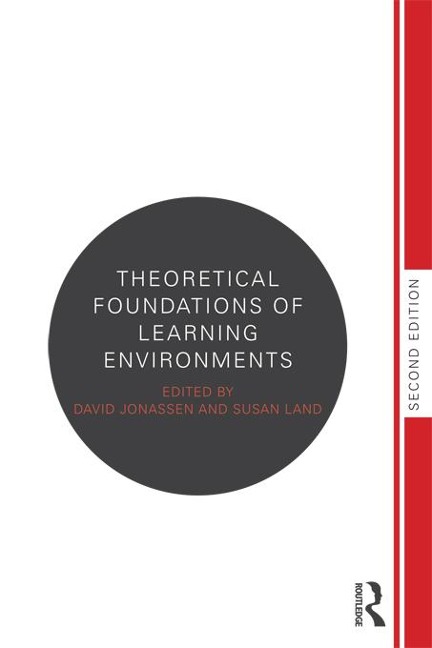
Theoretical Foundations of Learning Environments provides students, faculty, and instructional designers with a clear, concise introduction to the major pedagogical and psychological theories and their implications for the design of new learning environments for schools, universities, or corporations. Leading experts describe the most important contemporary theories that form the foundation of the conception and design of student-centered learning environments and new applications of educational technologies. This book is well suited as a textbook for courses in instructional design, educational psychology, learning theory, curriculum theory and design, and related areas. The rise of constructivism and its associated theories represented a paradigm shift for educators and instructional designers to a view of learning as necessarily more social, conversational, and constructive than traditional transmissive views of learning. This bestselling book was the first to provide a manageable overview of the altered field, and the second edition has been fully updated to include expert introductions to Metacognition, Argumentation, and other key contemporary theories.
David Jonassen is Curators' Professor at the University of Missouri. Susan Land is Associate Professor of Education and Professor-in-Charge of the Instructional Systems program at Penn State University.
Preface Part 1: Overview 1. Student-Centered Learning Environments: Foundations, Assumptions and Design Susan Land, The Pennsylvania State University Michael Hannafin, University of Georgia Kevin Oliver, North Carolina State University Part 2: Theoretical Perspectives for Learning Environments 2. From Practice Fields to Communities of Practice Sasha Barab, Arizona State University Thomas Duffy, Indiana University 3. Designing Model-Based Learning Environments to Support Mental Models for Learning Pablo Pirnay-Dummer Dirk Ifenthaler Norbert M. Seel Albert-Ludwigs-University of Freiburg, Germany 4. Conceptual Change David Jonassen Matthew Easter University of Missouri 5. Argumentation and Student-Centered Learning Environments E. Michael Nussbaum, University of Nevada-Las Vegas 6. Theory and Practice of Case-Based Learning Aids Janet L. Kolodner, Georgia Institute of Technology Brian Dorn, University of Hartford Jakita Owensby Thomas, Spelman College Mark Guzdial, Georgia Institute of Technology 7. Metacognition and Self-Regulated Learning in Student-Centered Learning Environments Roger Azevedo Reza F. Behnagh Melissa Duffy Jason M. Harley Gregory Trevors McGill University 8. Embodied Cognition and Learning Environment Design John B. Black Ayelet Segal Jonathan Vitale Cameron Fadjo Teacher's College of Colombia University 9. Everyday expertise: Learning within and across formal and informal settings Heather Toomey Zimmerman, The Pennsylvania State University Phillip Bell, University of Washington 10. Activity Theory in the Learning Technologies Ben DeVane, University of Florida Kurt Squire, University of Wisconsin-Madison 11. Learning Communities: Theoretical Foundations for Making Connections Janette R. Hill, University of Georgia 12. What is a community of practice and how can we support it? Christopher Hoadley, New York University Part 3: Theoretical Perspective for Investigating Learning Environments 13. Learning Environments as Emergent Phenomena: Theoretical and Methodological Implications of Complexity Michael Jacobson, University of Sydney Manu Kapur, Nanyang Technological University Author Index Subject Index
Dieses eBook wird im PDF-Format geliefert und ist mit einem Adobe Kopierschutz (DRM) versehen. Sie können dieses eBook mit allen Geräten lesen, die das PDF-Format und den Adobe Kopierschutz (DRM) unterstützen.
Zum Beispiel mit den folgenden Geräten:
• tolino Reader
Laden Sie das eBook direkt über den Reader-Shop auf dem tolino herunter oder übertragen Sie das eBook auf Ihren tolino mit einer kostenlosen Software wie beispielsweise Adobe Digital Editions.
• Sony Reader & andere eBook Reader
Laden Sie das eBook direkt über den Reader-Shop herunter oder übertragen Sie das eBook mit der kostenlosen Software Sony READER FOR PC/Mac oder Adobe Digital Editions auf ein Standard-Lesegeräte mit epub- und Adobe DRM-Unterstützung.
• Tablets & Smartphones
Möchten Sie dieses eBook auf Ihrem Smartphone oder Tablet lesen, finden Sie hier unsere kostenlose Lese-App für iPhone/iPad und Android Smartphone/Tablets.
• PC & Mac
Lesen Sie das eBook direkt nach dem Herunterladen mit einer kostenlosen Lesesoftware, beispielsweise Adobe Digital Editions, Sony READER FOR PC/Mac oder direkt über Ihre eBook-Bibliothek in Ihrem Konto unter „Meine eBooks“ - „online lesen“.
Schalten Sie das eBook mit Ihrer persönlichen Adobe ID auf bis zu sechs Geräten gleichzeitig frei.
Bitte beachten Sie, dass die Kindle-Geräte das Format nicht unterstützen und dieses eBook somit nicht auf Kindle-Geräten lesbar ist.