Und dann auf "Zum Home-Bildschirm [+]".

Stöbern
genialokal zum Startbildschirm hinzufügen
Installieren Sie die genialokal App auf Ihrem Startbildschirm für einen schnellen Zugriff und eine komfortable Nutzung.
Installieren Sie die genialokal App auf Ihrem Startbildschirm für einen schnellen Zugriff und eine komfortable Nutzung.
Ihr gewünschter Artikel ist in 0 Buchhandlungen vorrätig - wählen Sie hier eine Buchhandlung in Ihrer Nähe aus:

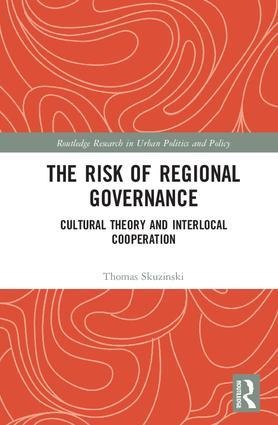
The Risk of Regional Governance is a story of the Rust Belt, of how local officials think about their community and the region, and-most importantly-of how we might craft policies that can overcome biases against regional governance.
Thomas Skuzinski is Assistant Professor of Urban Affairs and Planning at the School of Public and International Affairs at Virginia Tech University. He holds doctoral and master degrees from the University of Michigan, and a law degree from Michigan State University. His work uses a sociological institutionalist lens to examine how the rules, norms, and cultures in which local government actors are embedded shape metropolitan governance.
1. Introduction. 1.1 Opting out 1.2 Governing metropolitan regions 1.3 The legitimacy of reform 1.4 Reform as a transaction 1.5 The limitations of economizing 1.6 Theoretical perspectives on metropolitan governance 1.7 The goals of the book 1.8 Evidence from metropolitan Michigan 1.9 The plan of the book 2. Governing the Region through Cooperation 2.1 The Manchester Community 2.2 The difficulty of structural reforms 2.3 The limitations of state and federal intervention 2.4 Distinguishing cooperation 2.5 Enabling cooperation 2.6 Awareness of the law 2.7 Conclusion 3. Beyond Economizing 3.1 Transaction cost economizing 3.2 Cooperation as a transaction 3.3 The individual in the local government organization 3.4 Some conceptual issues 3.5 Maintaining systems versus creating lifestyles 3.6 When reform seems irrational 3.7 Conclusion 4. Sociocultural collective action 4.1 Introduction 4.2 Revisiting rationality 4.3 Individuals and institutions 4.4 The appropriateness of regional reform 4.5 An illustration 5. Investigating Rules and Norms 5.1 Introduction 5.2 Economizing and reciprocity in preference formation 5.3 The norm of responsiveness in local government 5.4 The treatment of responsiveness in economizing studies 5.5 Evidence of political legitimizing 6. Cultural Legitimizing 6.1 From gay rights to gun control to governance 6.2 Grid-group cultural theory 6.3 Reconciling cultural theory with rational choice institutionalism 6.4 Connecting dispositions to governance 6.5 The cultural dispositions of local elected officials 6.6 Dispositions and partisan identity 6.7 Evidence of cultural legitimizing 6.8 Conclusion 7. Conclusion 7.1 Avenues for policy reform under legitimizing 7.2 Dealing with cultural pluralism through de-biasing 7.3 The prospects for regional governance through voluntary interlocal cooperation