Und dann auf "Zum Home-Bildschirm [+]".

Stöbern
genialokal zum Startbildschirm hinzufügen
Installieren Sie die genialokal App auf Ihrem Startbildschirm für einen schnellen Zugriff und eine komfortable Nutzung.
Installieren Sie die genialokal App auf Ihrem Startbildschirm für einen schnellen Zugriff und eine komfortable Nutzung.
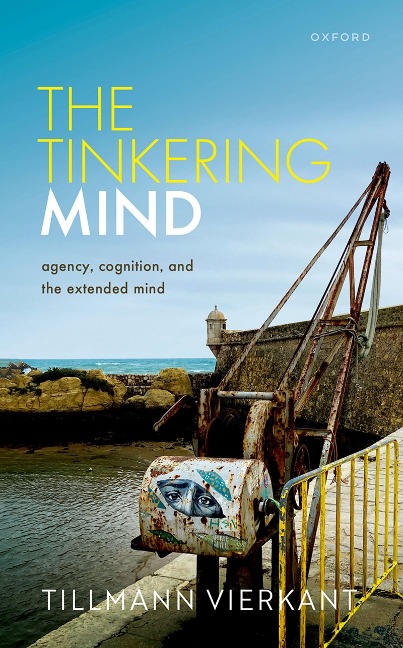
Epistemic agency is a crucial concept in many different areas of philosophy and the cognitive sciences. It is crucial in dual process theories of cognition as well as theories of metacognition and mindreading, self-control, and moral agency. But what is epistemic agency? The Tinkering Mind argues that epistemic agency has two distinct and incompatible definitions. It can be simply understood as intentional mental action, or as a distinct non-voluntary form of evaluative agency. The core argument of the book demonstrates that both definitions lead to surprising and counterintuitive consequences. If epistemic agency is a form of intentional action, then this implies that the radical theory of extended cognition has to be true. If, on the other hand, epistemic agency is not intentional action but evaluative agency, then intentional epistemic actions like deliberation are not truly cognitive but merely catalytic. Once established, the distinction between these two options sheds new light on various and diverse philosophical and psychological debates from dual process theories to debates on choice and self-control.
Tillmann Vierkant is a Senior Lecturer in Philosophy at the School of Philosophy, Psychology and Language Sciences (PPLS) at the University of Edinburgh. His research interests are centred around mental actions and epistemic agency. He has worked extensively on topics relating to free will and voluntary action in an interdisciplinary context. He has also written on willpower, the extended mind, implicit bias, self-knowledge and an X phi paper exploring folk intuitions on freedom and responsibility. Currently, he is part of an interdisciplinary project on the neuro-philosophy of free will, and a project on responsibility in autonomous systems.
- 1: Introduction, Core Argument and Methodology - 2: The Simple Argument - 3: Objections to the Simple Argument - 4: Extending and Shrinking Agents - 5: Metacognition - 6: Willpower and Epistemic Agency - 7: How Choices can be Actions - 8: Diachronicity: Intentional or Rational? - 9: At the Very End
Dieses eBook wird im PDF-Format geliefert und ist mit einem Adobe Kopierschutz (DRM) versehen. Sie können dieses eBook mit allen Geräten lesen, die das PDF-Format und den Adobe Kopierschutz (DRM) unterstützen.
Zum Beispiel mit den folgenden Geräten:
• tolino Reader
Laden Sie das eBook direkt über den Reader-Shop auf dem tolino herunter oder übertragen Sie das eBook auf Ihren tolino mit einer kostenlosen Software wie beispielsweise Adobe Digital Editions.
• Sony Reader & andere eBook Reader
Laden Sie das eBook direkt über den Reader-Shop herunter oder übertragen Sie das eBook mit der kostenlosen Software Sony READER FOR PC/Mac oder Adobe Digital Editions auf ein Standard-Lesegeräte mit epub- und Adobe DRM-Unterstützung.
• Tablets & Smartphones
Möchten Sie dieses eBook auf Ihrem Smartphone oder Tablet lesen, finden Sie hier unsere kostenlose Lese-App für iPhone/iPad und Android Smartphone/Tablets.
• PC & Mac
Lesen Sie das eBook direkt nach dem Herunterladen mit einer kostenlosen Lesesoftware, beispielsweise Adobe Digital Editions, Sony READER FOR PC/Mac oder direkt über Ihre eBook-Bibliothek in Ihrem Konto unter „Meine eBooks“ - „online lesen“.
Schalten Sie das eBook mit Ihrer persönlichen Adobe ID auf bis zu sechs Geräten gleichzeitig frei.
Bitte beachten Sie, dass die Kindle-Geräte das Format nicht unterstützen und dieses eBook somit nicht auf Kindle-Geräten lesbar ist.