Und dann auf "Zum Home-Bildschirm [+]".

Stöbern
genialokal zum Startbildschirm hinzufügen
Installieren Sie die genialokal App auf Ihrem Startbildschirm für einen schnellen Zugriff und eine komfortable Nutzung.
Installieren Sie die genialokal App auf Ihrem Startbildschirm für einen schnellen Zugriff und eine komfortable Nutzung.
Ihr gewünschter Artikel ist in 0 Buchhandlungen vorrätig - wählen Sie hier eine Buchhandlung in Ihrer Nähe aus:

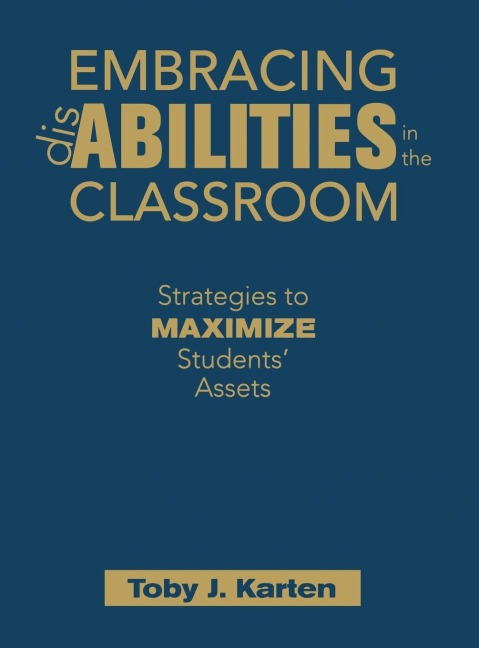

Foster positive experiences by differentiating not only instruction but attitudes too!This practical resource illustrates how educators can effectively promote sensitive, inclusive practices that maximize success for students with disabilities. Karten demonstrates the impact of literature, self-advocacy, role playing, and behavioral, academic, and social interventions on students' growth. The numerous tables, rubrics, instructional guidelines, charts, and content-rich interdisciplinary lessons help readers: Determine effective strategies for differentiating instruction for specific disabilities Modify lessons and curriculum appropriately in the content areas Encourage students to become active participants in learning Increase disability awareness and foster inclusive mind-sets in students, colleagues, and families
Toby J. Karten is an adjunct professor at the College of New Jersey, Gratz College in Pennsylvania, and Washington College in Maryland. Along with being a mentor and resource center teacher in New Jersey, Karten has designed a graduate course entitled "Skills and Strategies for Inclusion and disABILITY Awareness" and has trained other instructors to teach her course. Karten has presented at local, state, and international staff development workshops and conferences. She has been recognized by both the Council for Exceptional Children and the New Jersey Department of Education as an exemplary educator, receiving two "Teacher of the Year" awards. Karten has authored several books for Corwin Press about inclusion practices, including Inclusion Strategies That Work! and More Inclusion Strategies That Work!, as well as a series of activity books. An experienced educator who has worked in the field of special education since 1976, Karten believes that once we place the adjective "special" in front of the noun "education," every classroom student is a winner, receiving the best instructional strategies by a highly trained and prepared staff. She has an undergraduate degree in special education from Brooklyn College, a master of science in special education from the College of Staten Island, and a supervisory degree from Georgian Court University.
Preface
Acknowledgments
About the Author
Part I. Introducing Disabilities
1. Historical Background of Disabilities
Chapter Highlights
Classroom Connections
Ways to Differentiate Attitudes
Then to Now
Out and About
Beyond Terminology
Legislation Says...and the Classroom Does
2. How Others Interact and Acknowledge Disabilities and Differences
Chapter Highlights
Classroom Connections
Ways to Differentiate Attitudes
Dislabeling Activities
Part II. Classroom Implications
3. Entering the Inclusion Classroom
Chapter Highlights
Classroom Connections
Ways to Differentiate Attitudes
Assessing, Modifying, & Adapting the Curriculum
Capitalize on Strengths: What to Minimize & Maximize
4. Mastering the Curriculum
Chapter Highlights
Classroom Connections
Ways to Differentiate Attitudes
Presenting Curriculum
5. Content-Related Strategies and Lessons
Chapter Highlights
Classroom Connections
Ways to Differentiate Attitudes
Their Strategies, Not Ours!
Put Me in Coach!
It's All in the Presentation!
Reading Curriculum Concerns
Appropriate Reading & Language Arts Accommodations, Adaptations, and Strategies for Lessons
Writing Curriculum Concerns: Write On!
Mathematics Curriculum Concerns: Math Matters, Too!
Other Curriculum Lessons
6. Instructional Differentiation and Sensitivities That Respond to Students' Behavioral, Social, Emotional, and Perceptual Needs
Chapter Highlights
Classroom Connections
Ways to Differentiate Attitudes
Part III. Schools, Families, and the Future
7. Increasing Disability Awareness and Better Attitudes for Families and All Communities
Chapter Highlights
Classroom Connections
Ways to Differentiate Attitudes
8. Future Horizons for Disabilities
Chapter Highlights
Classroom Connections
Ways to Differentiate Attitudes
Commitments to Students' Achievements
Appendix A: Differentiating and Assessing Attitudes With Ability Awareness Rubrics
Appendix B: Enabling vs. Challenging Your Students
Appendix C: Student Data Documentation
Appendix D: Increasing Communications and Collaboration
References
Index