Und dann auf "Zum Home-Bildschirm [+]".

Stöbern
genialokal zum Startbildschirm hinzufügen
Installieren Sie die genialokal App auf Ihrem Startbildschirm für einen schnellen Zugriff und eine komfortable Nutzung.
Installieren Sie die genialokal App auf Ihrem Startbildschirm für einen schnellen Zugriff und eine komfortable Nutzung.
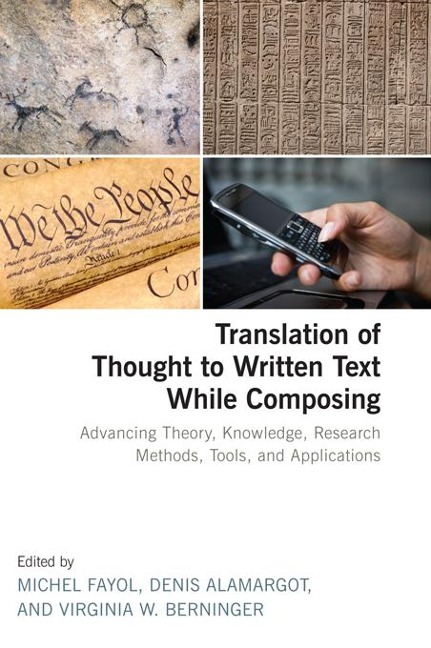
Translation of cognitive representations into written language is one of the most important processes in writing. This volume provides a long-awaited updated overview of the field. The contributors discuss each of the commonly used research methods for studying translation; theorize about the nature of the cognitive and language representations and cognitive/linguistic transformation mechanisms involved in translation during writing; and make the case that translation is a higher-order executive function that is fundamental to the writing process. The book also reviews the application of research to practice -- that is, the translation of the research findings in education and the work-world for individuals who interact with others using written language to communicate ideas. This volume provides a rich resource for student, theorists, and empirical researchers in cognitive psychology, linguistics, and education; and teachers and clinicians who can use the research in their work.
Michel Fayol, M. Denis Alamargot, Virginia Berninger
Part 1. Reexamining What Translation is and Its Role in Writing. Fayol, Alamargot, Berninger, Introduction to the Volume: From Cave Writers to Elite Scribes to Professional Writers to Universal Writers: Translation is Fundamental to Writing. Hayes, Translation and its Relation to Other Writing Processes: Evidence from Language Bursts, Revision, and Transcription. Berninger, Rijlaarsdam, Fayol, Mapping Research Questions about Translation to Methods, Measures, and Models. Part 2. Individual Differences and Developmental Research Methods for Generating and Applying Theory of Translation at Different Levels of Language to Writing. Berninger, Fayol, Alamargot, Contribution of the Pattern Analyzer, Oracle, Cross-Code Talker, Cross-Code Scribe, and Silent Orthographer in Learning to Transcribe and Translate at the Word-Level. Berninger, Hayes, Twenty Children on Writing Treks: Intra-Individual and Inter-Individual Variation in Their Developing, Self-Regulated Translation and Related Processes Grades 1 to 5. Verheyden, Van den Branden, Rijlaarsdam, Van den Bergh, De Maeijer, Translation Skills and Trade-Off in Young L2-Learners' Written Narrations. Part 3. Instructional Research with Improving Translation in Mind. Jones, Christensen, Impact of Teacher Professional Development on Understanding the Role of Handwriting during Translation of Beginning Writers: Improved Handwriting and Story Composing. Costa, Kitson, Knuth, Miller, Yerby, Anderson, Hooper, Beginning Writer's Translational Processes during Composing: Insights from Selected Neuropsychological Findings, Self-Talk Strategies, and Evidence-Based Interventions. Puranik, Wagner, Kim, Lopez, Assessing Elementary Students' Transcription and Text Generation during Written Translation: A Multivariate Approach. Dunn, Facilitating Children's Translation of Ideas into Written Language through Combining Art Activities and Self-Regulated Strategy Instruction for Writing. Part 4. Experimental Methods for Studying Translation in Real Time in Adults and Children. Fayol, Lété, From Ideas to Written Text: The Contribution of On-Line Studies to Understanding Written Composition. Alamargot, Chesnut, Caporossi, Using Eye and Pen Movements to Study the Writing Process. Lambert, Alamargot, Fayol, Why Use a Copy Task to Study Spelling in Handwriting? Part 5. Reflections on Past, Present, and Future of Translation Research. Neef, Braunschweig, Translation in the Context of Theoretical Writing System Research. Torrance, Final Comments on Translation. Glossary.
Dieses eBook wird im PDF-Format geliefert und ist mit einem Adobe Kopierschutz (DRM) versehen. Sie können dieses eBook mit allen Geräten lesen, die das PDF-Format und den Adobe Kopierschutz (DRM) unterstützen.
Zum Beispiel mit den folgenden Geräten:
• tolino Reader
Laden Sie das eBook direkt über den Reader-Shop auf dem tolino herunter oder übertragen Sie das eBook auf Ihren tolino mit einer kostenlosen Software wie beispielsweise Adobe Digital Editions.
• Sony Reader & andere eBook Reader
Laden Sie das eBook direkt über den Reader-Shop herunter oder übertragen Sie das eBook mit der kostenlosen Software Sony READER FOR PC/Mac oder Adobe Digital Editions auf ein Standard-Lesegeräte mit epub- und Adobe DRM-Unterstützung.
• Tablets & Smartphones
Möchten Sie dieses eBook auf Ihrem Smartphone oder Tablet lesen, finden Sie hier unsere kostenlose Lese-App für iPhone/iPad und Android Smartphone/Tablets.
• PC & Mac
Lesen Sie das eBook direkt nach dem Herunterladen mit einer kostenlosen Lesesoftware, beispielsweise Adobe Digital Editions, Sony READER FOR PC/Mac oder direkt über Ihre eBook-Bibliothek in Ihrem Konto unter „Meine eBooks“ - „online lesen“.
Schalten Sie das eBook mit Ihrer persönlichen Adobe ID auf bis zu sechs Geräten gleichzeitig frei.
Bitte beachten Sie, dass die Kindle-Geräte das Format nicht unterstützen und dieses eBook somit nicht auf Kindle-Geräten lesbar ist.