Und dann auf "Zum Home-Bildschirm [+]".

Stöbern
genialokal zum Startbildschirm hinzufügen
Installieren Sie die genialokal App auf Ihrem Startbildschirm für einen schnellen Zugriff und eine komfortable Nutzung.
Installieren Sie die genialokal App auf Ihrem Startbildschirm für einen schnellen Zugriff und eine komfortable Nutzung.
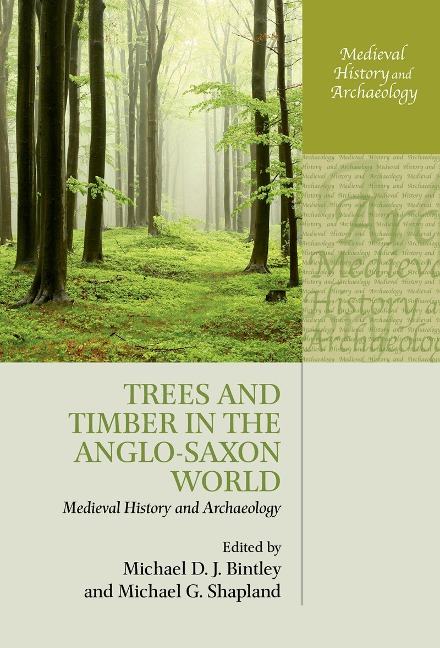
Trees were of fundamental importance in Anglo-Saxon society. Anglo-Saxons dwelt in timber houses, relied on woodland as an economic resource, and created a material culture of wood which was at least as meaningfully-imbued, and vastly more prevalent, than the sculpture and metalwork with which we associate them today. Trees held a central place in Anglo-Saxon belief systems, which carried into the Christian period, not least in the figure of the cross itself. Despite this, the transience of trees and timber in comparison to metal and stone has meant that the subject has received comparatively little attention from scholars. Trees and Timber in the Anglo-Saxon World constitutes the very first collection of essays written about the role of trees in early medieval England, bringing together established specialists and new voices to present an interdisciplinary insight into the complex relationship between the early English and their woodlands. The woodlands of England were not only deeply rooted in every aspect of Anglo-Saxon material culture, as a source of heat and light, food and drink, wood and timber for the construction of tools, weapons, and materials, but also in their spiritual life, symbolic vocabulary, and sense of connection to their beliefs and heritage. These essays do not merely focus on practicalities, such as carpentry techniques and the extent of woodland coverage, but rather explore the place of trees and timber in the intellectual lives of the early medieval inhabitants of England, using evidence from archaeology, place-names, landscapes, and written sources.
Michael D. J. Bintley studied a BA in English and an MA in Medieval Literature at UCL, before writing an interdisciplinary PhD thesis on Trees and Woodland in Anglo-Saxon Culture (2009). He lectured at University College London, Birkbeck College, and Corpus Christi College, Oxford, before being appointed Lecturer in Medieval Literature at Canterbury Christ Church University in 2012. His research is interdisciplinary, and focuses primarily on landscapes, religion, and society in early medieval England and Scandinavia.
Michael G. Shapland recently completed his PhD thesis at the Institute of Archaeology, University College London, entitled Buildings of Secular and Religious Lordship: Anglo-Saxon Tower-Nave Churches. He has a background in field archaeology, is an excavator and buildings specialist, and lectures part-time at the University of Winchester. His research focusses on Anglo-Saxon churches and aristocratic practice.
- List of illustrations - 1: Michael D. J. Bintley and Michael G. Shapland: An Introduction to Trees and Timber in the Anglo-Saxon World - Timber in Anglo-Saxon building practice - 2: Michael G. Shapland: Meanings of Timber and Stone in Anglo-Saxon Building Practice - 3: Mark Gardiner: The Sophistication of Late Anglo-Saxon Timber Buildings - 4: John Baker: References to Timber Building Materials in Old English Place-Names - Perceptions of Wood and Wooden Objects - 5: Martin G. Comey: The Wooden Drinking Vessels in the Sutton Hoo Assemblage: Materials, Morphology and Usage - 6: Jennifer Neville: The Exeter Book Riddles' Precarious Insights into Wooden Artefacts - 7: Michael D. J. Bintley: Brungen of Bearwe: Ploughing Common Furrows in Exeter Book Riddle 21, The Dream of the Rood, and the Æcerbot Charm - 8: Pirkko Koppinen: Breaking the Mould: Solving the Old English Riddle 12 as Wudu 'Wood' - Trees and Woodland in Anglo-Saxon Belief - 9: Clive Tolley: What is a 'World Tree', and Should We Expect to Find One Growing in Anglo-Saxon England? - 10: John Blair: Holy Beams: Anglo-Saxon Cult Sites and the Place-Name Element Beam - 11: Michael D. J. Bintley: Recasting the Role of Sacred Trees in Anglo-Saxon Spiritual History: the South Sandbach Cross 'Ancestors of Christ' Panel in its Cultural Contexts - 12: Della Hooke: Christianity and the 'Sacred Tree'
Dieses eBook wird im PDF-Format geliefert und ist mit einem Adobe Kopierschutz (DRM) versehen. Sie können dieses eBook mit allen Geräten lesen, die das PDF-Format und den Adobe Kopierschutz (DRM) unterstützen.
Zum Beispiel mit den folgenden Geräten:
• tolino Reader
Laden Sie das eBook direkt über den Reader-Shop auf dem tolino herunter oder übertragen Sie das eBook auf Ihren tolino mit einer kostenlosen Software wie beispielsweise Adobe Digital Editions.
• Sony Reader & andere eBook Reader
Laden Sie das eBook direkt über den Reader-Shop herunter oder übertragen Sie das eBook mit der kostenlosen Software Sony READER FOR PC/Mac oder Adobe Digital Editions auf ein Standard-Lesegeräte mit epub- und Adobe DRM-Unterstützung.
• Tablets & Smartphones
Möchten Sie dieses eBook auf Ihrem Smartphone oder Tablet lesen, finden Sie hier unsere kostenlose Lese-App für iPhone/iPad und Android Smartphone/Tablets.
• PC & Mac
Lesen Sie das eBook direkt nach dem Herunterladen mit einer kostenlosen Lesesoftware, beispielsweise Adobe Digital Editions, Sony READER FOR PC/Mac oder direkt über Ihre eBook-Bibliothek in Ihrem Konto unter „Meine eBooks“ - „online lesen“.
Schalten Sie das eBook mit Ihrer persönlichen Adobe ID auf bis zu sechs Geräten gleichzeitig frei.
Bitte beachten Sie, dass die Kindle-Geräte das Format nicht unterstützen und dieses eBook somit nicht auf Kindle-Geräten lesbar ist.