Und dann auf "Zum Home-Bildschirm [+]".

Stöbern
genialokal zum Startbildschirm hinzufügen
Installieren Sie die genialokal App auf Ihrem Startbildschirm für einen schnellen Zugriff und eine komfortable Nutzung.
Installieren Sie die genialokal App auf Ihrem Startbildschirm für einen schnellen Zugriff und eine komfortable Nutzung.
Ihr gewünschter Artikel ist in 0 Buchhandlungen vorrätig - wählen Sie hier eine Buchhandlung in Ihrer Nähe aus:

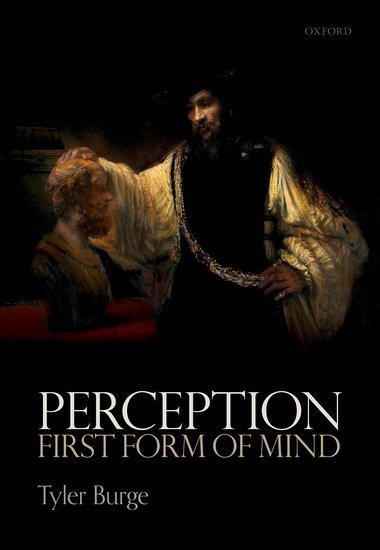
Tyler Burge offers an agenda-setting, scientifically rigorous account of the most primitive form of representational mind: perception. He explains how perception works and how it relates to other mental capacities--conation, attention, memory, anticipation, affect, learning, imagining--and clarifies the distinction between perceiving and thinking.
Tyler Burge is Flint Professor of Philosophy, UCLA, where has taught since 1971. He has held visiting positions at Harvard, MIT, Stanford, Munich, Bayreuth, Bologna, and Zurich. He has delivered numerous named lecture series, including the Locke Lectures, Dewey Lectures, Whitehead Lectures, Kant Lectures, Petrus Hispanus Lectures, and Nicod Lectures. His work has made contributions to philosophy of mind, philosophy of psychologyepistemology, philosophy of language, philosophy of logic, and the history of philosophy. He has published four books with OUP: Origins of Objectivity (2010) and three volumes of essays, Truth, Thought, Reason (2005), Foundations of Mind (2007), and Cognition through Understanding (2013).
Preface
Part I: Perception
1: Introduction
2: Perception
3: Perceptual Constancy: A Central Psychological Natural Kind
Part II: Form
4: Some Basics about Perception and Perceptual Systems
5: Perceptual Reference Requires Perceptual Attribution
6: Form and Semantics of Perceptual Representational Contents
7: Perceptual Attributives and Referential Applications in Perceptual Constancies
8: Egocentric Indexing in Perceptual Spatial and Temporal Frameworks
9: The Iconic Nature of Perception
Part III: Formation
10: First-formed Perception
11: Intra-saccadic Perception and Recurrent Processing
12: Further Attributives: Primitive Attribution of Causation, Agency
Part IV: System
13: Perceptual-level Representation and Categorization
14: Perceptual-level Conation and Relatively Primitive, Perceptually Guided Action
15: Perceptual Attention
16: Perceptual Memory I: Shorter Term Systems
17: Perceptual Memory II: Visual Perceptual Long-Term Memory
18: Perceptual Learning, Perceptual Anticipation, Perceptual Imagining
19: Perception and Cognition
20: Conclusion