Und dann auf "Zum Home-Bildschirm [+]".

Stöbern
genialokal zum Startbildschirm hinzufügen
Installieren Sie die genialokal App auf Ihrem Startbildschirm für einen schnellen Zugriff und eine komfortable Nutzung.
Installieren Sie die genialokal App auf Ihrem Startbildschirm für einen schnellen Zugriff und eine komfortable Nutzung.
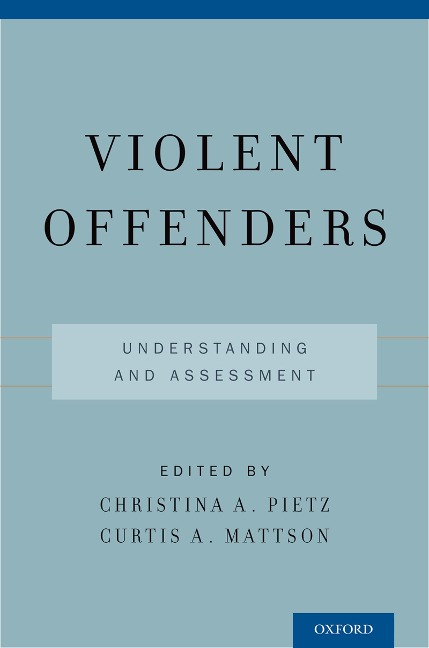
Offenders convicted of violent crimes accounted for almost 15,000 (7.5%) of the federal inmate population in recent reports; and, despite the public's perception that the overall crime rate is down, there are indications that rates of violent crime may actually be increasing in certain geographic areas and populations. In response, forensic psychologists are increasingly being called upon to understand the causes of violence, predict violent behavior and the likelihood or recidivism, develop treatment programs, and even assist law enforcement in solving crimes. The assessment of violence is an ever-evolving field of study and the need for updated analysis of personality constructs, etiological links, corollary elements, and tools for violence prediction are of primary import. Violent Offenders addresses the numerous challenges and issues facing individuals working with this population and provides broad coverage regarding specific groups of violent perpetrators. It looks at a wide-range of topics and offending populations including violent children and adolescents, intimate partner violence, terrorism, sexually based crimes, gang violence, institutional violence, and violence perpetrated by police officers. Skillfully edited by Christina Pietz, a forensic psychologist, and Curtis Mattson, a clinical psychologist, this volume offers insight into current psychological theories of violence and addresses the links, both evident and assumed, between psychological disorders and violence. Chapters are authored by leaders in their fields and cover topics such as the psychiatric treatment of violent behavior, assessment and prediction of risk for future dangerousness, special considerations for ethical conduct, research considerations, and the etiological associations of violence with neurophysiology, substance abuse, and environment. Violent Offenders will benefit clinicians and professionals working in correctional and forensic fields and is appropriate for use in clinical and counseling graduate programs that offer specialized training in correctional and/or forensic psychology and for courses in deviant behavior and setting-specific assessment.
Christina A. Pietz, PhD, ABPP, is a Forensic Psychologist at the United States Medical Center for Federal Prisoners in Springfield, MO, and at Burrell Behavioral Health. She has completed psychological evaluations for federal courts throughout the United States, and she has testified as an expert witness in federal court, state court, and military court. Dr. Pietz is also Director of Forensic Training at the Forest Institute of Professional Psychology and Past President of the American Board of Forensic Psychology. Currently, she serves on the American Board of Psychology Board of Trustees as the representative for the American Board of Forensic Psychology. Dr. Curtis A. Mattson, PsyD, earned his PsyD from the Forest Institute of Professional Psychology in 2009. He completed an internship in correctional psychology and a postdoctoral residency with specializations in forensic psychology and personality assessment. Currently, he is a licensed psychologist and professor at the Forest Institute, where he teaches courses in assessment and personality.
About the Editors Contributors Section I. Overview and Constructs of Violence 1. Psychological Perspectives of Violence Melanie Schettler 2. Antisocial Behavior among Children in Poverty: Understanding Environmental Effects in Daily Life Michael A. Russell and Candice L. Odgers 3. Substance Abuse and Violence Curtis A. Mattson and Christina A. Pietz 4. Major Mental Disorders and Violence Laura S. Guy and Kevin S. Douglas 5. Aggressive Externalizing Disorders: Conduct Disorder, Antisocial Personality Disorder, and Psychopathy Laura E. Drislane, Noah C. Venables, and Christopher J. Patrick Section II. Special Offender Populations 6. Juvenile Homicide: Trends, Correlates, Causal Factors, and Outcomes Kathleen M. Heide 7. Physically and Sexually Violent Females Geoffrey R. McKee and R. Gregg Dwyer 8. Men Who Kill Bethany K. Walters and Eric W. Hickey 9. Psychological Factors in Intimate Partner Violence Donald Dutton and Christie Tetreault 10. Perpetrators of Sexual Violence: Demographics, Assessments, Interventions Alix M. McLearen, Ivonne E. Bazerman, and Katherine Bracken-Minor 11. Under the Color of Authority: Police Officers as Violent Offenders David M. Corey and Casey O. Stewart 12. Institutional Violence Risk: Theory, Assessment, and Management Daniel J. Neller and Michael J. Vitacco 13. Youth Gangs: An Overview of Key Findings and Directions for the Future Terrance J. Taylor and J. Michael Vecchio 14. Understanding Terrorists Randy Borum Section III. Evaluative Approach and Special Considerations 15. Legal, Clinical and Scientific Foundations of Violence Risk Assessment David F. Mrad and Daniel J. Neller 16. Use of Assessment Measures for the Evaluation of Future Risk Chad A. Brinkley 17. The Structured Professional Judgment Approach to Violence Risk Assessment and Management: Why it is Useful, How to Use it, and its Empirical Support Kevin S. Douglas and Henrik Belfrage 18. Assessing Facets of Personality and Psychopathology in Violent Offenders Dustin B. Wygant, Kathryn C. Applegate, and Tina D. Wall 19. Assessing malingering in violent offenders Holly A. Miller 20. Assessment of Neurophysiological and Neuropsychological Bases for Violence Rachel Fazio and Robert L. Denney 21. Violence: Psychiatric Assessment and Intervention Charles Scott, Philip J. Resnick, and William Newman 22. Ethical Considerations and Professional Posture Kimberly Larson, Robert Kinscherff, and Stacey Goldstein-Dwyer 23. Conducting Research with Special Populations Gianni Pirelli and Patricia A. Zapf Index
Dieses eBook wird im PDF-Format geliefert und ist mit einem Adobe Kopierschutz (DRM) versehen. Sie können dieses eBook mit allen Geräten lesen, die das PDF-Format und den Adobe Kopierschutz (DRM) unterstützen.
Zum Beispiel mit den folgenden Geräten:
• tolino Reader
Laden Sie das eBook direkt über den Reader-Shop auf dem tolino herunter oder übertragen Sie das eBook auf Ihren tolino mit einer kostenlosen Software wie beispielsweise Adobe Digital Editions.
• Sony Reader & andere eBook Reader
Laden Sie das eBook direkt über den Reader-Shop herunter oder übertragen Sie das eBook mit der kostenlosen Software Sony READER FOR PC/Mac oder Adobe Digital Editions auf ein Standard-Lesegeräte mit epub- und Adobe DRM-Unterstützung.
• Tablets & Smartphones
Möchten Sie dieses eBook auf Ihrem Smartphone oder Tablet lesen, finden Sie hier unsere kostenlose Lese-App für iPhone/iPad und Android Smartphone/Tablets.
• PC & Mac
Lesen Sie das eBook direkt nach dem Herunterladen mit einer kostenlosen Lesesoftware, beispielsweise Adobe Digital Editions, Sony READER FOR PC/Mac oder direkt über Ihre eBook-Bibliothek in Ihrem Konto unter „Meine eBooks“ - „online lesen“.
Schalten Sie das eBook mit Ihrer persönlichen Adobe ID auf bis zu sechs Geräten gleichzeitig frei.
Bitte beachten Sie, dass die Kindle-Geräte das Format nicht unterstützen und dieses eBook somit nicht auf Kindle-Geräten lesbar ist.