Und dann auf "Zum Home-Bildschirm [+]".

Stöbern
genialokal zum Startbildschirm hinzufügen
Installieren Sie die genialokal App auf Ihrem Startbildschirm für einen schnellen Zugriff und eine komfortable Nutzung.
Installieren Sie die genialokal App auf Ihrem Startbildschirm für einen schnellen Zugriff und eine komfortable Nutzung.
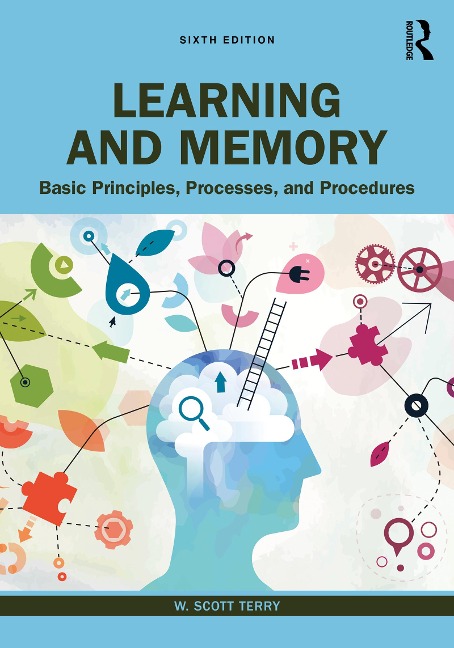
Learning and Memory provides a balanced review of the core methods and the latest research on animal learning and human memory. Topical coverage ranges from the basic and central processes of learning, including classical and instrumental conditioning and encoding and storage in long-term memory, to topics not traditionally covered, such as spatial learning, motor skills, and implicit memory. The general rules of learning are reviewed along with the exceptions, limitations, and best applications of these rules. Alternative approaches to learning and memory, including cognitive, neuroscientific, functional, and behavioral, are also discussed. Individual differences in age, gender, learning abilities, and social and cultural background are explored throughout the text and presented in a dedicated chapter. The relevance of basic principles is highlighted throughout the text with everyday examples that ignite reader interest in addition to more traditional examples from human and animal laboratory studies. Research examples are drawn from education, neuropsychology, psychiatry, nursing, and ecological (or everyday) memory. Each chapter begins with an outline and concludes with a detailed summary. Applications and extensions are showcased in text boxes as well as in distinct applications sections in every chapter, and review and recapitulation sections are interspersed throughout the chapters.
W. Scott Terry is Professor Emeritus at the University of North Carolina at Charlotte where he taught psychology of learning to undergraduates and graduate students in industrial-organizational psychology, clinical psychology, and education.
Preface, Acknowledgments, 1. Introduction, 2. Habituation and Other Forms of Stimulus Learning, 3. Classical Conditioning, 4. Instrumental Conditioning: Reward, 5. Instrumental Conditioning: Nonreward, Punishment, and Avoidance, 6. Verbal Learning, 7. Human Memory Conceptual Approaches, 8. Short-Term Memory, 9. Encoding, 10. Storage and Retrieval, 11. Spatial, Motor-Skills, and Implicit Learning, 12. Individual Differences in Learning and Memory, Glossary, References, Author Index, Subject Index
Dieses eBook wird im PDF-Format geliefert und ist mit einem Adobe Kopierschutz (DRM) versehen. Sie können dieses eBook mit allen Geräten lesen, die das PDF-Format und den Adobe Kopierschutz (DRM) unterstützen.
Zum Beispiel mit den folgenden Geräten:
• tolino Reader
Laden Sie das eBook direkt über den Reader-Shop auf dem tolino herunter oder übertragen Sie das eBook auf Ihren tolino mit einer kostenlosen Software wie beispielsweise Adobe Digital Editions.
• Sony Reader & andere eBook Reader
Laden Sie das eBook direkt über den Reader-Shop herunter oder übertragen Sie das eBook mit der kostenlosen Software Sony READER FOR PC/Mac oder Adobe Digital Editions auf ein Standard-Lesegeräte mit epub- und Adobe DRM-Unterstützung.
• Tablets & Smartphones
Möchten Sie dieses eBook auf Ihrem Smartphone oder Tablet lesen, finden Sie hier unsere kostenlose Lese-App für iPhone/iPad und Android Smartphone/Tablets.
• PC & Mac
Lesen Sie das eBook direkt nach dem Herunterladen mit einer kostenlosen Lesesoftware, beispielsweise Adobe Digital Editions, Sony READER FOR PC/Mac oder direkt über Ihre eBook-Bibliothek in Ihrem Konto unter „Meine eBooks“ - „online lesen“.
Schalten Sie das eBook mit Ihrer persönlichen Adobe ID auf bis zu sechs Geräten gleichzeitig frei.
Bitte beachten Sie, dass die Kindle-Geräte das Format nicht unterstützen und dieses eBook somit nicht auf Kindle-Geräten lesbar ist.