Und dann auf "Zum Home-Bildschirm [+]".

Stöbern
genialokal zum Startbildschirm hinzufügen
Installieren Sie die genialokal App auf Ihrem Startbildschirm für einen schnellen Zugriff und eine komfortable Nutzung.
Installieren Sie die genialokal App auf Ihrem Startbildschirm für einen schnellen Zugriff und eine komfortable Nutzung.
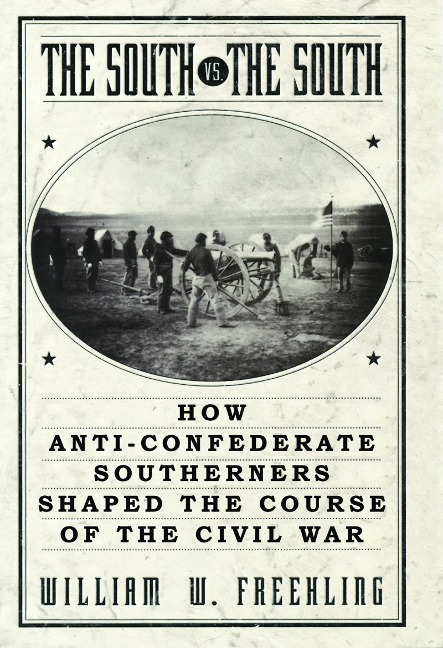
Why did the Confederacy lose the Civil War? Most historians point to the larger number of Union troops, for example, or the North's greater industrial might. Now, in The South Vs. the South, one of America's leading authorities on the Civil War era offers an entirely new answer to this question. William Freehling argues that anti-Confederate Southerners--specifically, border state whites and southern blacks--helped cost the Confederacy the war. White men in such border states as Missouri, Kentucky, and Maryland, Freehling points out, were divided in their loyalties--but far more joined the Union army (or simply stayed home) than marched off in Confederate gray. If they had enlisted as rebel troops in the same proportion as white men did farther south, their numbers would have offset all the Confederate casualties during four years of war. In addition, when those states stayed loyal, the vast majority of the South's urban population and industrial capacity remained in Union hands. And many forget, Freehling writes, that the slaves' own decisions led to a series of white decisions (culminating in the Emancipation Proclamation) that turned federal forces into an army of liberation, depriving the South of labor and adding essential troops to the blue ranks. Whether revising our conception of slavery or of Abraham Lincoln, or establishing the antecedents of Martin Luther King, or analyzing Union military strategy, or uncovering new meanings in what is arguably America's greatest piece of sculpture, Augustus St.-Gaudens' Shaw Memorial, Freehling writes with piercing insight and rhetorical verve. Concise and provocative, The South Vs. the South will forever change the way we view the Civil War.
William W. Freehling is Professor of History and Otis A. Singletary Chair in Humanities at the University of Kentucky, and is the author of The Road to Disunion, Volume I: Disunionists at Bay, 1776-1854, which won the Owsley Prize. He lives near Lexington, Kentucky.
Dieses eBook wird im PDF-Format geliefert und ist mit einem Adobe Kopierschutz (DRM) versehen. Sie können dieses eBook mit allen Geräten lesen, die das PDF-Format und den Adobe Kopierschutz (DRM) unterstützen.
Zum Beispiel mit den folgenden Geräten:
• tolino Reader
Laden Sie das eBook direkt über den Reader-Shop auf dem tolino herunter oder übertragen Sie das eBook auf Ihren tolino mit einer kostenlosen Software wie beispielsweise Adobe Digital Editions.
• Sony Reader & andere eBook Reader
Laden Sie das eBook direkt über den Reader-Shop herunter oder übertragen Sie das eBook mit der kostenlosen Software Sony READER FOR PC/Mac oder Adobe Digital Editions auf ein Standard-Lesegeräte mit epub- und Adobe DRM-Unterstützung.
• Tablets & Smartphones
Möchten Sie dieses eBook auf Ihrem Smartphone oder Tablet lesen, finden Sie hier unsere kostenlose Lese-App für iPhone/iPad und Android Smartphone/Tablets.
• PC & Mac
Lesen Sie das eBook direkt nach dem Herunterladen mit einer kostenlosen Lesesoftware, beispielsweise Adobe Digital Editions, Sony READER FOR PC/Mac oder direkt über Ihre eBook-Bibliothek in Ihrem Konto unter „Meine eBooks“ - „online lesen“.
Schalten Sie das eBook mit Ihrer persönlichen Adobe ID auf bis zu sechs Geräten gleichzeitig frei.
Bitte beachten Sie, dass die Kindle-Geräte das Format nicht unterstützen und dieses eBook somit nicht auf Kindle-Geräten lesbar ist.