Und dann auf "Zum Home-Bildschirm [+]".

Stöbern
genialokal zum Startbildschirm hinzufügen
Installieren Sie die genialokal App auf Ihrem Startbildschirm für einen schnellen Zugriff und eine komfortable Nutzung.
Installieren Sie die genialokal App auf Ihrem Startbildschirm für einen schnellen Zugriff und eine komfortable Nutzung.
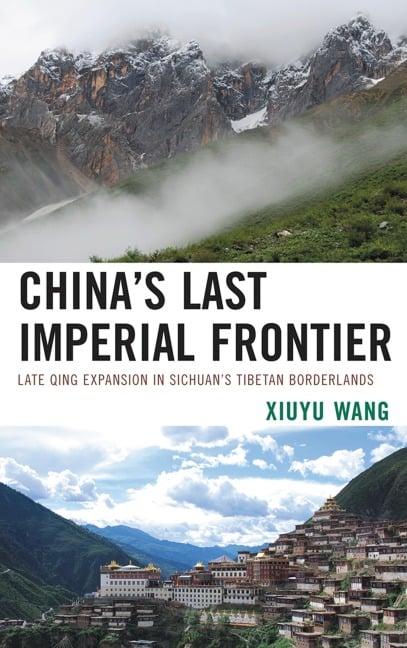
China's Last Imperial Frontier explores imperial China's frontier expansion in the Tibetan borderlands during the last decades of the Qing. The empire mounted a series of military attacks against indigenous chieftaincies and Buddhist monasteries in the east Tibetan region seeking to replace native authorities with state bureaucrats by redrawing the politically diverse frontier into a system of Chinese-style counties. Historically, at all the strategic frontier locations, the state had been for the most part outstripped by local institutions in political, military, and ideological strengths. With perceived threats from the Anglo-Russian "Great Game" accentuating Qing vulnerability in Tibet, the Sichuan government took advantage of the frontier crisis by encroaching upon local and Lhasa domains in Kham. Even though the Kham campaign was portrayed in Qing official discourse as a part of the nationwide reforms of "New Policies" (xinzheng) and administrative regularization (gaitu guiliu), its progress on the ground was influenced by the dynamics of interregional relations, including Sichuan's competition with central Tibet, power struggles among Qing frontier officials, and varied Khampa responses to the new regime. The growing regionalism intensified the resistance of local forces to imperial authority. Despite the uneven results of the late Qing campaign, it had come to serve as an important source of sovereignty claims and policy inspirations for the subsequent governments.
Xiuyu Wang is professor of history at Washington State University Vancouver.
List of Tables and Figures
Acknowledgments
Introduction
Chapter 1. Qing Discourse and Capability in Eastern Tibet
Chapter 2. Frontier Society and Power
Chapter 3. Lu Chuanlin's "Great Game" in Nyarong
Chapter 4. Frontier Incident and War Making
Chapter 5. State Violence and Local Resistance: the Kham War
Chapter 6. "Regularization" Reconsidered: Variants of Gaitu Guiliu in Northern Kham
Chapter 7. Fashioning an "Inner Region beyond the Pass"
Chapter 8. Developing the West: Opening Kham Lands, Mines and Young Minds
Conclusion
Abbreviations
Bibliography
Character List
Index
Dieses eBook wird im PDF-Format geliefert und ist mit einem Adobe Kopierschutz (DRM) versehen. Sie können dieses eBook mit allen Geräten lesen, die das PDF-Format und den Adobe Kopierschutz (DRM) unterstützen.
Zum Beispiel mit den folgenden Geräten:
• tolino Reader
Laden Sie das eBook direkt über den Reader-Shop auf dem tolino herunter oder übertragen Sie das eBook auf Ihren tolino mit einer kostenlosen Software wie beispielsweise Adobe Digital Editions.
• Sony Reader & andere eBook Reader
Laden Sie das eBook direkt über den Reader-Shop herunter oder übertragen Sie das eBook mit der kostenlosen Software Sony READER FOR PC/Mac oder Adobe Digital Editions auf ein Standard-Lesegeräte mit epub- und Adobe DRM-Unterstützung.
• Tablets & Smartphones
Möchten Sie dieses eBook auf Ihrem Smartphone oder Tablet lesen, finden Sie hier unsere kostenlose Lese-App für iPhone/iPad und Android Smartphone/Tablets.
• PC & Mac
Lesen Sie das eBook direkt nach dem Herunterladen mit einer kostenlosen Lesesoftware, beispielsweise Adobe Digital Editions, Sony READER FOR PC/Mac oder direkt über Ihre eBook-Bibliothek in Ihrem Konto unter „Meine eBooks“ - „online lesen“.
Schalten Sie das eBook mit Ihrer persönlichen Adobe ID auf bis zu sechs Geräten gleichzeitig frei.
Bitte beachten Sie, dass die Kindle-Geräte das Format nicht unterstützen und dieses eBook somit nicht auf Kindle-Geräten lesbar ist.