Und dann auf "Zum Home-Bildschirm [+]".

Stöbern
genialokal zum Startbildschirm hinzufügen
Installieren Sie die genialokal App auf Ihrem Startbildschirm für einen schnellen Zugriff und eine komfortable Nutzung.
Installieren Sie die genialokal App auf Ihrem Startbildschirm für einen schnellen Zugriff und eine komfortable Nutzung.
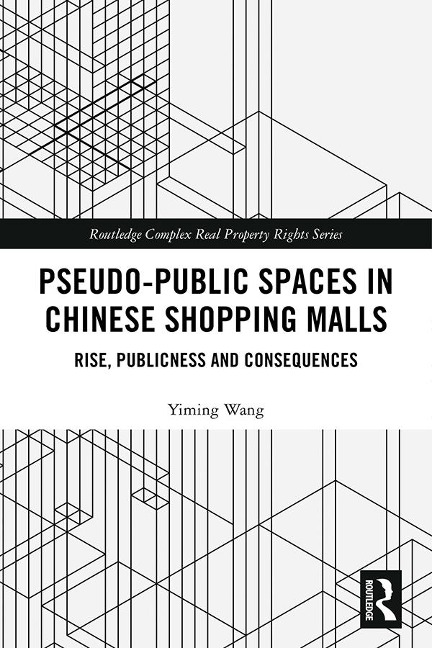
Shopping malls in China create a new pseudo-public urban space which is under the control of private or quasi-public power structure. As they are open for public use, mediated by the co-mingling of private property rights and public meanings of urban space, the rise, publicness and consequences of the boom in the construction of shopping malls raises major questions in spatial political economy and magnifies existing theoretical debates between the natural and conventional schools of property rights. In examining these issues this book develops a theoretical framework starting with a critique of the socio-spatial debate between two influential bodies of work represented by the work of Henri Lefebvre and David Harvey. Drawing on the framework, the book examines why pseudo-public spaces have been growing so rapidly in China since the 1980s; assesses to what degree pseudo-public spaces are public, and how they affect the publicness of Chinese cities; and explores the consequences of their rise. Findings of this book provide insights that can help to better understand Chinese urbanism and also have the potential to inform urban policy in China. This book will be of interest to academics and researchers in both Chinese studies and urban studies.
Yiming Wang is a Postdoctoral Research Fellow at the College of Architecture and Urban Planning (CAUP) in Tongji University, China. He completed his PhD at the University of Technology Sydney, Australia. His research is centred on Chinese urbanism, spatial political economy and the publicness of space.
Contents List of Figures List of Tables Series Editor Foreword Preface Abbreviations 1 Introduction 2 Understanding Spatial Transformation 3 The Rise of Pseudo-Public Spaces 4 The Publicness of Pseudo-Public Spaces 5 Consequences of Pseudo-Public Spaces 6 Conclusion Bibliography Appendices Index
Dieses eBook wird im PDF-Format geliefert und ist mit einem Adobe Kopierschutz (DRM) versehen. Sie können dieses eBook mit allen Geräten lesen, die das PDF-Format und den Adobe Kopierschutz (DRM) unterstützen.
Zum Beispiel mit den folgenden Geräten:
• tolino Reader
Laden Sie das eBook direkt über den Reader-Shop auf dem tolino herunter oder übertragen Sie das eBook auf Ihren tolino mit einer kostenlosen Software wie beispielsweise Adobe Digital Editions.
• Sony Reader & andere eBook Reader
Laden Sie das eBook direkt über den Reader-Shop herunter oder übertragen Sie das eBook mit der kostenlosen Software Sony READER FOR PC/Mac oder Adobe Digital Editions auf ein Standard-Lesegeräte mit epub- und Adobe DRM-Unterstützung.
• Tablets & Smartphones
Möchten Sie dieses eBook auf Ihrem Smartphone oder Tablet lesen, finden Sie hier unsere kostenlose Lese-App für iPhone/iPad und Android Smartphone/Tablets.
• PC & Mac
Lesen Sie das eBook direkt nach dem Herunterladen mit einer kostenlosen Lesesoftware, beispielsweise Adobe Digital Editions, Sony READER FOR PC/Mac oder direkt über Ihre eBook-Bibliothek in Ihrem Konto unter „Meine eBooks“ - „online lesen“.
Schalten Sie das eBook mit Ihrer persönlichen Adobe ID auf bis zu sechs Geräten gleichzeitig frei.
Bitte beachten Sie, dass die Kindle-Geräte das Format nicht unterstützen und dieses eBook somit nicht auf Kindle-Geräten lesbar ist.