Und dann auf "Zum Home-Bildschirm [+]".

Stöbern
genialokal zum Startbildschirm hinzufügen
Installieren Sie die genialokal App auf Ihrem Startbildschirm für einen schnellen Zugriff und eine komfortable Nutzung.
Installieren Sie die genialokal App auf Ihrem Startbildschirm für einen schnellen Zugriff und eine komfortable Nutzung.

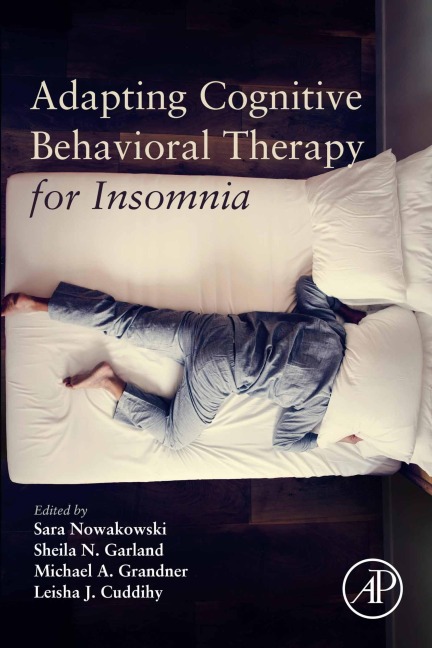
Cognitive behavioral therapy for insomnia (CBT-I) has emerged as the standard first-line treatment for insomnia. The number of patients receiving non-medication treatments is increasing, and there is a growing need to address a wide range of patient backgrounds, characteristics, and medical and psychiatric comorbidities. Adapting Cognitive Behavioral Therapy for Insomnia identifies for clinicians how best to deliver and/or modify CBT-I based on the needs of their patients. The book recommends treatment modifications based on patient age, comorbid conditions, and for various special populations. - Summarizes research on cognitive behavior therapy for insomnia (CBT-I)
- Directs clinicians how to modify CBT-I for comorbid patient conditions
- Discusses comorbid sleep, psychiatric, and medical disorders
- Specifies modifications across the lifespan for different client ages and conditions
- Includes special populations: short sleepers and more
PrefaceAcknowledgments Part 1: Traditional CBT-I components and delivery 1. Standard cognitive behavioral therapy for insomnia (CBT-I)Alexandria Muench, Ivan Vargas, Donn Posner, and Michael L. Perlis Part 2: CBT-I in other sleep disorders 2. CBT-I in patients with obstructive sleep apneaEarl Charles Crew 3. CBT-I for patients with phase disorders or insomnia with circadian misalignmentMarissa A. Evans and Brant P. Hasler 4. CBT-I for patients with shift work disorderPhilip Cheng 5. CBT-I for patients with hypersomnia disordersJason C. Ong and Matthew D. Schuiling 6. CBT-I for patients with orthosomniaKelly Glazer Baron Part 3: CBT-I in psychiatric disorders 7. CBT-I for patients with depressionJennifer Goldschmied and Philip Gehrman 8. CBT-I for patients with schizophrenia and other psychotic disordersAndrew Scott Tubbs and Michael A. Grandner 9. CBT-I for people diagnosed with bipolar disorder: Moving from a disorder-focused to a transdiagnostic conceptualizationAllison G. Harvey and Caitlin E. Gasperetti 10. CBT-I in patients with alcohol use and cannabis use disordersGabrielle E. Bowyer, Trevor M. Brooks, and Deirdre A. Conroy Part 4: CBT-I in medical disorders 11. CBT-I for patients with chronic painLeisha J. Cuddihy, Sara Nowakowski, Michael A. Grandner, Jessica M. Meers,and Michael T. Smith 12. CBT-I during and after a cancer diagnosisSheila N. Garland 13. CBT-I in patients with a history of traumatic brain injuryErin A. Almklov, Guadalupe L. Rivera, and Henry Orff Part 5: CBT-I across the lifespan 14. CBT-I for adolescentsMelisa E. Moore and Alison R. Hartman 15. CBT-I in pregnancyAnna L. MacKinnon, Ivan D. Sedov, and Lianne M. Tomfohr-Madsen 16. CBT-I for perimenopause and postmenopauseJessica M. Meers, Darius B. Dawson, and Sara Nowakowski 17. CBT-I for older adultsJaime M. Hughes and Jennifer L. Martin Part 6: Other special considerations 18. CBT-I in the short sleep duration phenotypeJulio Fernandez-Mendoza 19. CBT-I for people who failed CBT-IMichael A. Grandner, Denise Rodriguez Esquivel, and Spencer Dawson 20. CBT-I in patients who wish to reduce use of hypnotic medicationNorah Simpson and Rachel Manber