Und dann auf "Zum Home-Bildschirm [+]".

Stöbern
genialokal zum Startbildschirm hinzufügen
Installieren Sie die genialokal App auf Ihrem Startbildschirm für einen schnellen Zugriff und eine komfortable Nutzung.
Installieren Sie die genialokal App auf Ihrem Startbildschirm für einen schnellen Zugriff und eine komfortable Nutzung.
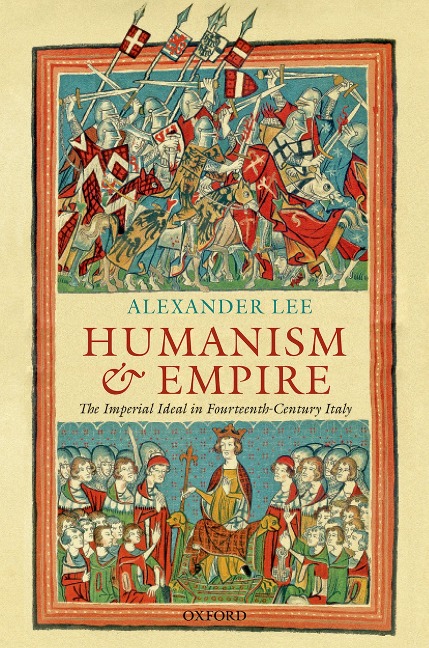
For more than a century, scholars have believed that Italian humanism was predominantly civic in outlook. Often serving in communal government, fourteenth-century humanists like Albertino Mussato and Coluccio Saltuati are said to have derived from their reading of the Latin classics a rhetoric of republican liberty that was opposed to the 'tyranny' of neighbouring signori and of the German emperors. In this ground-breaking study, Alexander Lee challenges this long-held belief. From the death of Frederick II in 1250 to the failure of Rupert of the Palatinate's ill-fated expedition in 1402, Lee argues, the humanists nurtured a consistent and powerful affection for the Holy Roman Empire. Though this was articulated in a variety of different ways, it was nevertheless driven more by political conviction than by cultural concerns. Surrounded by endless conflict - both within and between city-states - the humanists eagerly embraced the Empire as the surest guarantee of peace and liberty, and lost no opportunity to invoke its protection. Indeed, as Lee shows, the most ardent appeals to imperial authority were made not by 'signorial' humanists, but by humanists in the service of communal regimes. The first comprehensive, synoptic study of humanistic ideas of Empire in the period c.1250-1402, this volume offers a radically new interpretation of fourteenth-century political thought, and raises wide-ranging questions about the foundations of modern constitutional ideas. As such, it is essential reading not just for students of Renaissance Italy and the history of political thought, but for all those interested in understanding the origins of liberty
Alexander Lee is a fellow in the Centre for the Study of the Renaissance at the University of Warwick. Educated at the universities of Cambridge and Edinburgh, he has previously held positions at the University of Oxford, the Université du Luxembourg, and the Università degli studi di Bergamo. His recent publications include Petrarch and St. Augustine: Classical Scholarship, Christian Theology, and the Origins of the Renaissance in Italy (2012) and The Ugly Renaissance (2013). He is currently completing a biography of Niccolò Machiavelli.
- Introduction: Empire and Humanism - Part I The Defence of Empire - 1: Communes, Signori, and Empire (c.1260-c.1335) - 2: Providence, History, and Empire (c.1290-c.1335) - 3: Italy, Rome, and Empire (c.1335-1369) - 4: The Twilight of Empire (1369-1402) - Part II The Dynamics of Empire - 5: The Bounds of Empire - 6: Imperium and Sacerdotium - 7: An Elective Empire - Epilogue: Humanism and Empire - Bibliography
Dieses eBook wird im PDF-Format geliefert und ist mit einem Adobe Kopierschutz (DRM) versehen. Sie können dieses eBook mit allen Geräten lesen, die das PDF-Format und den Adobe Kopierschutz (DRM) unterstützen.
Zum Beispiel mit den folgenden Geräten:
• tolino Reader
Laden Sie das eBook direkt über den Reader-Shop auf dem tolino herunter oder übertragen Sie das eBook auf Ihren tolino mit einer kostenlosen Software wie beispielsweise Adobe Digital Editions.
• Sony Reader & andere eBook Reader
Laden Sie das eBook direkt über den Reader-Shop herunter oder übertragen Sie das eBook mit der kostenlosen Software Sony READER FOR PC/Mac oder Adobe Digital Editions auf ein Standard-Lesegeräte mit epub- und Adobe DRM-Unterstützung.
• Tablets & Smartphones
Möchten Sie dieses eBook auf Ihrem Smartphone oder Tablet lesen, finden Sie hier unsere kostenlose Lese-App für iPhone/iPad und Android Smartphone/Tablets.
• PC & Mac
Lesen Sie das eBook direkt nach dem Herunterladen mit einer kostenlosen Lesesoftware, beispielsweise Adobe Digital Editions, Sony READER FOR PC/Mac oder direkt über Ihre eBook-Bibliothek in Ihrem Konto unter „Meine eBooks“ - „online lesen“.
Schalten Sie das eBook mit Ihrer persönlichen Adobe ID auf bis zu sechs Geräten gleichzeitig frei.
Bitte beachten Sie, dass die Kindle-Geräte das Format nicht unterstützen und dieses eBook somit nicht auf Kindle-Geräten lesbar ist.