Und dann auf "Zum Home-Bildschirm [+]".

Stöbern
genialokal zum Startbildschirm hinzufügen
Installieren Sie die genialokal App auf Ihrem Startbildschirm für einen schnellen Zugriff und eine komfortable Nutzung.
Installieren Sie die genialokal App auf Ihrem Startbildschirm für einen schnellen Zugriff und eine komfortable Nutzung.
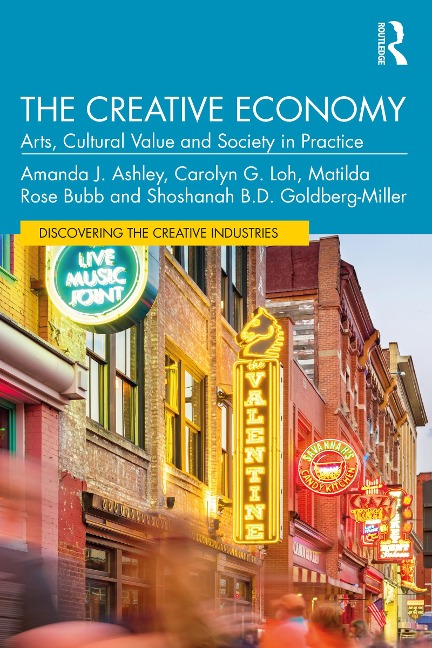
The creative economy permeates our everyday lives, shaping where we live, what we buy, and how we interact with others. Looking at dimensions of people, place, policy, and market forces, the book offers a comprehensive perspective on arts and culture, in both economic and social life. The book explores the multifaceted components that make up this complex field. Underlying this journey is the throughline of diversity, equity, and inclusion as watchwords of today's global paradigm. Capital, gentrification, pay disparities, and the hegemonic confines of cultural production are a few of the key issues analyzed. Using case studies and stories of artists and creatives from the worlds of fashion, design, music, and the media arts, the book also delves into gastronomy, literature, architecture, and theatre-presenting a nuanced look at the ways in which the creative sector impacts the world today. Readers will benefit from features such as key takeaways, discussion questions, and activities, throughout the chapters. Students, scholars, policymakers, and the general public will find this a valuable resource. This book offers the reader a chance not only to understand the cultural and creative industries, but to internalize its elements and embrace the creative spirit that imbues the sector.
Amanda J. Ashley is Professor of Urban Studies and Community Development and the Director of the School of the Arts at Boise State University, USA. Carolyn G. Loh is Professor of Urban Studies and Planning at Wayne State University, USA. Matilda Rose Bubb is the City of Boise's Cultural Planner, a Public Policy and Administration Ph.D. candidate at Boise State University, USA, and a visual artist. Shoshanah B.D. Goldberg-Miller is Associate Professor in the Department of Arts Administration, Education, and Policy and Affiliate Associate Professor of City and Regional Planning at The Ohio State University, USA.
Chapter 1. Welcome to the Creative Economy Chapter 2. Cultural Economics and the Creative Sector Chapter 3. Creative Economy Fundamentals Chapter 4. Place and the Creative Economy Chapter 5. Creative Economy Ecosystems Chapter 6. Centering Artists and Creatives Chapter 7. Policy and the Creative Economy Chapter 8. Champions of the Creative Economy Chapter 9. Examples of Equitable Creative Economic Development Chapter 10. Moving Forward in the Creative Economy
Dieses eBook wird im PDF-Format geliefert und ist mit einem Adobe Kopierschutz (DRM) versehen. Sie können dieses eBook mit allen Geräten lesen, die das PDF-Format und den Adobe Kopierschutz (DRM) unterstützen.
Zum Beispiel mit den folgenden Geräten:
• tolino Reader
Laden Sie das eBook direkt über den Reader-Shop auf dem tolino herunter oder übertragen Sie das eBook auf Ihren tolino mit einer kostenlosen Software wie beispielsweise Adobe Digital Editions.
• Sony Reader & andere eBook Reader
Laden Sie das eBook direkt über den Reader-Shop herunter oder übertragen Sie das eBook mit der kostenlosen Software Sony READER FOR PC/Mac oder Adobe Digital Editions auf ein Standard-Lesegeräte mit epub- und Adobe DRM-Unterstützung.
• Tablets & Smartphones
Möchten Sie dieses eBook auf Ihrem Smartphone oder Tablet lesen, finden Sie hier unsere kostenlose Lese-App für iPhone/iPad und Android Smartphone/Tablets.
• PC & Mac
Lesen Sie das eBook direkt nach dem Herunterladen mit einer kostenlosen Lesesoftware, beispielsweise Adobe Digital Editions, Sony READER FOR PC/Mac oder direkt über Ihre eBook-Bibliothek in Ihrem Konto unter „Meine eBooks“ - „online lesen“.
Schalten Sie das eBook mit Ihrer persönlichen Adobe ID auf bis zu sechs Geräten gleichzeitig frei.
Bitte beachten Sie, dass die Kindle-Geräte das Format nicht unterstützen und dieses eBook somit nicht auf Kindle-Geräten lesbar ist.